Faculty rights and adjunct reforms draw broad testimony; bills would expand tenure transparency and adjunct protections
September 11, 2025 | 2025 Legislature MA, Massachusetts
This article was created by AI summarizing key points discussed. AI makes mistakes, so for full details and context, please refer to the video of the full meeting. Please report any errors so we can fix them. Report an error »
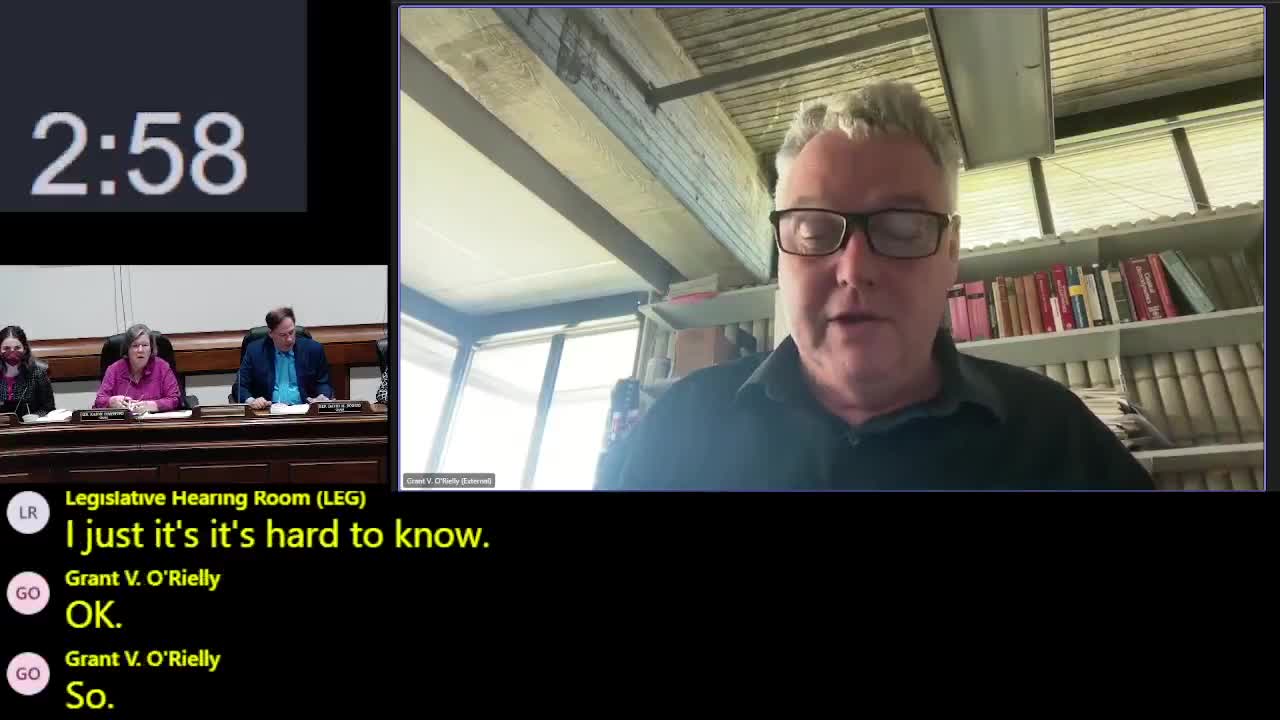
A coalition of faculty leaders, union representatives and adjunct instructors told the Joint Committee on Higher Education that a set of bills pending before the committee would improve fairness, academic quality and student outcomes by protecting tenure candidates, raising adjunct pay, expanding benefits and creating clear career pathways for contingent faculty.
Open‑meeting right for tenure candidates: Grant O’Reilly, an associate professor at UMass Dartmouth, testified on S.933, an act relative to the rights of faculty members at the University of Massachusetts. The bill would give faculty under consideration for tenure the right to attend the UMass Board of Trustees meeting where their case is considered and to speak on their own behalf. “The trustees hold an immense amount of power and their decisions regarding tenure can change the trajectory of our careers,” O’Reilly said.
Adjunct and contingent faculty reforms: Multiple witnesses urged passage of bills that would apply across community colleges, state universities and UMass campuses. Senator Eldridge, sponsor of S.930 (with House companion H.3948), said contingent faculty teach a substantial share of coursework and often lack job security, benefits and a path to full‑time positions. The Massachusetts Teachers Association and union leaders called adjuncts “the exploited gig workers of public higher education,” and urged pay parity, access to healthcare and retirement benefits for part‑time faculty who teach half‑time or more across campuses.
Personal testimony: Several adjuncts described precarious livelihoods. Phyllis Keenan, an adjunct math instructor, said she teaches multiple part‑time courses at different colleges and lacks employer‑provided health insurance or access to the state retirement system. Julia Brito and Ashley Brogna described semester‑to‑semester income volatility that they said undermines both their well‑being and students’ consistency of instruction. Joe Nardoni of the Massachusetts Community College Council called the current arrangement “morally repugnant,” describing multi‑decade adjunct careers without advancement or employer retirement contributions.
Proposals and technical issues: Testimony discussed several possible remedies: (1) pay parity so adjunct course pay is proportional to a full‑time faculty salary equivalent; (2) threshold access to health insurance and retirement for adjuncts teaching a half‑time or greater aggregate load across campuses; (3) internal hiring preference and transparent interview processes for conversion to full‑time roles; and (4) structured career ladders and professional development. Witnesses noted implementation complexity across multiple public higher education systems and suggested statutory direction and centralized data systems to track cross‑campus teaching loads.
Next steps: Sponsors and unions asked the committee for a favorable report and for further work on specifics such as precise pay‑parity calculations, threshold definitions for benefits eligibility, and mechanisms to prioritize qualified adjuncts for full‑time positions. No formal votes were taken at the hearing.
Open‑meeting right for tenure candidates: Grant O’Reilly, an associate professor at UMass Dartmouth, testified on S.933, an act relative to the rights of faculty members at the University of Massachusetts. The bill would give faculty under consideration for tenure the right to attend the UMass Board of Trustees meeting where their case is considered and to speak on their own behalf. “The trustees hold an immense amount of power and their decisions regarding tenure can change the trajectory of our careers,” O’Reilly said.
Adjunct and contingent faculty reforms: Multiple witnesses urged passage of bills that would apply across community colleges, state universities and UMass campuses. Senator Eldridge, sponsor of S.930 (with House companion H.3948), said contingent faculty teach a substantial share of coursework and often lack job security, benefits and a path to full‑time positions. The Massachusetts Teachers Association and union leaders called adjuncts “the exploited gig workers of public higher education,” and urged pay parity, access to healthcare and retirement benefits for part‑time faculty who teach half‑time or more across campuses.
Personal testimony: Several adjuncts described precarious livelihoods. Phyllis Keenan, an adjunct math instructor, said she teaches multiple part‑time courses at different colleges and lacks employer‑provided health insurance or access to the state retirement system. Julia Brito and Ashley Brogna described semester‑to‑semester income volatility that they said undermines both their well‑being and students’ consistency of instruction. Joe Nardoni of the Massachusetts Community College Council called the current arrangement “morally repugnant,” describing multi‑decade adjunct careers without advancement or employer retirement contributions.
Proposals and technical issues: Testimony discussed several possible remedies: (1) pay parity so adjunct course pay is proportional to a full‑time faculty salary equivalent; (2) threshold access to health insurance and retirement for adjuncts teaching a half‑time or greater aggregate load across campuses; (3) internal hiring preference and transparent interview processes for conversion to full‑time roles; and (4) structured career ladders and professional development. Witnesses noted implementation complexity across multiple public higher education systems and suggested statutory direction and centralized data systems to track cross‑campus teaching loads.
Next steps: Sponsors and unions asked the committee for a favorable report and for further work on specifics such as precise pay‑parity calculations, threshold definitions for benefits eligibility, and mechanisms to prioritize qualified adjuncts for full‑time positions. No formal votes were taken at the hearing.
Don't Miss a Word: See the Full Meeting!
Go beyond summaries. Unlock every video, transcript, and key insight with a Founder Membership.
✓
Get instant access to full meeting videos
✓
Search and clip any phrase from complete transcripts
✓
Receive AI-powered summaries & custom alerts
✓
Enjoy lifetime, unrestricted access to government data
30-day money-back guarantee
