Oversight hearing flags bench trials in New Orleans where prosecutors presented no witnesses
September 11, 2025 | 2025 Legislature LA, Louisiana
This article was created by AI summarizing key points discussed. AI makes mistakes, so for full details and context, please refer to the video of the full meeting. Please report any errors so we can fix them. Report an error »
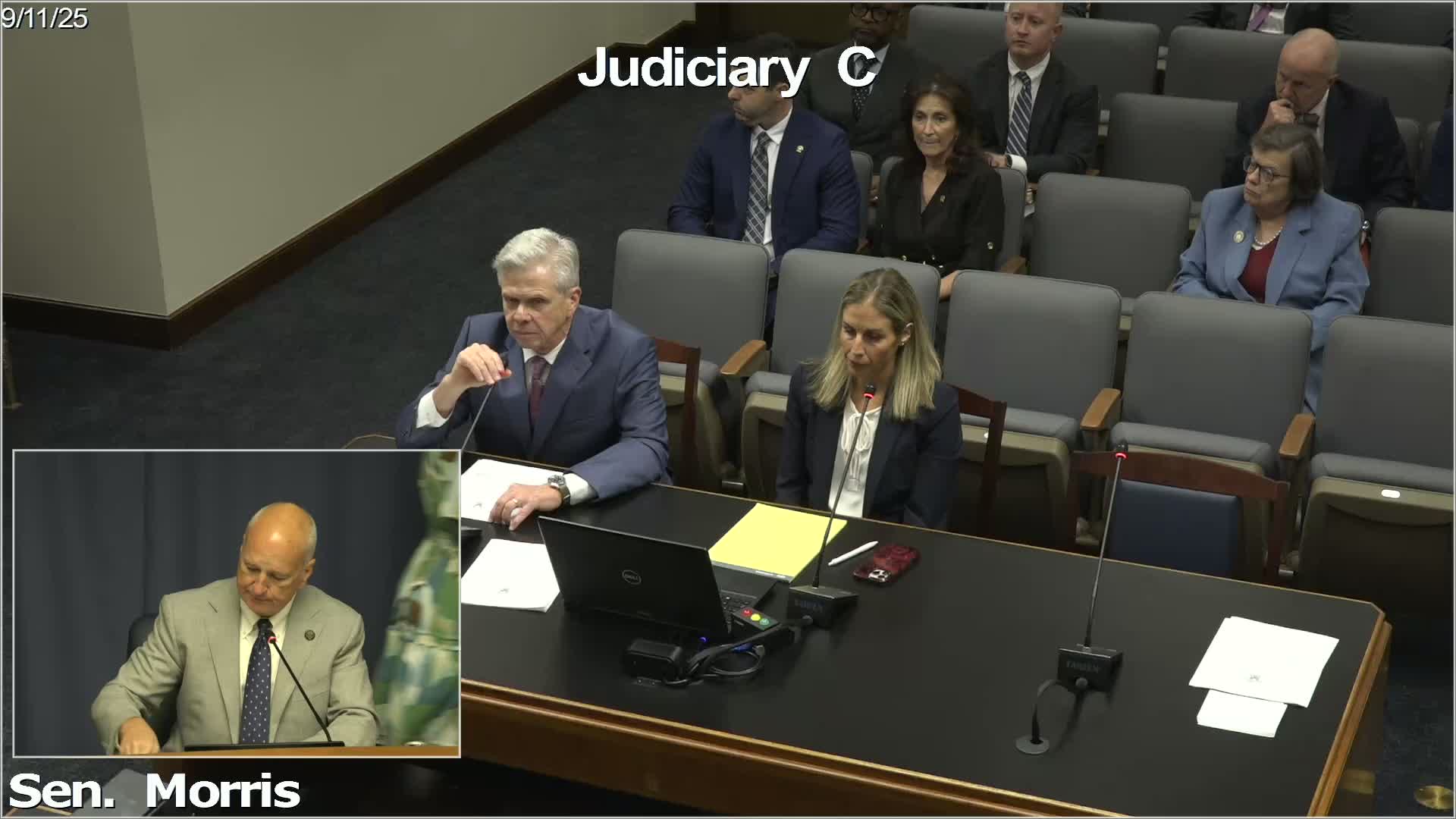
BATON ROUGE, La. — A legislative oversight hearing Thursday focused on a Metropolitan Crime Commission report that found repeated judge (bench) trials in Orleans Parish where prosecutors presented no witnesses, producing a string of not-guilty findings and prompting ethics complaints and officewide retraining.
Rafael Goenaccio, president of the Metropolitan Crime Commission, told the Senate Judiciary C Committee the group reviewed thousands of cases and identified an unusually large share of bench trials funneled to two judges and a pattern in which prosecutors presented no testimony in many of those judge trials. "In 13 of those 16 [judge trials] no witnesses were sworn in," Goenaccio said, describing transcripts the commission obtained and reviewed.
The finding prompted a heated exchange between committee members, the commission's witnesses and representatives of the Orleans Parish District Attorney's office. Laura Cannizzaro Rodrigue, a former Orleans Parish prosecutor who worked on the commission's review, walked senators through court transcripts in which defense attorneys openly said they expected the prosecution to present no evidence and judges found defendants not guilty after the state "rested." She said Louisiana law makes a judge trial commence only when the first witness is sworn, and that many of the transcripts show no witness oath was taken.
The commission's data, presented at the hearing, covered calendar years 2022–2024 and examined more than 7,100 cases that passed through Orleans Criminal District Court. Goenaccio said 355 cases closed after trial during that period; 125 were judge trials. Ten judges averaged about six judge trials apiece over three years; two judges were statistical outliers. The commission's presentation said one judge had presided over 47 bench trials with a 79% acquittal rate and another had presided over 16 bench trials in a single year with an 88% acquittal rate. The report noted juries in Orleans acquitted at a roughly 43% rate, while judge trials overall acquitted at a higher rate in the sections reviewed.
Metropolitan Crime Commission officials said they alerted the district attorney's office and filed formal complaints. Goenaccio told senators he filed complaints with the Judiciary Commission and with the chief disciplinary counsel of the Louisiana State Bar Association.
The hearing prompted questions about prosecutorial practice and court procedure. Colin Sims, district attorney for Louisiana's 20th Judicial District, said in his office he would have dismissed cases in similar circumstances or sought immediate remedies, and that he uses internal reporting to monitor trends. "I would dismiss my case in advance and enter a null a prosequi, regroup, and then reinstitute my case for prosecution," Sims said.
Melanie Talia, president of the New Orleans Police and Justice Foundation and a former Orleans prosecutor, described the electronic subpoena system known as "court notify," and said the system includes escalation so a missing officer's absence escalates up the chain of command. She told senators that in the cases examined officers had testified at earlier motion hearings but, according to communications some officers shared with her group, were not always phoned by ADAs before trial to confirm presence.
Orleans Parish District Attorney Williams (title used in the hearing) acknowledged the incidents should not have happened and said his office retrained the two prosecutors involved and took other remedial steps. "It should not have happened," Williams said. "The buck stops with me." He said his office has retrained staff, pulled the two ADAs from that section, and that his first assistant has instituted additional oversight and training.
Williams and other witnesses described outreach to victims and logistical challenges in domestic-violence and victim-dependent cases, in which victims sometimes decline to testify. Victim outreach is tracked in the DA's office via a case management system the office described at the hearing; witnesses said some victims later became nonresponsive or told prosecutors they would not come to court.
A victim who testified, former prosecutor and property owner Mr. Arcuri, said his home burglary case stalled when prosecutors failed to disclose surveillance video in advance and the judge suppressed the footage at a pretrial hearing. The video was not available to the defense before trial, Arcuri testified, and the case ultimately ended in a not-guilty finding after prosecutors "rested." "The video was in their possession for a year," he said.
The committee heard competing explanations and next steps. The DA's office and its first assistant said the two ADAs involved were inexperienced and had been retrained; they said the office has added supervisory capacity and tightened policies about courtroom readiness. The Metropolitan Crime Commission said the pattern, the transcripts, and the concentration of judge trials before two judges required further investigation and formal review.
Lawmakers also discussed statutory reforms. Witnesses and committee members raised a proposal to require prosecutorial consent before a defendant may waive a jury and elect a judge trial; committee witnesses said 35 states already require mutual consent or similar safeguards. District Attorney Williams said his office helped draft legislation to require that change and has submitted it for consideration.
The committee did not vote on legislation at the hearing. Members said they intend further oversight and requested follow-up: the Metropolitan Crime Commission said it will issue additional reports on prosecutors and police; the DA's office said it would continue victim outreach and review the specific cases for potential recharging where permissible.
Why it matters: Senators said the hearing was about preserving trust in the criminal justice system and ensuring victims and the public see deliberate, lawful case handling. The apparent procedural lapses in the transcripts — where state lawyers announced readiness despite no witnesses being sworn and judges issued not-guilty findings — raised questions about ethics, supervision and whether records available to the public (minute entries) accurately reflect what transpired in court.
The oversight hearing produced commitments to pursue remedies: formal complaints already filed, DA's office retraining and supervision, and a push for a statutory change to require prosecutorial agreement to bench trials that supporters said would reduce the risk of the pattern the commission documented.
The committee recessed after hearing additional testimony by law-enforcement and court-system witnesses and taking public comment.
Rafael Goenaccio, president of the Metropolitan Crime Commission, told the Senate Judiciary C Committee the group reviewed thousands of cases and identified an unusually large share of bench trials funneled to two judges and a pattern in which prosecutors presented no testimony in many of those judge trials. "In 13 of those 16 [judge trials] no witnesses were sworn in," Goenaccio said, describing transcripts the commission obtained and reviewed.
The finding prompted a heated exchange between committee members, the commission's witnesses and representatives of the Orleans Parish District Attorney's office. Laura Cannizzaro Rodrigue, a former Orleans Parish prosecutor who worked on the commission's review, walked senators through court transcripts in which defense attorneys openly said they expected the prosecution to present no evidence and judges found defendants not guilty after the state "rested." She said Louisiana law makes a judge trial commence only when the first witness is sworn, and that many of the transcripts show no witness oath was taken.
The commission's data, presented at the hearing, covered calendar years 2022–2024 and examined more than 7,100 cases that passed through Orleans Criminal District Court. Goenaccio said 355 cases closed after trial during that period; 125 were judge trials. Ten judges averaged about six judge trials apiece over three years; two judges were statistical outliers. The commission's presentation said one judge had presided over 47 bench trials with a 79% acquittal rate and another had presided over 16 bench trials in a single year with an 88% acquittal rate. The report noted juries in Orleans acquitted at a roughly 43% rate, while judge trials overall acquitted at a higher rate in the sections reviewed.
Metropolitan Crime Commission officials said they alerted the district attorney's office and filed formal complaints. Goenaccio told senators he filed complaints with the Judiciary Commission and with the chief disciplinary counsel of the Louisiana State Bar Association.
The hearing prompted questions about prosecutorial practice and court procedure. Colin Sims, district attorney for Louisiana's 20th Judicial District, said in his office he would have dismissed cases in similar circumstances or sought immediate remedies, and that he uses internal reporting to monitor trends. "I would dismiss my case in advance and enter a null a prosequi, regroup, and then reinstitute my case for prosecution," Sims said.
Melanie Talia, president of the New Orleans Police and Justice Foundation and a former Orleans prosecutor, described the electronic subpoena system known as "court notify," and said the system includes escalation so a missing officer's absence escalates up the chain of command. She told senators that in the cases examined officers had testified at earlier motion hearings but, according to communications some officers shared with her group, were not always phoned by ADAs before trial to confirm presence.
Orleans Parish District Attorney Williams (title used in the hearing) acknowledged the incidents should not have happened and said his office retrained the two prosecutors involved and took other remedial steps. "It should not have happened," Williams said. "The buck stops with me." He said his office has retrained staff, pulled the two ADAs from that section, and that his first assistant has instituted additional oversight and training.
Williams and other witnesses described outreach to victims and logistical challenges in domestic-violence and victim-dependent cases, in which victims sometimes decline to testify. Victim outreach is tracked in the DA's office via a case management system the office described at the hearing; witnesses said some victims later became nonresponsive or told prosecutors they would not come to court.
A victim who testified, former prosecutor and property owner Mr. Arcuri, said his home burglary case stalled when prosecutors failed to disclose surveillance video in advance and the judge suppressed the footage at a pretrial hearing. The video was not available to the defense before trial, Arcuri testified, and the case ultimately ended in a not-guilty finding after prosecutors "rested." "The video was in their possession for a year," he said.
The committee heard competing explanations and next steps. The DA's office and its first assistant said the two ADAs involved were inexperienced and had been retrained; they said the office has added supervisory capacity and tightened policies about courtroom readiness. The Metropolitan Crime Commission said the pattern, the transcripts, and the concentration of judge trials before two judges required further investigation and formal review.
Lawmakers also discussed statutory reforms. Witnesses and committee members raised a proposal to require prosecutorial consent before a defendant may waive a jury and elect a judge trial; committee witnesses said 35 states already require mutual consent or similar safeguards. District Attorney Williams said his office helped draft legislation to require that change and has submitted it for consideration.
The committee did not vote on legislation at the hearing. Members said they intend further oversight and requested follow-up: the Metropolitan Crime Commission said it will issue additional reports on prosecutors and police; the DA's office said it would continue victim outreach and review the specific cases for potential recharging where permissible.
Why it matters: Senators said the hearing was about preserving trust in the criminal justice system and ensuring victims and the public see deliberate, lawful case handling. The apparent procedural lapses in the transcripts — where state lawyers announced readiness despite no witnesses being sworn and judges issued not-guilty findings — raised questions about ethics, supervision and whether records available to the public (minute entries) accurately reflect what transpired in court.
The oversight hearing produced commitments to pursue remedies: formal complaints already filed, DA's office retraining and supervision, and a push for a statutory change to require prosecutorial agreement to bench trials that supporters said would reduce the risk of the pattern the commission documented.
The committee recessed after hearing additional testimony by law-enforcement and court-system witnesses and taking public comment.
View the Full Meeting & All Its Details
This article offers just a summary. Unlock complete video, transcripts, and insights as a Founder Member.
✓
Watch full, unedited meeting videos
✓
Search every word spoken in unlimited transcripts
✓
AI summaries & real-time alerts (all government levels)
✓
Permanent access to expanding government content
30-day money-back guarantee
