SOPEC urges Hocking County to consider community electric aggregation
August 28, 2025 | Hocking County, Ohio
This article was created by AI summarizing key points discussed. AI makes mistakes, so for full details and context, please refer to the video of the full meeting. Please report any errors so we can fix them. Report an error »
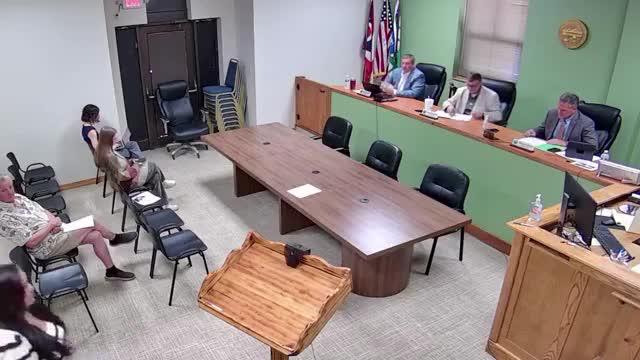
Jessica Armold, a representative of the Sustainable Ohio Public Energy Council, told the Hocking County Board of Commissioners on Aug. 28 that SOPEC can run a community choice aggregation (CCA) program to secure competitive electric prices and 100% renewable energy options for residents, small businesses and municipal accounts.
The presentation explained the basic 5Ws: SOPEC is a governmental aggregator with 49 member communities across Ohio, and it partners with suppliers such as AEP Energy to provide generation service while the local utility continues to deliver distribution and customer service. "The utility would stay the same... Your bill would continue to come from AEP Ohio," Armold said.
Armold said SOPEC typically secures generation pricing that runs 15% to 30% below the standard service offer for municipal accounts and highlighted a statewide example: "Cleveland... has saved approximately $20,000,000 since going with the Texas Electric Aggregation Program." She also described a $16,600,000 federal grant SOPEC helped secure for charging and fueling infrastructure and a model used in Athens County where modest local fees were set aside for community energy projects.
Commissioners asked about existing local arrangements and suppliers. Armold confirmed Logan participates in SOPEC's residential and small-business aggregation while Logan's municipal accounts currently have a separate municipal aggregation contract with a different provider. Commissioners identified Palmer Energy and a presenter named Phil Dicer as a competing option the county has consulted. Armold advised commissioners that market volatility makes direct, time-aligned price comparisons important: arrange indicative pricing from multiple providers at roughly the same time to compare "apples to apples."
The presentation did not include a formal proposal or motion; commissioners did not vote on joining a SOPEC program at the meeting. Armold left informational materials with the board and offered to provide indicative pricing if the county requests it.
What this means going forward: county officials have new information about an alternative aggregation model that emphasizes 100% renewable generation options and pooled purchasing; any change would require staff follow-up, comparative pricing, and formal action by the board before procurement or enrollment begins.
Armold's contact and informational folders were provided to commissioners for follow-up.
The presentation explained the basic 5Ws: SOPEC is a governmental aggregator with 49 member communities across Ohio, and it partners with suppliers such as AEP Energy to provide generation service while the local utility continues to deliver distribution and customer service. "The utility would stay the same... Your bill would continue to come from AEP Ohio," Armold said.
Armold said SOPEC typically secures generation pricing that runs 15% to 30% below the standard service offer for municipal accounts and highlighted a statewide example: "Cleveland... has saved approximately $20,000,000 since going with the Texas Electric Aggregation Program." She also described a $16,600,000 federal grant SOPEC helped secure for charging and fueling infrastructure and a model used in Athens County where modest local fees were set aside for community energy projects.
Commissioners asked about existing local arrangements and suppliers. Armold confirmed Logan participates in SOPEC's residential and small-business aggregation while Logan's municipal accounts currently have a separate municipal aggregation contract with a different provider. Commissioners identified Palmer Energy and a presenter named Phil Dicer as a competing option the county has consulted. Armold advised commissioners that market volatility makes direct, time-aligned price comparisons important: arrange indicative pricing from multiple providers at roughly the same time to compare "apples to apples."
The presentation did not include a formal proposal or motion; commissioners did not vote on joining a SOPEC program at the meeting. Armold left informational materials with the board and offered to provide indicative pricing if the county requests it.
What this means going forward: county officials have new information about an alternative aggregation model that emphasizes 100% renewable generation options and pooled purchasing; any change would require staff follow-up, comparative pricing, and formal action by the board before procurement or enrollment begins.
Armold's contact and informational folders were provided to commissioners for follow-up.
Don't Miss a Word: See the Full Meeting!
Go beyond summaries. Unlock every video, transcript, and key insight with a Founder Membership.
✓
Get instant access to full meeting videos
✓
Search and clip any phrase from complete transcripts
✓
Receive AI-powered summaries & custom alerts
✓
Enjoy lifetime, unrestricted access to government data
30-day money-back guarantee
