Proposed Mister Car Wash at Springs at Lockport Draws Council Concern; Vote Deferred
September 04, 2025 | Lockport, Will County, Illinois
This article was created by AI summarizing key points discussed. AI makes mistakes, so for full details and context, please refer to the video of the full meeting. Please report any errors so we can fix them. Report an error »
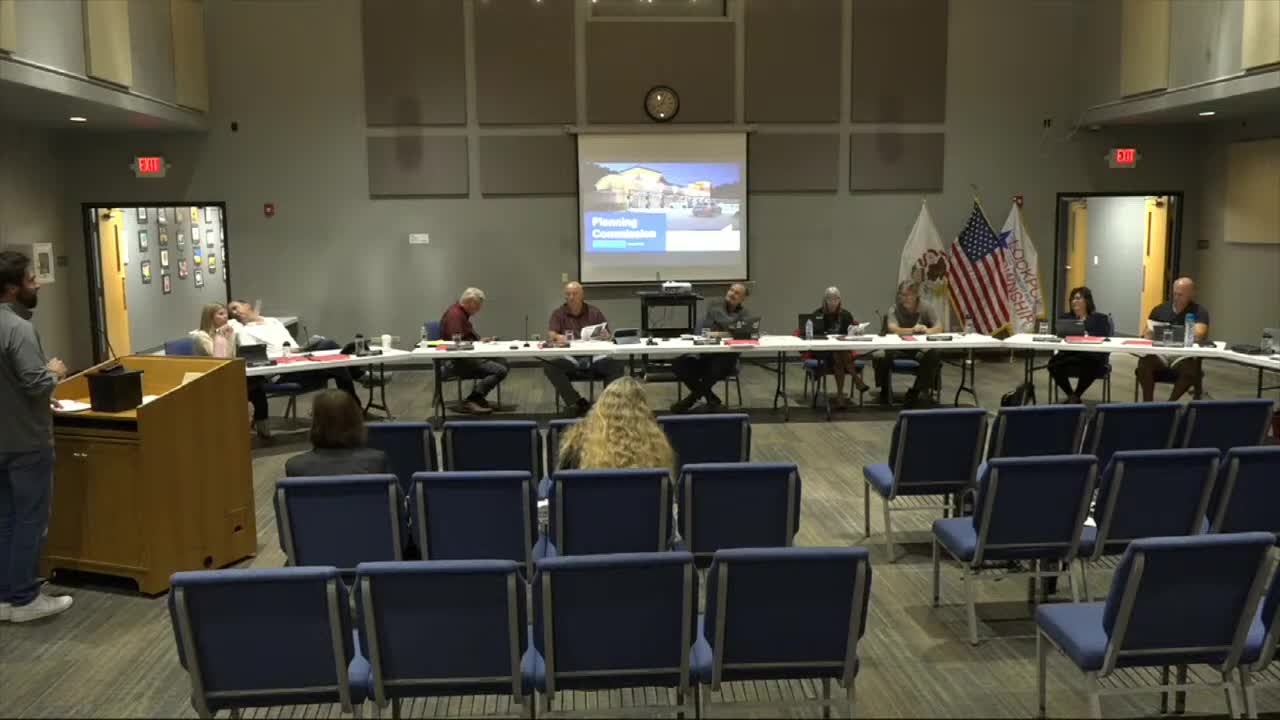
A proposal to add a Mister Car Wash on a 1.11-acre commercial outlot at the Springs at Lockport drew questions from Lockport City Council members and was set for consideration at the council's Sept. 17 meeting.
City planning staff presented a final development plan and amendment to the Springs at Lockport plan development, describing a 4,874-square-foot standalone car wash with 19 vacuum stations, separate inbound and outbound lanes and a 12-foot sound wall on the egress side intended to mitigate noise for adjacent properties. Planning staff said the Planning and Zoning Commission recommended the plan 7–0 and asked that the ordinance (25‑0‑13) be placed on the Sept. 17 council agenda for action or consent.
The developer's representative, Rob Barsom of Mister Car Wash, told the council the company operates more than 500 locations nationwide and said the firm's water-reuse system “reduces freshwater usage by about 25%” and that the company “recycle[s] over 50%” of wash water; he described the site selection as driven by regional trade area and co-location with quick-service restaurants.
Council members pressed staff and the applicant on several topics: the site's steep topography and retaining-wall work, queuing and circulation where Adelman Drive meets the private drive and 150th Street, proximity to existing car washes, and whether the Springs' master developer had consented. Councilmember questions noted that the outlots were originally described as C‑3 commercial pads and that private covenants and developer communications had previously suggested other national tenants for the corridor.
Staff said Continental Group (the master developer) had lifted a private covenant prohibiting a car wash for the outlot and that Continental had been “supportive of having this next to their large residential project.” Staff also said any request tied to this site would still require a special use permit under the city's zoning code. Barsom said Mister Car Wash’s typical membership ramp target for new builds is about 2,000 members per store; he said the company's internal capacity modeling could serve more cars but that observed peak hourly throughput in a recent market averaged about 43 cars per hour.
Multiple council members asked that the master developer or petitioner attend the next meeting so council can probe broader development questions, including whether the car wash would affect the viability of future uses on adjacent pads and whether supplemental public incentives (the developer had previously discussed a possible sales-tax incentive tied to retaining-wall costs) were anticipated.
No formal vote was taken; staff said the item would be on the Sept. 17 agenda and that the applicant would be asked to attend that meeting.
The council discussion included specific technical points the applicant agreed to follow up on, including more detail on: reclaimed-water volumes and treatment, sound-study results underlying the 12-foot wall, queuing capacity through the entrance/pay station and tunnel, and whether the applicant had analyzed alternative existing sites in Lockport.
If approved on Sept. 17, the ordinance would amend the Springs at Lockport plan development to allow the car wash and adopt final development plans (ordinance 25‑0‑13).
City planning staff presented a final development plan and amendment to the Springs at Lockport plan development, describing a 4,874-square-foot standalone car wash with 19 vacuum stations, separate inbound and outbound lanes and a 12-foot sound wall on the egress side intended to mitigate noise for adjacent properties. Planning staff said the Planning and Zoning Commission recommended the plan 7–0 and asked that the ordinance (25‑0‑13) be placed on the Sept. 17 council agenda for action or consent.
The developer's representative, Rob Barsom of Mister Car Wash, told the council the company operates more than 500 locations nationwide and said the firm's water-reuse system “reduces freshwater usage by about 25%” and that the company “recycle[s] over 50%” of wash water; he described the site selection as driven by regional trade area and co-location with quick-service restaurants.
Council members pressed staff and the applicant on several topics: the site's steep topography and retaining-wall work, queuing and circulation where Adelman Drive meets the private drive and 150th Street, proximity to existing car washes, and whether the Springs' master developer had consented. Councilmember questions noted that the outlots were originally described as C‑3 commercial pads and that private covenants and developer communications had previously suggested other national tenants for the corridor.
Staff said Continental Group (the master developer) had lifted a private covenant prohibiting a car wash for the outlot and that Continental had been “supportive of having this next to their large residential project.” Staff also said any request tied to this site would still require a special use permit under the city's zoning code. Barsom said Mister Car Wash’s typical membership ramp target for new builds is about 2,000 members per store; he said the company's internal capacity modeling could serve more cars but that observed peak hourly throughput in a recent market averaged about 43 cars per hour.
Multiple council members asked that the master developer or petitioner attend the next meeting so council can probe broader development questions, including whether the car wash would affect the viability of future uses on adjacent pads and whether supplemental public incentives (the developer had previously discussed a possible sales-tax incentive tied to retaining-wall costs) were anticipated.
No formal vote was taken; staff said the item would be on the Sept. 17 agenda and that the applicant would be asked to attend that meeting.
The council discussion included specific technical points the applicant agreed to follow up on, including more detail on: reclaimed-water volumes and treatment, sound-study results underlying the 12-foot wall, queuing capacity through the entrance/pay station and tunnel, and whether the applicant had analyzed alternative existing sites in Lockport.
If approved on Sept. 17, the ordinance would amend the Springs at Lockport plan development to allow the car wash and adopt final development plans (ordinance 25‑0‑13).
Don't Miss a Word: See the Full Meeting!
Go beyond summaries. Unlock every video, transcript, and key insight with a Founder Membership.
✓
Get instant access to full meeting videos
✓
Search and clip any phrase from complete transcripts
✓
Receive AI-powered summaries & custom alerts
✓
Enjoy lifetime, unrestricted access to government data
30-day money-back guarantee
