New London faces multimillion-dollar wastewater upgrades to meet 2029 phosphorus limits
September 04, 2025 | New London, Waupaca County, Wisconsin
This article was created by AI summarizing key points discussed. AI makes mistakes, so for full details and context, please refer to the video of the full meeting. Please report any errors so we can fix them. Report an error »
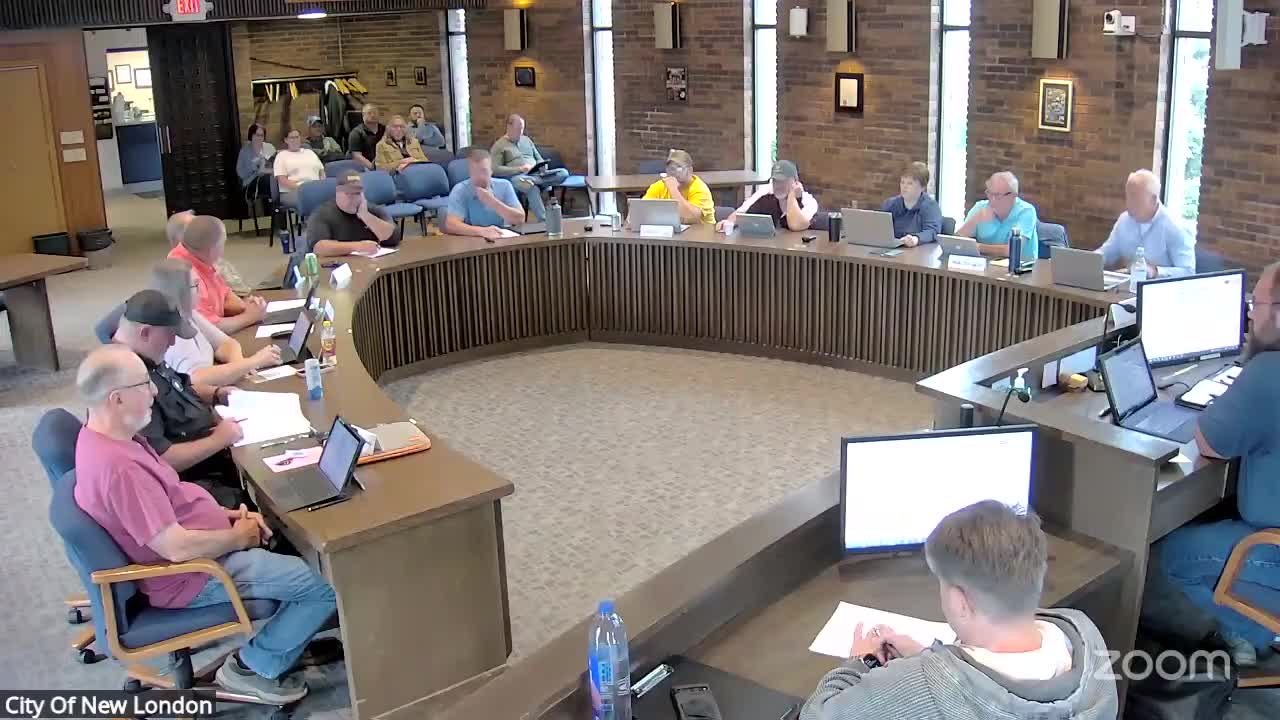
Mike Gerbets, a wastewater engineer with Donahue & Associates, told the Board of Public Works on Sept. 3 that the city must upgrade its treatment plant to meet a new Wisconsin Department of Natural Resources phosphorus limit and a compliance schedule in the city’s permit.
The DNR allocation from the Upper Fox–Wolf River Basin total maximum daily load sets the city’s six‑month average at 3.3 pounds per day of phosphorus (about 0.25 milligrams per liter), the consultant said; that limit takes effect July 1, 2029. “You are on the clock,” Gerbets said. “You have a compliance schedule in your permit, and it takes an awful lot of time to design and especially build things today.”
Why it matters: the plant is old and complex, officials said. Staff reported mechanical equipment that has reached or exceeded expected service life and operational limits that make chemical‑only fixes unlikely to achieve the new 0.25 mg/L phosphorus requirement. The consultant presented three primary alternatives: add effluent filtration to the existing facility (lower capital cost but more complex hydraulics and continued reliance on older processes); build a new biological nutrient‑removal activated‑sludge liquid train on the existing site with land‑applied Class B biosolids; or build the same activated‑sludge train plus an on‑site dryer that produces a Class A (dried) biosolids product.
On sludge and biosolids: Ben (staff member), who oversees the plant operations, described increasing disposal costs and other operational issues. He proposed increasing sludge‑hauling funding to $210,000 for next year, citing the need to haul liquid sludge farther as available farmland fields decline. Ben also proposed several user‑fee changes for haulers and nonresidential waste: raise the annual permit fee from $15 to $120, increase septic charges to $10 per thousand (units described in the staff presentation as per thousand gallons), raise grease‑trap charges from $30 to $150, add a porta‑potty classification at $45, and a 50‑cent increase for holding‑tank waste. He told the board these changes would take effect in 2026. “So I would like to increase the sludge hauling to $210,000 for next year,” Ben said.
Funding and schedule: Gerbets emphasized available funding routes and the importance of timing. The Wisconsin Clean Water Fund (state revolving fund) offers the most favorable financing for a city of New London’s size and income band, including longer loan terms (up to 30 years) and possible principal forgiveness; Donahue identified roughly $1 million in principal forgiveness the city may be eligible for. USDA Rural Development can offer 40‑year terms and sometimes grants, but available grant money is limited, Gerbets said. He also noted that revenue bonds would avoid federal procurement constraints but typically carry higher interest rates.
Gantt and permit milestones cited in the presentation (from the city’s permit and consultant schedule): the city submitted a preliminary compliance alternatives plan in June 2025; the DNR expects a final compliance alternatives plan in June 2026; plans and specifications are due in June 2027; construction must be complete by June 2029 so the plant can begin meeting the new limits by July 2029. Gerbets recommended accelerating preliminary design to fall 2025 (ideally starting in September or October) so the project can be bid in 2026 and the contractor can be given about 30 months to construct the work without paying a time‑crunch premium.
Tradeoffs and risks: the consultant said the filtration upgrade (cloth‑media disc filter) is lower capital cost but leaves the plant’s older, complex footprint largely in place and may be more vulnerable to future regulatory shifts (including possible future nitrogen limits). The activated‑sludge alternatives provide biological phosphorus removal and a clearer pathway to add nitrogen removal later if required, but the biosolids handling option matters: Class B land application is permitted today but may become constrained by PFAS concerns or field nutrient limits; an on‑site dryer that produces a Class A dried product reduces reliance on land application markets but has higher capital cost. Gerbets noted the city’s option to relocate the plant was evaluated and would add roughly $20 million to project cost because of long force main and pumping requirements.
Board and public questions: board members and residents asked about whether the project simply moves phosphorus from the river to farm fields and whether land application will remain viable. Mike Gerbets and staff explained solids‑based removal moves phosphorus into biosolids; land application is regulated and becoming more constrained in some places. Ben and staff noted increased fees from haulers, competition for disposal fields, and the potential benefit from biogas if digesters are returned to service.
Next steps: staff and the consultant urged the Board to authorize preliminary design work this fall, to submit an intent to apply for Clean Water Fund financing in October, to complete preliminary design and a facility plan by January to inform a public hearing and a finalized alternative selection, and to bid the project in 2026 so construction can be completed before the 2029 compliance date.
No formal vote to select an alternative was taken at the Sept. 3 meeting. Board members directed staff to proceed with outreach and design planning consistent with the timeline discussed by the consultant.
Ending: the city faces a near‑term decision with long‑term implications for rates and biosolids handling. Staff recommended public outreach and early design to improve cost certainty before the community selects a final alternative for DNR review.
The DNR allocation from the Upper Fox–Wolf River Basin total maximum daily load sets the city’s six‑month average at 3.3 pounds per day of phosphorus (about 0.25 milligrams per liter), the consultant said; that limit takes effect July 1, 2029. “You are on the clock,” Gerbets said. “You have a compliance schedule in your permit, and it takes an awful lot of time to design and especially build things today.”
Why it matters: the plant is old and complex, officials said. Staff reported mechanical equipment that has reached or exceeded expected service life and operational limits that make chemical‑only fixes unlikely to achieve the new 0.25 mg/L phosphorus requirement. The consultant presented three primary alternatives: add effluent filtration to the existing facility (lower capital cost but more complex hydraulics and continued reliance on older processes); build a new biological nutrient‑removal activated‑sludge liquid train on the existing site with land‑applied Class B biosolids; or build the same activated‑sludge train plus an on‑site dryer that produces a Class A (dried) biosolids product.
On sludge and biosolids: Ben (staff member), who oversees the plant operations, described increasing disposal costs and other operational issues. He proposed increasing sludge‑hauling funding to $210,000 for next year, citing the need to haul liquid sludge farther as available farmland fields decline. Ben also proposed several user‑fee changes for haulers and nonresidential waste: raise the annual permit fee from $15 to $120, increase septic charges to $10 per thousand (units described in the staff presentation as per thousand gallons), raise grease‑trap charges from $30 to $150, add a porta‑potty classification at $45, and a 50‑cent increase for holding‑tank waste. He told the board these changes would take effect in 2026. “So I would like to increase the sludge hauling to $210,000 for next year,” Ben said.
Funding and schedule: Gerbets emphasized available funding routes and the importance of timing. The Wisconsin Clean Water Fund (state revolving fund) offers the most favorable financing for a city of New London’s size and income band, including longer loan terms (up to 30 years) and possible principal forgiveness; Donahue identified roughly $1 million in principal forgiveness the city may be eligible for. USDA Rural Development can offer 40‑year terms and sometimes grants, but available grant money is limited, Gerbets said. He also noted that revenue bonds would avoid federal procurement constraints but typically carry higher interest rates.
Gantt and permit milestones cited in the presentation (from the city’s permit and consultant schedule): the city submitted a preliminary compliance alternatives plan in June 2025; the DNR expects a final compliance alternatives plan in June 2026; plans and specifications are due in June 2027; construction must be complete by June 2029 so the plant can begin meeting the new limits by July 2029. Gerbets recommended accelerating preliminary design to fall 2025 (ideally starting in September or October) so the project can be bid in 2026 and the contractor can be given about 30 months to construct the work without paying a time‑crunch premium.
Tradeoffs and risks: the consultant said the filtration upgrade (cloth‑media disc filter) is lower capital cost but leaves the plant’s older, complex footprint largely in place and may be more vulnerable to future regulatory shifts (including possible future nitrogen limits). The activated‑sludge alternatives provide biological phosphorus removal and a clearer pathway to add nitrogen removal later if required, but the biosolids handling option matters: Class B land application is permitted today but may become constrained by PFAS concerns or field nutrient limits; an on‑site dryer that produces a Class A dried product reduces reliance on land application markets but has higher capital cost. Gerbets noted the city’s option to relocate the plant was evaluated and would add roughly $20 million to project cost because of long force main and pumping requirements.
Board and public questions: board members and residents asked about whether the project simply moves phosphorus from the river to farm fields and whether land application will remain viable. Mike Gerbets and staff explained solids‑based removal moves phosphorus into biosolids; land application is regulated and becoming more constrained in some places. Ben and staff noted increased fees from haulers, competition for disposal fields, and the potential benefit from biogas if digesters are returned to service.
Next steps: staff and the consultant urged the Board to authorize preliminary design work this fall, to submit an intent to apply for Clean Water Fund financing in October, to complete preliminary design and a facility plan by January to inform a public hearing and a finalized alternative selection, and to bid the project in 2026 so construction can be completed before the 2029 compliance date.
No formal vote to select an alternative was taken at the Sept. 3 meeting. Board members directed staff to proceed with outreach and design planning consistent with the timeline discussed by the consultant.
Ending: the city faces a near‑term decision with long‑term implications for rates and biosolids handling. Staff recommended public outreach and early design to improve cost certainty before the community selects a final alternative for DNR review.
View the Full Meeting & All Its Details
This article offers just a summary. Unlock complete video, transcripts, and insights as a Founder Member.
✓
Watch full, unedited meeting videos
✓
Search every word spoken in unlimited transcripts
✓
AI summaries & real-time alerts (all government levels)
✓
Permanent access to expanding government content
30-day money-back guarantee
