Homeowners urge removal of proposed 10-foot setback in Newcastle critical areas update
August 28, 2025 | City Council Meetings, Newcastle, King County, Washington
This article was created by AI summarizing key points discussed. AI makes mistakes, so for full details and context, please refer to the video of the full meeting. Please report any errors so we can fix them. Report an error »
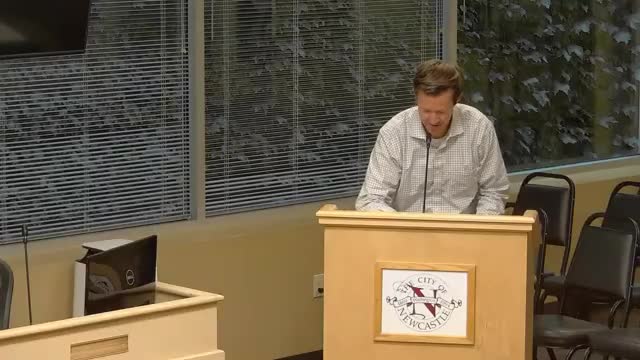
Vice Chair Lynn Troutman presiding over the Newcastle Planning Commission on Aug. 27 heard public comment from three residents who said proposed changes to the city’s critical areas ordinance — including an additional 10-foot building setback beyond Ecology-recommended wetland buffers — could make existing homes nonconforming and limit homeowners’ ability to repair or expand.
The comments matter because the draft changes would increase required setbacks around certain wetlands: speakers described a current 40-foot recommended buffer for a Category 4 wetland and said the proposal would add a 10-foot building setback, effectively creating a 50-foot limit that could run through existing houses and block planned additions.
Scott Adams, a resident of the Lake Washington neighborhood, said his house was built in 1993 and “currently complies with the 40-foot buffer,” but that the proposed change “would go straight through our kitchen, making our home nonconforming.” Adams asked the commission to remove the proposed 10-foot building setback, grandfather existing properties and extend outreach.
Chelsea Adams, representing the Lake Washington Bridge HOA, said residents received notice in July and many are “not only now learning about the proposed changes.” She told commissioners that residents were being directed to long technical documents and in many cases would need to hire consultants to learn how the rule would apply. “We’ve now been told we need to hire a wetland biologist at a cost of up to $4,000 out of pocket in order to evaluate how these changes may apply to us,” she said, adding that homeowners were receiving conditional answers — “long strings of ifs” — that left uncertainty about whether renovations or storm damage could force full compliance under the new standard.
Chelsea Adams also cited an enforcement trigger discussed in the materials: if a property owner does “more than 30% of your home's value in renovation, the entire structure must be brought into compliance,” and she said that, in an extreme damage scenario, that threshold could force owners to reduce or alter existing footprints.
Jan Drange raised concerns about the wording in edits proposed by the Washington Department of Fish and Wildlife, saying the draft’s use of the word “avoid” could be read as absolute. “Avoid means avoid and there’s the end,” Drange said, arguing the language could eliminate nuance and existing expectations for long-standing properties.
Speakers asked the commission to: remove the 10-foot additional building setback beyond the wetland buffer; explicitly grandfather existing, conforming homes so they may remain and pursue reasonable improvements; and delay further action for 9 to 12 months to allow homeowners time to obtain wetland assessments and for city staff to conduct additional outreach and analysis.
There was no formal action on the critical areas ordinance during the meeting. Vice Chair Troutman opened and closed the public comment period, and commissioners noted that the public hearing was skipped later in the agenda because no one signed up for it. The meeting record shows the commission approved the minutes from the last meeting by unanimous consent and amended the agenda to remove items 9 and 10 before proceeding.
The public comments identified specific potential effects on property owners (loss of ability to add to or rebuild homes that become nonconforming), cost burdens for private assessments, and concerns about the precision of regulatory language. Commissioners did not take a vote on the ordinance or schedule a follow-up at the meeting; Troutman said the chair and agenda-setting participants may reschedule a public hearing if it can be properly noticed.
The Planning Commission packet referenced Department of Ecology guidance for wetland buffers and included markups from the Department of Fish and Wildlife; speakers said the proposed additional setback exceeds Ecology recommendations for Category 4 wetlands. Speakers cited local valuation context in public comment — one commenter referenced a King County valuation figure — but no new staff analysis, findings, or staff responses were recorded in the meeting transcript.
The commission’s next regular meeting was announced for Sept. 24, and Troutman said agenda setting between the chair and staff may determine whether the matter returns for a noticed public hearing.
The comments matter because the draft changes would increase required setbacks around certain wetlands: speakers described a current 40-foot recommended buffer for a Category 4 wetland and said the proposal would add a 10-foot building setback, effectively creating a 50-foot limit that could run through existing houses and block planned additions.
Scott Adams, a resident of the Lake Washington neighborhood, said his house was built in 1993 and “currently complies with the 40-foot buffer,” but that the proposed change “would go straight through our kitchen, making our home nonconforming.” Adams asked the commission to remove the proposed 10-foot building setback, grandfather existing properties and extend outreach.
Chelsea Adams, representing the Lake Washington Bridge HOA, said residents received notice in July and many are “not only now learning about the proposed changes.” She told commissioners that residents were being directed to long technical documents and in many cases would need to hire consultants to learn how the rule would apply. “We’ve now been told we need to hire a wetland biologist at a cost of up to $4,000 out of pocket in order to evaluate how these changes may apply to us,” she said, adding that homeowners were receiving conditional answers — “long strings of ifs” — that left uncertainty about whether renovations or storm damage could force full compliance under the new standard.
Chelsea Adams also cited an enforcement trigger discussed in the materials: if a property owner does “more than 30% of your home's value in renovation, the entire structure must be brought into compliance,” and she said that, in an extreme damage scenario, that threshold could force owners to reduce or alter existing footprints.
Jan Drange raised concerns about the wording in edits proposed by the Washington Department of Fish and Wildlife, saying the draft’s use of the word “avoid” could be read as absolute. “Avoid means avoid and there’s the end,” Drange said, arguing the language could eliminate nuance and existing expectations for long-standing properties.
Speakers asked the commission to: remove the 10-foot additional building setback beyond the wetland buffer; explicitly grandfather existing, conforming homes so they may remain and pursue reasonable improvements; and delay further action for 9 to 12 months to allow homeowners time to obtain wetland assessments and for city staff to conduct additional outreach and analysis.
There was no formal action on the critical areas ordinance during the meeting. Vice Chair Troutman opened and closed the public comment period, and commissioners noted that the public hearing was skipped later in the agenda because no one signed up for it. The meeting record shows the commission approved the minutes from the last meeting by unanimous consent and amended the agenda to remove items 9 and 10 before proceeding.
The public comments identified specific potential effects on property owners (loss of ability to add to or rebuild homes that become nonconforming), cost burdens for private assessments, and concerns about the precision of regulatory language. Commissioners did not take a vote on the ordinance or schedule a follow-up at the meeting; Troutman said the chair and agenda-setting participants may reschedule a public hearing if it can be properly noticed.
The Planning Commission packet referenced Department of Ecology guidance for wetland buffers and included markups from the Department of Fish and Wildlife; speakers said the proposed additional setback exceeds Ecology recommendations for Category 4 wetlands. Speakers cited local valuation context in public comment — one commenter referenced a King County valuation figure — but no new staff analysis, findings, or staff responses were recorded in the meeting transcript.
The commission’s next regular meeting was announced for Sept. 24, and Troutman said agenda setting between the chair and staff may determine whether the matter returns for a noticed public hearing.
View the Full Meeting & All Its Details
This article offers just a summary. Unlock complete video, transcripts, and insights as a Founder Member.
✓
Watch full, unedited meeting videos
✓
Search every word spoken in unlimited transcripts
✓
AI summaries & real-time alerts (all government levels)
✓
Permanent access to expanding government content
30-day money-back guarantee
