Department of Revenue briefs panel on scale and limits of sales-and-use tax exemptions and reporting challenges
August 22, 2025 | Revenue, Joint & Standing, Committees, Legislative, Wyoming
This article was created by AI summarizing key points discussed. AI makes mistakes, so for full details and context, please refer to the video of the full meeting. Please report any errors so we can fix them. Report an error »
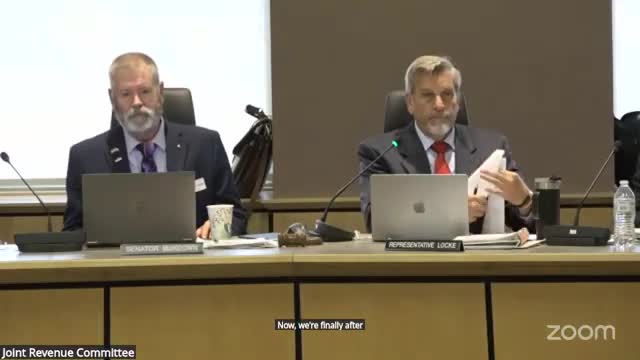
The Wyoming Department of Revenue told lawmakers the state's sales-and-use tax system has many statutory exemptions and that practical reporting limits make it difficult to compute an accurate, comprehensive tally of taxes foregone. The department reviewed longstanding categories of exemptions, explained how audits and exemption certificates work, and summarized why prior attempts to survey exempted purchases produced unreliable numbers.
"Nothing is taxable unless there is an imposition statute," Department of Revenue director Brett Fanning told the committee, underscoring a central difference between property tax (all property taxable unless exempt) and sales tax (specific statutory imposition plus listed exemptions). Fanning and Sharon Grama (the excise-tax division lead introduced to the committee) described three exemption types: entity-based (entity must present a certificate), use-based (certificate required because vendor cannot know purchaser's use), and product-based (everyone exempt without a certificate, e.g., groceries and motor fuels).
Depth and dollars: Fanning told the panel that licensed vendors report gross sales and total deductions on the state return; the department's consolidated picture for a recent reporting period showed very large aggregate volumes and substantial deductions reported to the department. The department also said many large deductions come from wholesale-for-resale claims, manufacturing ingredient/resale exemptions, motor-fuel and grocery exemptions, power used in manufacturing, and exemptions for well-site services before production casing is set. Officials warned the committee that many vendors report company-wide (national or international) gross sales and then deduct non-Wyoming activity, which makes a precise measurement of the state's tax-foregone total difficult.
Why prior surveys were weak: the department described an earlier statutory survey effort that required outreach to a small set of industries (manufacturing machinery, data centers, broadband, etc.). The department and partner agencies (the Wyoming Business Council and Department of Workforce Services) sent questionnaires, but participation was incomplete; for example, the data-center survey returned only two of five possible responses in one recent year. The department concluded that even with a 100% response rate the survey picture would be incomplete because many entities that use exemptions are not required to register with the Department of Revenue and some do not have a clear administrative point of contact.
Illustrative figures presented to the committee (department-reported aggregates): the department cited multi-billion-dollar gross sales totals and reported deductions; after deductions the department reported an annual net taxable base and a reported tax amount (figures were aggregated on department returns). Fanning emphasized the caveats: vendors report in good faith and the department's ability to disaggregate deductions by exemption type is limited.
Committee direction and next steps: lawmakers asked the department for better data and raised several policy questions, including whether the state should require more specific exemption reporting or create thresholds that trigger reporting. Department staff said earlier proposals to require reporting or to attach incentives/penalties had been tried; results were mixed because of compliance burdens on small businesses and confidentiality concerns for large companies. Committee members asked staff to prepare background materials and possible statutory approaches for future meetings; no legislative votes were taken.
Ending: the committee agreed to continue the sales-and-use tax conversation at subsequent meetings. The department offered to provide more targeted analyses and examples by county and by industry to help the committee consider whether new reporting requirements or statutory changes are appropriate.
"Nothing is taxable unless there is an imposition statute," Department of Revenue director Brett Fanning told the committee, underscoring a central difference between property tax (all property taxable unless exempt) and sales tax (specific statutory imposition plus listed exemptions). Fanning and Sharon Grama (the excise-tax division lead introduced to the committee) described three exemption types: entity-based (entity must present a certificate), use-based (certificate required because vendor cannot know purchaser's use), and product-based (everyone exempt without a certificate, e.g., groceries and motor fuels).
Depth and dollars: Fanning told the panel that licensed vendors report gross sales and total deductions on the state return; the department's consolidated picture for a recent reporting period showed very large aggregate volumes and substantial deductions reported to the department. The department also said many large deductions come from wholesale-for-resale claims, manufacturing ingredient/resale exemptions, motor-fuel and grocery exemptions, power used in manufacturing, and exemptions for well-site services before production casing is set. Officials warned the committee that many vendors report company-wide (national or international) gross sales and then deduct non-Wyoming activity, which makes a precise measurement of the state's tax-foregone total difficult.
Why prior surveys were weak: the department described an earlier statutory survey effort that required outreach to a small set of industries (manufacturing machinery, data centers, broadband, etc.). The department and partner agencies (the Wyoming Business Council and Department of Workforce Services) sent questionnaires, but participation was incomplete; for example, the data-center survey returned only two of five possible responses in one recent year. The department concluded that even with a 100% response rate the survey picture would be incomplete because many entities that use exemptions are not required to register with the Department of Revenue and some do not have a clear administrative point of contact.
Illustrative figures presented to the committee (department-reported aggregates): the department cited multi-billion-dollar gross sales totals and reported deductions; after deductions the department reported an annual net taxable base and a reported tax amount (figures were aggregated on department returns). Fanning emphasized the caveats: vendors report in good faith and the department's ability to disaggregate deductions by exemption type is limited.
Committee direction and next steps: lawmakers asked the department for better data and raised several policy questions, including whether the state should require more specific exemption reporting or create thresholds that trigger reporting. Department staff said earlier proposals to require reporting or to attach incentives/penalties had been tried; results were mixed because of compliance burdens on small businesses and confidentiality concerns for large companies. Committee members asked staff to prepare background materials and possible statutory approaches for future meetings; no legislative votes were taken.
Ending: the committee agreed to continue the sales-and-use tax conversation at subsequent meetings. The department offered to provide more targeted analyses and examples by county and by industry to help the committee consider whether new reporting requirements or statutory changes are appropriate.
View the Full Meeting & All Its Details
This article offers just a summary. Unlock complete video, transcripts, and insights as a Founder Member.
✓
Watch full, unedited meeting videos
✓
Search every word spoken in unlimited transcripts
✓
AI summaries & real-time alerts (all government levels)
✓
Permanent access to expanding government content
30-day money-back guarantee
