Cheyenne officials defend data-center exemptions as job and property-tax generators; residents and lawmakers press for transparency
August 22, 2025 | Revenue, Joint & Standing, Committees, Legislative, Wyoming
This article was created by AI summarizing key points discussed. AI makes mistakes, so for full details and context, please refer to the video of the full meeting. Please report any errors so we can fix them. Report an error »
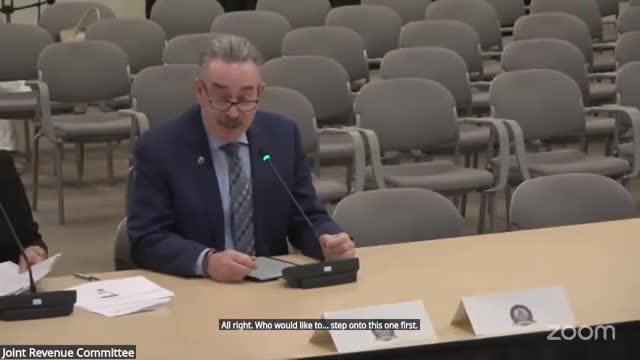
Cheyenne elected officials, economic development staff and the local utility told the interim committee that sales-tax exemptions for data-center equipment helped recruit major projects but also raised questions about local impacts and reporting transparency.
Mayor Patrick Collins and Betsy Hale (chief executive of Cheyenne Leads) described a multi-year recruitment effort that brought Microsoft, Meta and several other facilities to the Cheyenne region. Hale said the original recruitment included an early state and local incentive package and that the Microsoft campus has since made large investments. "Microsoft became operational in 2014," Hale told the committee, and she said Microsoft has invested "$3,100,000,000" to date and "we project that their full investment over the next 5 to 10 years will be another $10 to $15,000,000,000." Mayor Collins said state-level incentives and local infrastructure were decisive: he quoted an announcement from a Wyoming official when Microsoft was recruited, saying: "without these incentives and our infrastructure investments, the Microsoft project and future projects of this caliber would not be possible." The mayor added that data centers have produced measurable property-tax receipts at the county level and philanthropic support for local institutions.
Local benefits and caveats: Cheyenne officials pointed to property tax on servers and equipment, local construction and new business-parks infrastructure. Representative Storer (in the hearing) supplied a local example of scale: he said Microsoft accounts in Laramie County show roughly "$1,800,000,000" of personal property fair-market value that he associated with about "$12,000,000" in property tax receipts. Betsy Hale said the city has tracked development returns and reported that for every dollar invested in business-park infrastructure and land incentives the community received roughly "$28.89 in real tax revenue," a figure she attributed to university economic analysis.
Utilities and resource questions: Black Hills Energy explained how data centers are supplied and billed. David Bush of Black Hills Energy said most power sold to data centers is acquired on the market or supplied from a mix of local generation and market purchases, and that data centers typically also have on-site backup generation. He told the committee that the utility's tariff and contract arrangements are structured so that the costs of the data centers' incremental infrastructure are paid by those users and not rate-based to other customers: "If a data center needs power, we procure that power through the market, and they pay for it entirely." City and utility witnesses also told the committee that the presence of data centers has increased local electricity demand; Cheyenne Leads estimated currently active data centers use about 140 acre-feet of water a year (a small share of municipal demand) but that future projects could require far more electricity.
Local concerns: several legislators raised constituent concerns about noise and other community impacts from crypto-mining and some smaller facilities. Cheyenne Leads and developers said they are working to mitigate noise and visual impacts with sound barriers, site design and community meetings; the mayor said Microsoft and other firms have funded off-site improvements such as road, trail and water-line projects.
Committee reaction: committee members said they want better transparency on the fiscal trade-offs: where exemptions are granted, how much revenue is generated from property taxes, sales taxes on electricity and other taxable services, and whether the economic-development benefits offset tax incentives. Department of Revenue staff said they will try to provide more disaggregated county- and industry-level examples and legal options for reporting. The committee did not adopt any bill at the hearing.
Ending: Cheyenne leaders said the city wants to preserve certainty for recruiters while working to address specific neighborhood impacts; the committee asked staff for more detailed fiscal analyses that break down sales tax, utility payments and property taxes associated with data-center projects.
Mayor Patrick Collins and Betsy Hale (chief executive of Cheyenne Leads) described a multi-year recruitment effort that brought Microsoft, Meta and several other facilities to the Cheyenne region. Hale said the original recruitment included an early state and local incentive package and that the Microsoft campus has since made large investments. "Microsoft became operational in 2014," Hale told the committee, and she said Microsoft has invested "$3,100,000,000" to date and "we project that their full investment over the next 5 to 10 years will be another $10 to $15,000,000,000." Mayor Collins said state-level incentives and local infrastructure were decisive: he quoted an announcement from a Wyoming official when Microsoft was recruited, saying: "without these incentives and our infrastructure investments, the Microsoft project and future projects of this caliber would not be possible." The mayor added that data centers have produced measurable property-tax receipts at the county level and philanthropic support for local institutions.
Local benefits and caveats: Cheyenne officials pointed to property tax on servers and equipment, local construction and new business-parks infrastructure. Representative Storer (in the hearing) supplied a local example of scale: he said Microsoft accounts in Laramie County show roughly "$1,800,000,000" of personal property fair-market value that he associated with about "$12,000,000" in property tax receipts. Betsy Hale said the city has tracked development returns and reported that for every dollar invested in business-park infrastructure and land incentives the community received roughly "$28.89 in real tax revenue," a figure she attributed to university economic analysis.
Utilities and resource questions: Black Hills Energy explained how data centers are supplied and billed. David Bush of Black Hills Energy said most power sold to data centers is acquired on the market or supplied from a mix of local generation and market purchases, and that data centers typically also have on-site backup generation. He told the committee that the utility's tariff and contract arrangements are structured so that the costs of the data centers' incremental infrastructure are paid by those users and not rate-based to other customers: "If a data center needs power, we procure that power through the market, and they pay for it entirely." City and utility witnesses also told the committee that the presence of data centers has increased local electricity demand; Cheyenne Leads estimated currently active data centers use about 140 acre-feet of water a year (a small share of municipal demand) but that future projects could require far more electricity.
Local concerns: several legislators raised constituent concerns about noise and other community impacts from crypto-mining and some smaller facilities. Cheyenne Leads and developers said they are working to mitigate noise and visual impacts with sound barriers, site design and community meetings; the mayor said Microsoft and other firms have funded off-site improvements such as road, trail and water-line projects.
Committee reaction: committee members said they want better transparency on the fiscal trade-offs: where exemptions are granted, how much revenue is generated from property taxes, sales taxes on electricity and other taxable services, and whether the economic-development benefits offset tax incentives. Department of Revenue staff said they will try to provide more disaggregated county- and industry-level examples and legal options for reporting. The committee did not adopt any bill at the hearing.
Ending: Cheyenne leaders said the city wants to preserve certainty for recruiters while working to address specific neighborhood impacts; the committee asked staff for more detailed fiscal analyses that break down sales tax, utility payments and property taxes associated with data-center projects.
Don't Miss a Word: See the Full Meeting!
Go beyond summaries. Unlock every video, transcript, and key insight with a Founder Membership.
✓
Get instant access to full meeting videos
✓
Search and clip any phrase from complete transcripts
✓
Receive AI-powered summaries & custom alerts
✓
Enjoy lifetime, unrestricted access to government data
30-day money-back guarantee
