Board approves multiple facilities contracts: pool excavation, mold remediation, chiller refrigerant and fire-extinguisher inspection
August 20, 2025 | CHSD 94, School Boards, Illinois
This article was created by AI summarizing key points discussed. AI makes mistakes, so for full details and context, please refer to the video of the full meeting. Please report any errors so we can fix them. Report an error »
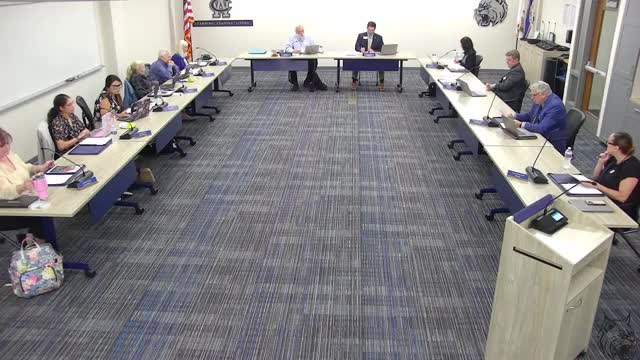
The Community High School District 94 Board of Education approved several facilities and maintenance expenditures during its August meeting, authorizing pool excavation, mold remediation in the Bishop gym, chiller refrigerant refill and annual fire-extinguisher inspections. The contracts were presented as discrete agenda items and passed by roll call. Details and questions: - Pool repair: The board approved a proposal from Miller Concrete (West Chicago) for $12,050 to excavate up to three access holes and backfill them. Trustees approved the proposal without further amendment. - Bishop gym mold remediation: The board approved a contract with Hygineering Inc. not to exceed $12,250 to remediate mold discovered on the Bishop gym ceiling near skylights; administrators said the mold was recent, caused by condensation during an accelerated cooling process used to cure paint, and limited to ceiling areas around the skylights. Board members asked whether the painting contractor should have foreseen the risk; administrators characterized the issue as an unfortunate result of a ‘‘perfect storm’’ of heat and humidity. - Chiller refrigerant refill: The board approved an invoice to ARS HVAC Supply Inc. to refill the chiller refrigerant at a cost of $10,281. Administrators said the refrigerant is the older, freon-based type compatible with current equipment and that replacement with newer refrigerants remains a longer-term consideration. - Fire-extinguisher inspection and maintenance: The board approved an invoice from Cintas Fire Protection for $16,564.76 for annual inspection, replacement and maintenance of approximately 195 extinguishers districtwide. Trustees confirmed the invoice includes inspection, tagging, repairs and occasional replacement or recharge as needed. Why it matters: The actions fund immediate safety and facility repairs necessary for school operations and extracurricular activities. Several trustees asked for additional detail on longevity of repairs, whether preventive steps could reduce recurrence (in the case of mold), and the lifespan/phase-out considerations for older refrigerants.
View the Full Meeting & All Its Details
This article offers just a summary. Unlock complete video, transcripts, and insights as a Founder Member.
✓
Watch full, unedited meeting videos
✓
Search every word spoken in unlimited transcripts
✓
AI summaries & real-time alerts (all government levels)
✓
Permanent access to expanding government content
30-day money-back guarantee
