Escambia speakers urge board to reinstate removed books after judge limits HB 1069
August 20, 2025 | Escambia, School Districts, Florida
This article was created by AI summarizing key points discussed. AI makes mistakes, so for full details and context, please refer to the video of the full meeting. Please report any errors so we can fix them. Report an error »
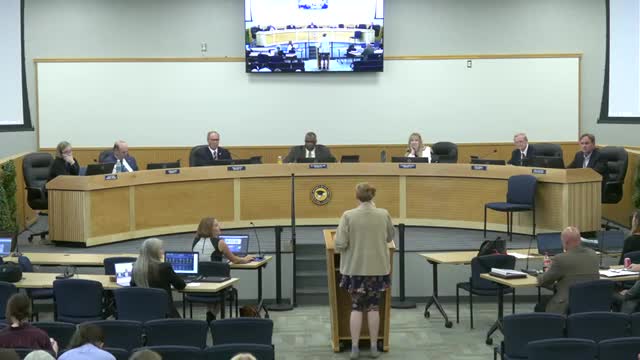
Dozens of community members, teachers and parents at the Aug. 19 Escambia County School Board meeting urged the board to restore books removed from school libraries and to reinstate the community book-review committees the board suspended in July.
Speakers said a recent federal judge's ruling that parts of House Bill 1069 are unconstitutional and direction to apply the Miller test require the district to consider challenged works in their entirety before removal. They warned continued blanket removals and the suspension of purchase could expose the district to more costly litigation and harm students'educational access.
Several speakers described the committee review process and said it had repeatedly recommended retaining challenged titles after full review. Linda Fossil, a former teacher, said the committee process considers books'value in full and argued that the district's July decision to remove books without committee review has left teachers without classroom libraries and students without access to vetted materials. "Bad policy comes at a cost. Don't put our funding at risk by continuing to violate the rights of our students," Fossil said.
Former and current educators who served on review committees described reading long novels and making age-appropriate recommendations; they said many challenges resulted in limited access decisions (age-up or age-down), not blanket bans. Multiple public speakers named titles they said had been removed, including works addressing race, gender and LGBTQ experiences and mainstream historical accounts. Rachel Bismarck told the board that books such as Little Rock 9 and I Know Why the Caged Bird Sings'which address Black history and lived experience'were among those removed and that removing such works suppresses academic and narrative exploration.
Speakers also noted fiscal impacts: several said the district has already spent substantial public funds defending earlier First Amendment lawsuits and warned additional removals could increase legal exposure. One speaker cited a district'expenditure figure of about $800,000 to defend two First Amendment cases; others urged pausing further policy updates (policies 2520 and 2522 were named in testimony) until courts and the state provide clarification.
Board members did not take a formal vote at the meeting to reinstate or return books; the public-comment period concluded with appeals from parents and educators to restore the committee process and to follow the recent judicial guidance applying the Miller test.
Speakers and attendees repeatedly requested that the board: resume the multi-member review committees, follow the judge's direction to evaluate materials in full, and end blanket removals and the district'wide purchase freeze that affects classroom libraries.
The board did not announce a reversal or a formal policy change at the meeting; members acknowledged the litigation and the legal questions raised but did not adopt new instructions during public comment.
Speakers said a recent federal judge's ruling that parts of House Bill 1069 are unconstitutional and direction to apply the Miller test require the district to consider challenged works in their entirety before removal. They warned continued blanket removals and the suspension of purchase could expose the district to more costly litigation and harm students'educational access.
Several speakers described the committee review process and said it had repeatedly recommended retaining challenged titles after full review. Linda Fossil, a former teacher, said the committee process considers books'value in full and argued that the district's July decision to remove books without committee review has left teachers without classroom libraries and students without access to vetted materials. "Bad policy comes at a cost. Don't put our funding at risk by continuing to violate the rights of our students," Fossil said.
Former and current educators who served on review committees described reading long novels and making age-appropriate recommendations; they said many challenges resulted in limited access decisions (age-up or age-down), not blanket bans. Multiple public speakers named titles they said had been removed, including works addressing race, gender and LGBTQ experiences and mainstream historical accounts. Rachel Bismarck told the board that books such as Little Rock 9 and I Know Why the Caged Bird Sings'which address Black history and lived experience'were among those removed and that removing such works suppresses academic and narrative exploration.
Speakers also noted fiscal impacts: several said the district has already spent substantial public funds defending earlier First Amendment lawsuits and warned additional removals could increase legal exposure. One speaker cited a district'expenditure figure of about $800,000 to defend two First Amendment cases; others urged pausing further policy updates (policies 2520 and 2522 were named in testimony) until courts and the state provide clarification.
Board members did not take a formal vote at the meeting to reinstate or return books; the public-comment period concluded with appeals from parents and educators to restore the committee process and to follow the recent judicial guidance applying the Miller test.
Speakers and attendees repeatedly requested that the board: resume the multi-member review committees, follow the judge's direction to evaluate materials in full, and end blanket removals and the district'wide purchase freeze that affects classroom libraries.
The board did not announce a reversal or a formal policy change at the meeting; members acknowledged the litigation and the legal questions raised but did not adopt new instructions during public comment.
Don't Miss a Word: See the Full Meeting!
Go beyond summaries. Unlock every video, transcript, and key insight with a Founder Membership.
✓
Get instant access to full meeting videos
✓
Search and clip any phrase from complete transcripts
✓
Receive AI-powered summaries & custom alerts
✓
Enjoy lifetime, unrestricted access to government data
30-day money-back guarantee
