Richland County CUSD 1 board backs ATG layout option, asks for cost, layout and timeline details for athletic complex
August 22, 2025 | Richland County CUSD 1, School Boards, Illinois
This article was created by AI summarizing key points discussed. AI makes mistakes, so for full details and context, please refer to the video of the full meeting. Please report any errors so we can fix them. Report an error »
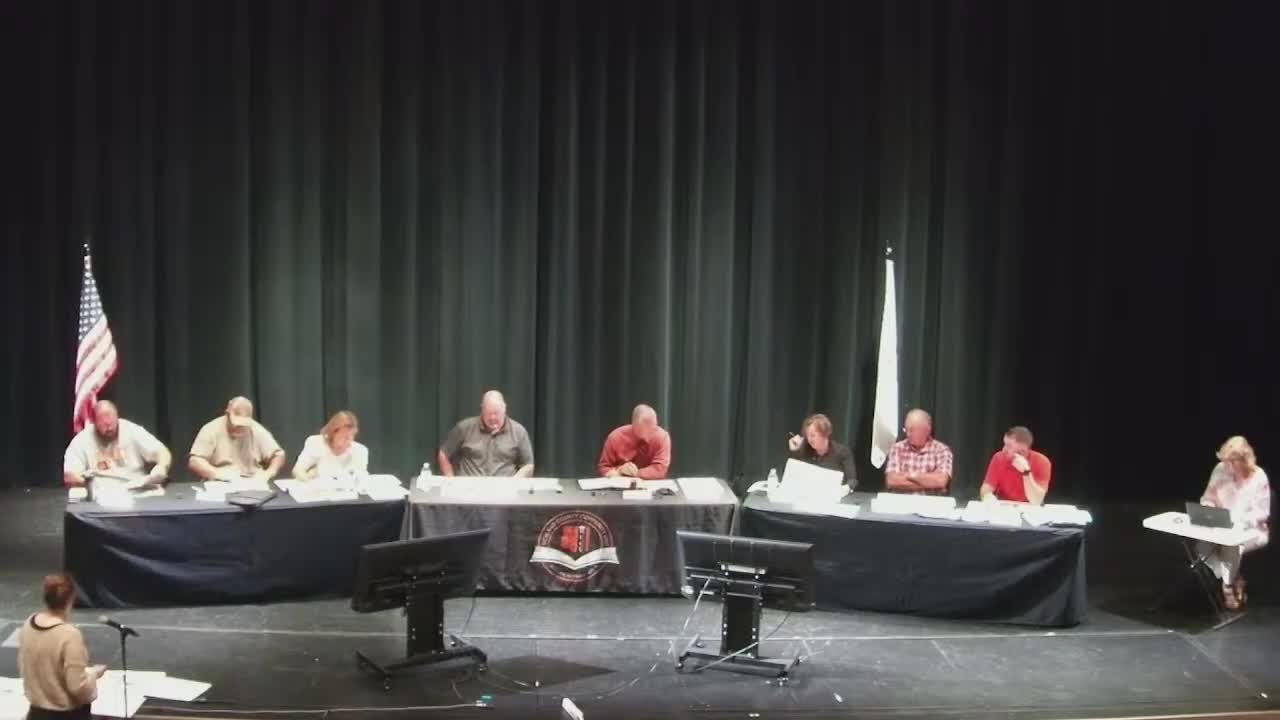
Richland County Community School District 1 trustees at a special meeting directed staff to move forward primarily with ATG’s site plan for a proposed athletic complex and asked consultants to return with alternate layouts, itemized cost comparisons (including turf-versus-grass pricing and 10-year maintenance estimates), and phased building options that could reduce near-term costs.
The decision came after a detailed presentation by Emily Spindler, a project consultant with FDMA, who reviewed two vendor proposals — from ATG and Vernon Jones — and summarized differences in layout, turf specifications, parking, soil‑stabilization contingencies and sequencing for the fields and a 12,500‑square‑foot athletic building. "They are confident with what they have drawn here that they will not produce any more water than what's already produced now," Spindler said, discussing ATG’s approach to field drainage and a sand/rubber base.
Why it matters: the project would replace and reconfigure the district’s athletic fields, add parking and a new locker/athletic building, and affect community use of the track and courts. Board members repeatedly flagged cost, constructability and community access — including ADA compliance inside the high school and temporary housing for JROTC and other programs — as central constraints that must be resolved before committing to final designs or bids.
Key points from the discussion
• Vendor comparison and contingencies: ATG offered a turnkey estimate with an a la carte list for finishes; Vernon Jones provided a base package with add‑ons. Spindler told the board ATG included a soil‑stabilization contingency of about $600,000–$700,000, while Vernon Jones listed roughly $300,000. The board was told ATG’s larger contingency may be more realistic given local soils.
• Turf, grass and maintenance: Board members asked for separate cost lines for each field so the district could evaluate mixed options (for example, turf for football and grass for some practice areas). Spindler said neither vendor’s current price includes the newer cooling infill material sometimes used to reduce turf heat; the proposals she reviewed assume a sand/rubber base. The board requested comparative estimates for turf types (including the newer cooling infill), grass, and 10‑year maintenance costs for each field.
• Layout and circulation: The board discussed two principal field orientations. Vernon Jones’ layout placed the football field east–west to reduce sun‑glare on players; ATG’s layout placed it north–south and added two parking lots totaling 101 new spaces inside the site. Board members asked ATG to evaluate flipped or shifted layouts to bring the football field closer to primary parking while minimizing sun exposure for players and fans.
• Lighting, seating and accessibility: ATG provided a lighting price range tied to product options; higher prices reflect programmable LED systems with advanced features. Trustees asked for seating capacity details; board members noted the existing stadium has about 1,200 home seats and about 620 visitor seats and requested confirmed seating and ADA seating plans for any new grandstands. Spindler confirmed ramps and ADA seating areas would be required and included in later design phases.
• Athletic building scope and phasing: The proposed athletic building (about 12,500 sq. ft., per current drawings) was discussed separately from the fields. Spindler and the board agreed the building will require formal bidding and could be phased (for example, complete restrooms/concession first, leave other spaces for later) to shorten an initial construction window. Consultants estimated that field work could begin as early as November and be ready by the following August if no building work delayed the schedule; the building itself would require a longer bid and construction timeline and may push portions of the project into the next year.
• Program needs and reuse: Board members emphasized the district must plan for interim space for JROTC events (the program needs roughly a 50×90 foot space for competitions) and consider folding JROTC and wrestling into the new building to avoid adding a separate facility. Trustees asked consultants to show one or more versions that reduce conditioned square footage and explore placing storage under bleachers to cut building size.
• Safety, community access and departmental input: Spindler said police and fire had been involved in earlier meetings but had not yet reviewed the final ATG drawings; trustees asked staff to get formal input from the fire and sheriff’s departments on the selected plan. The board also discussed community access points (for walkers using the track) and proposed 2‑hour evening overrides on tennis lights to allow limited public evening use while turning lights off at 10:00 p.m.
Board directions and next steps
The board asked FDMA and ATG to return with:
- Alternate ATG layouts that move the football field closer to parking and explore flipped configurations;
- Itemized cost estimates that separate each field and show grass vs. turf options, include turf‑infill options (including newer cooling infill), and list maintenance costs over a 10‑year period;
- Revised building options (two to three reduced‑scope versions) with estimated bid ranges per version, including a phasing plan that could prioritize restrooms/concession for earlier use; and
- Confirmation of soil‑stabilization and grading costs and documentation of police/fire review of the final site plan.
Votes and formal action
The meeting record contains a single formal motion to adjourn. The motion to adjourn was made by Dennis Anderson, seconded by Wilson, and carried by voice vote with all board members present answering "Aye." (Roll call at the start of the meeting indicated seven members present.)
Ending note
Consultants and staff will prepare the requested alternate layouts, itemized budgets and phased building options for the board’s next regular meeting on September 18, and the board also indicated interest in a separate financial briefing on bond/refinancing options from Bernardi Financial to understand funding scenarios before committing to a final design or bid package.
The decision came after a detailed presentation by Emily Spindler, a project consultant with FDMA, who reviewed two vendor proposals — from ATG and Vernon Jones — and summarized differences in layout, turf specifications, parking, soil‑stabilization contingencies and sequencing for the fields and a 12,500‑square‑foot athletic building. "They are confident with what they have drawn here that they will not produce any more water than what's already produced now," Spindler said, discussing ATG’s approach to field drainage and a sand/rubber base.
Why it matters: the project would replace and reconfigure the district’s athletic fields, add parking and a new locker/athletic building, and affect community use of the track and courts. Board members repeatedly flagged cost, constructability and community access — including ADA compliance inside the high school and temporary housing for JROTC and other programs — as central constraints that must be resolved before committing to final designs or bids.
Key points from the discussion
• Vendor comparison and contingencies: ATG offered a turnkey estimate with an a la carte list for finishes; Vernon Jones provided a base package with add‑ons. Spindler told the board ATG included a soil‑stabilization contingency of about $600,000–$700,000, while Vernon Jones listed roughly $300,000. The board was told ATG’s larger contingency may be more realistic given local soils.
• Turf, grass and maintenance: Board members asked for separate cost lines for each field so the district could evaluate mixed options (for example, turf for football and grass for some practice areas). Spindler said neither vendor’s current price includes the newer cooling infill material sometimes used to reduce turf heat; the proposals she reviewed assume a sand/rubber base. The board requested comparative estimates for turf types (including the newer cooling infill), grass, and 10‑year maintenance costs for each field.
• Layout and circulation: The board discussed two principal field orientations. Vernon Jones’ layout placed the football field east–west to reduce sun‑glare on players; ATG’s layout placed it north–south and added two parking lots totaling 101 new spaces inside the site. Board members asked ATG to evaluate flipped or shifted layouts to bring the football field closer to primary parking while minimizing sun exposure for players and fans.
• Lighting, seating and accessibility: ATG provided a lighting price range tied to product options; higher prices reflect programmable LED systems with advanced features. Trustees asked for seating capacity details; board members noted the existing stadium has about 1,200 home seats and about 620 visitor seats and requested confirmed seating and ADA seating plans for any new grandstands. Spindler confirmed ramps and ADA seating areas would be required and included in later design phases.
• Athletic building scope and phasing: The proposed athletic building (about 12,500 sq. ft., per current drawings) was discussed separately from the fields. Spindler and the board agreed the building will require formal bidding and could be phased (for example, complete restrooms/concession first, leave other spaces for later) to shorten an initial construction window. Consultants estimated that field work could begin as early as November and be ready by the following August if no building work delayed the schedule; the building itself would require a longer bid and construction timeline and may push portions of the project into the next year.
• Program needs and reuse: Board members emphasized the district must plan for interim space for JROTC events (the program needs roughly a 50×90 foot space for competitions) and consider folding JROTC and wrestling into the new building to avoid adding a separate facility. Trustees asked consultants to show one or more versions that reduce conditioned square footage and explore placing storage under bleachers to cut building size.
• Safety, community access and departmental input: Spindler said police and fire had been involved in earlier meetings but had not yet reviewed the final ATG drawings; trustees asked staff to get formal input from the fire and sheriff’s departments on the selected plan. The board also discussed community access points (for walkers using the track) and proposed 2‑hour evening overrides on tennis lights to allow limited public evening use while turning lights off at 10:00 p.m.
Board directions and next steps
The board asked FDMA and ATG to return with:
- Alternate ATG layouts that move the football field closer to parking and explore flipped configurations;
- Itemized cost estimates that separate each field and show grass vs. turf options, include turf‑infill options (including newer cooling infill), and list maintenance costs over a 10‑year period;
- Revised building options (two to three reduced‑scope versions) with estimated bid ranges per version, including a phasing plan that could prioritize restrooms/concession for earlier use; and
- Confirmation of soil‑stabilization and grading costs and documentation of police/fire review of the final site plan.
Votes and formal action
The meeting record contains a single formal motion to adjourn. The motion to adjourn was made by Dennis Anderson, seconded by Wilson, and carried by voice vote with all board members present answering "Aye." (Roll call at the start of the meeting indicated seven members present.)
Ending note
Consultants and staff will prepare the requested alternate layouts, itemized budgets and phased building options for the board’s next regular meeting on September 18, and the board also indicated interest in a separate financial briefing on bond/refinancing options from Bernardi Financial to understand funding scenarios before committing to a final design or bid package.
Don't Miss a Word: See the Full Meeting!
Go beyond summaries. Unlock every video, transcript, and key insight with a Founder Membership.
✓
Get instant access to full meeting videos
✓
Search and clip any phrase from complete transcripts
✓
Receive AI-powered summaries & custom alerts
✓
Enjoy lifetime, unrestricted access to government data
30-day money-back guarantee
