Texas Supreme Court hears whether $25 million appellate bond cap can be multiplied for multiple defendants
September 11, 2025 | Supreme Court of Texas, Judicial, Texas
This article was created by AI summarizing key points discussed. AI makes mistakes, so for full details and context, please refer to the video of the full meeting. Please report any errors so we can fix them. Report an error »
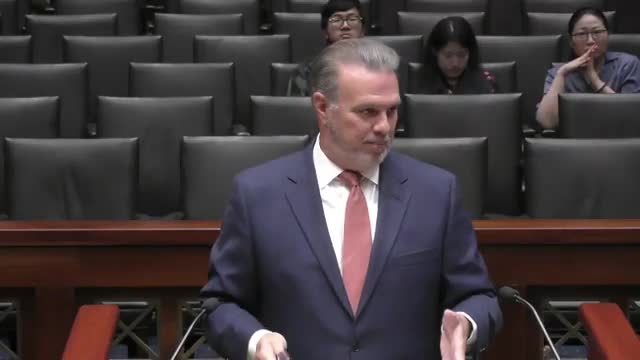
At oral argument before the Supreme Court of Texas, attorneys debated whether the $25,000,000 statutory cap on supersedeas bonds can be multiplied when there are multiple judgment debtors named in a single judgment. Miss Johnson, counsel for the relator Enric Greystar Development and Construction, told the court that the statute’s text, structure and purpose show the cap applies per judgment rather than per defendant: “The issue in this case is whether the $25,000,000 statutory cap on supercedious bonds can be multiplied when there are multiple judgment debtors and a massive judgment?”
Why it matters: The court’s interpretation will determine how much security defendants must post to suspend enforcement of large money judgments while appealing, affecting collection efforts, settlement pressure and the practical ability of corporate defendants to pursue appellate review.
Counsel for the relator argued the statutory definition of “security” and the cross-reference structure in chapter 52 of the Texas Civil Practice and Remedies Code foreclose what the relator called “cap stacking.” Miss Johnson said the statutory language ties security to “a judgment” and that the legislature’s chosen $25,000,000 cap reflects a deliberate balance favoring the right to appeal over full immediate recovery of massive awards. She noted practical consequences in the present litigation, saying creditors pursued remedy efforts beyond the named debtors, including domesticating judgments in Delaware and discovery directed at nonparties.
Mr. Henry, counsel for the real party in interest, urged a different reading, arguing that importing the statutory definition of “security” leads naturally to a per-judgment-debtor application. He used a colloquial analogy to press his point: “It is $5 for the person standing there trying to get into the ballgame, not all the fans in the world.” Henry said other statutory protections—net-worth limits, a trial-court ability to reduce security when posting it would cause substantial economic harm, and injunctive remedies to prevent asset dissipation—operate at the individual-debtor level and support interpreting the cap as tied to each judgment debtor.
Justices pressed both sides on practical hypotheticals. Several justices queried whether joint or joint-and-several liability should change the analysis; whether a single joint bond could satisfy multiple debtors; whether trial courts and appellate courts must allow time to cure an inadequate bond; and how the statute’s focus on “a judgment” should be read in multi-defendant cases. Counsel agreed joint bonds are possible in practice, but disputed whether the statute limits total security to $25,000,000 for an entire judgment or allows multiple $25,000,000 bonds up to the amount each debtor owes.
Transcript excerpts show the case involves what counsel described as very large awards—relator’s counsel referenced a “nuclear verdict” of $360,000,000 in non-economic damages and other speakers referenced multi-hundred-million-dollar verdicts—facts the justices used to examine the real-world consequences of either interpretation. Counsel for the relator emphasized that if the cap were multiplied simply by the number of defendants, plaintiffs could obtain far larger secured amounts than the legislature’s cap intended; counsel for the real party said limiting security to only one $25,000,000 bond could leave creditors undersecured when only some defendants prevail on appeal.
No decision was announced. At the end of argument the court took the case under submission.
The record of today’s argument centers on statutory interpretation (Chapter 52 of the Texas Civil Practice and Remedies Code), the Rules of Appellate Procedure cited by counsel (Rule 24.3 and Rule 24.4), and earlier Texas decisions the parties discussed, including Longview and cases identified by counsel as Fortune, Jackson Walker, and Sun Holdings v. Stockton. The court’s forthcoming opinion will determine whether the $25,000,000 cap operates as a ceiling per final money judgment or can be multiplied across multiple judgment debtors.
The case is submitted and will be decided by written opinion from the Supreme Court of Texas.
Why it matters: The court’s interpretation will determine how much security defendants must post to suspend enforcement of large money judgments while appealing, affecting collection efforts, settlement pressure and the practical ability of corporate defendants to pursue appellate review.
Counsel for the relator argued the statutory definition of “security” and the cross-reference structure in chapter 52 of the Texas Civil Practice and Remedies Code foreclose what the relator called “cap stacking.” Miss Johnson said the statutory language ties security to “a judgment” and that the legislature’s chosen $25,000,000 cap reflects a deliberate balance favoring the right to appeal over full immediate recovery of massive awards. She noted practical consequences in the present litigation, saying creditors pursued remedy efforts beyond the named debtors, including domesticating judgments in Delaware and discovery directed at nonparties.
Mr. Henry, counsel for the real party in interest, urged a different reading, arguing that importing the statutory definition of “security” leads naturally to a per-judgment-debtor application. He used a colloquial analogy to press his point: “It is $5 for the person standing there trying to get into the ballgame, not all the fans in the world.” Henry said other statutory protections—net-worth limits, a trial-court ability to reduce security when posting it would cause substantial economic harm, and injunctive remedies to prevent asset dissipation—operate at the individual-debtor level and support interpreting the cap as tied to each judgment debtor.
Justices pressed both sides on practical hypotheticals. Several justices queried whether joint or joint-and-several liability should change the analysis; whether a single joint bond could satisfy multiple debtors; whether trial courts and appellate courts must allow time to cure an inadequate bond; and how the statute’s focus on “a judgment” should be read in multi-defendant cases. Counsel agreed joint bonds are possible in practice, but disputed whether the statute limits total security to $25,000,000 for an entire judgment or allows multiple $25,000,000 bonds up to the amount each debtor owes.
Transcript excerpts show the case involves what counsel described as very large awards—relator’s counsel referenced a “nuclear verdict” of $360,000,000 in non-economic damages and other speakers referenced multi-hundred-million-dollar verdicts—facts the justices used to examine the real-world consequences of either interpretation. Counsel for the relator emphasized that if the cap were multiplied simply by the number of defendants, plaintiffs could obtain far larger secured amounts than the legislature’s cap intended; counsel for the real party said limiting security to only one $25,000,000 bond could leave creditors undersecured when only some defendants prevail on appeal.
No decision was announced. At the end of argument the court took the case under submission.
The record of today’s argument centers on statutory interpretation (Chapter 52 of the Texas Civil Practice and Remedies Code), the Rules of Appellate Procedure cited by counsel (Rule 24.3 and Rule 24.4), and earlier Texas decisions the parties discussed, including Longview and cases identified by counsel as Fortune, Jackson Walker, and Sun Holdings v. Stockton. The court’s forthcoming opinion will determine whether the $25,000,000 cap operates as a ceiling per final money judgment or can be multiplied across multiple judgment debtors.
The case is submitted and will be decided by written opinion from the Supreme Court of Texas.
Don't Miss a Word: See the Full Meeting!
Go beyond summaries. Unlock every video, transcript, and key insight with a Founder Membership.
✓
Get instant access to full meeting videos
✓
Search and clip any phrase from complete transcripts
✓
Receive AI-powered summaries & custom alerts
✓
Enjoy lifetime, unrestricted access to government data
30-day money-back guarantee
