Texas Supreme Court hears whether DFPS ‘abandoned’ bid to terminate mother’s parental rights
September 11, 2025 | Supreme Court of Texas, Judicial, Texas
This article was created by AI summarizing key points discussed. AI makes mistakes, so for full details and context, please refer to the video of the full meeting. Please report any errors so we can fix them. Report an error »
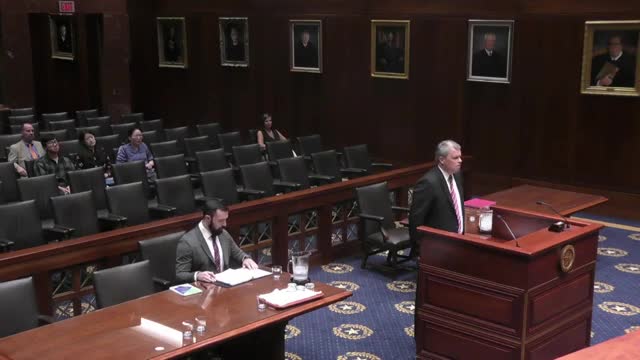
The Supreme Court of Texas heard argument in case number 240840D over whether the Texas Department of Family and Protective Services abandoned its cause of action to terminate a respondent mother’s parental rights after a DFPS caseworker testified at trial that the department was not seeking termination.
At the hearing, Mister Rowans, counsel for the petitioner, told the court: “The issue this morning in this case is whether or not the Texas Department of Family and Protective Services abandoned its cause of action to terminate respondent mother's parental rights.” Rowans argued that the department’s designated representative testified it was not seeking termination and that courts of appeals have treated similar testimony as abandonment in multiple recent decisions.
The question matters because abandonment can remove the legal basis for a termination judgment even when termination appears in the department’s written pleadings. Rowans asked the court to reverse the court of appeals and render judgment naming the respondent mother as a parent nonconservator — the lesser remedy the parties and some trial testimony discussed — because, he said, “the termination judgment was not supported by the pleadings.”
Mister Plemons, counsel for the respondent, countered that the record contains evidence the department continued to present termination evidence after the caseworker’s testimony and that, in any event, the issue was tried by consent. Plemons argued the caseworker did not have the authority to unilaterally abandon a claim the department continued to litigate and noted that written pleadings before and after trial continued to seek termination.
Justices asked multiple factual and doctrinal questions: whether DFPS’s routine practice of pleading termination in initial petitions should affect the abandonment analysis; whether a caseworker designated as a corporate representative has authority to bind the State on pleadings; and whether a clarifying statement from the department’s lawyer during trial would have cured any perceived abandonment. One justice observed that clear, unambiguous statements would avoid the recurring appellate disputes that arise when caseworkers and attorneys do not squarely state the department’s position at trial.
Counsel for the petitioner pointed to multiple courts of appeals decisions from Amarillo (2020), San Antonio (2021), Fort Worth (2022) and the First Court of Appeals in Houston (2023) in which appellate courts found abandonment where the department’s trial conduct was unambiguous. Counsel for the respondent emphasized precedent holding that certain government employees lack authority to bind the State in ways that would irrevocably abandon claims.
Both sides acknowledged policy concerns. Several justices noted the seriousness of terminating parental rights — repeatedly described in argument as the “civil death penalty” — and asked whether a rule requiring explicit clarity from the State at trial would be administrable and fair. Counsel for the respondent said a clarifying rule would be “very helpful,” but argued that even if the court adopts clearer guardrails going forward, this case should be resolved on the record because the issue was tried by consent or because the evidence supports termination.
The court took the case under submission after argument. No final ruling was announced from the bench at the hearing.
The argument focused narrowly on procedural and evidentiary questions about (1) whether testimony by a DFPS designated representative that the department was not seeking termination can be treated as an abandonment of the termination claim, and (2) whether the later presentation of evidence supporting termination or the department’s written pleadings can revive or preserve a termination claim despite such testimony.
At the hearing, Mister Rowans, counsel for the petitioner, told the court: “The issue this morning in this case is whether or not the Texas Department of Family and Protective Services abandoned its cause of action to terminate respondent mother's parental rights.” Rowans argued that the department’s designated representative testified it was not seeking termination and that courts of appeals have treated similar testimony as abandonment in multiple recent decisions.
The question matters because abandonment can remove the legal basis for a termination judgment even when termination appears in the department’s written pleadings. Rowans asked the court to reverse the court of appeals and render judgment naming the respondent mother as a parent nonconservator — the lesser remedy the parties and some trial testimony discussed — because, he said, “the termination judgment was not supported by the pleadings.”
Mister Plemons, counsel for the respondent, countered that the record contains evidence the department continued to present termination evidence after the caseworker’s testimony and that, in any event, the issue was tried by consent. Plemons argued the caseworker did not have the authority to unilaterally abandon a claim the department continued to litigate and noted that written pleadings before and after trial continued to seek termination.
Justices asked multiple factual and doctrinal questions: whether DFPS’s routine practice of pleading termination in initial petitions should affect the abandonment analysis; whether a caseworker designated as a corporate representative has authority to bind the State on pleadings; and whether a clarifying statement from the department’s lawyer during trial would have cured any perceived abandonment. One justice observed that clear, unambiguous statements would avoid the recurring appellate disputes that arise when caseworkers and attorneys do not squarely state the department’s position at trial.
Counsel for the petitioner pointed to multiple courts of appeals decisions from Amarillo (2020), San Antonio (2021), Fort Worth (2022) and the First Court of Appeals in Houston (2023) in which appellate courts found abandonment where the department’s trial conduct was unambiguous. Counsel for the respondent emphasized precedent holding that certain government employees lack authority to bind the State in ways that would irrevocably abandon claims.
Both sides acknowledged policy concerns. Several justices noted the seriousness of terminating parental rights — repeatedly described in argument as the “civil death penalty” — and asked whether a rule requiring explicit clarity from the State at trial would be administrable and fair. Counsel for the respondent said a clarifying rule would be “very helpful,” but argued that even if the court adopts clearer guardrails going forward, this case should be resolved on the record because the issue was tried by consent or because the evidence supports termination.
The court took the case under submission after argument. No final ruling was announced from the bench at the hearing.
The argument focused narrowly on procedural and evidentiary questions about (1) whether testimony by a DFPS designated representative that the department was not seeking termination can be treated as an abandonment of the termination claim, and (2) whether the later presentation of evidence supporting termination or the department’s written pleadings can revive or preserve a termination claim despite such testimony.
View the Full Meeting & All Its Details
This article offers just a summary. Unlock complete video, transcripts, and insights as a Founder Member.
✓
Watch full, unedited meeting videos
✓
Search every word spoken in unlimited transcripts
✓
AI summaries & real-time alerts (all government levels)
✓
Permanent access to expanding government content
30-day money-back guarantee
