Council opens discussion on limiting turf for new construction amid water constraints; refers matter to Water Board
August 15, 2025 | Parowan City Council, Parowan City Council, Parowan , Iron County, Utah
This article was created by AI summarizing key points discussed. AI makes mistakes, so for full details and context, please refer to the video of the full meeting. Please report any errors so we can fix them. Report an error »
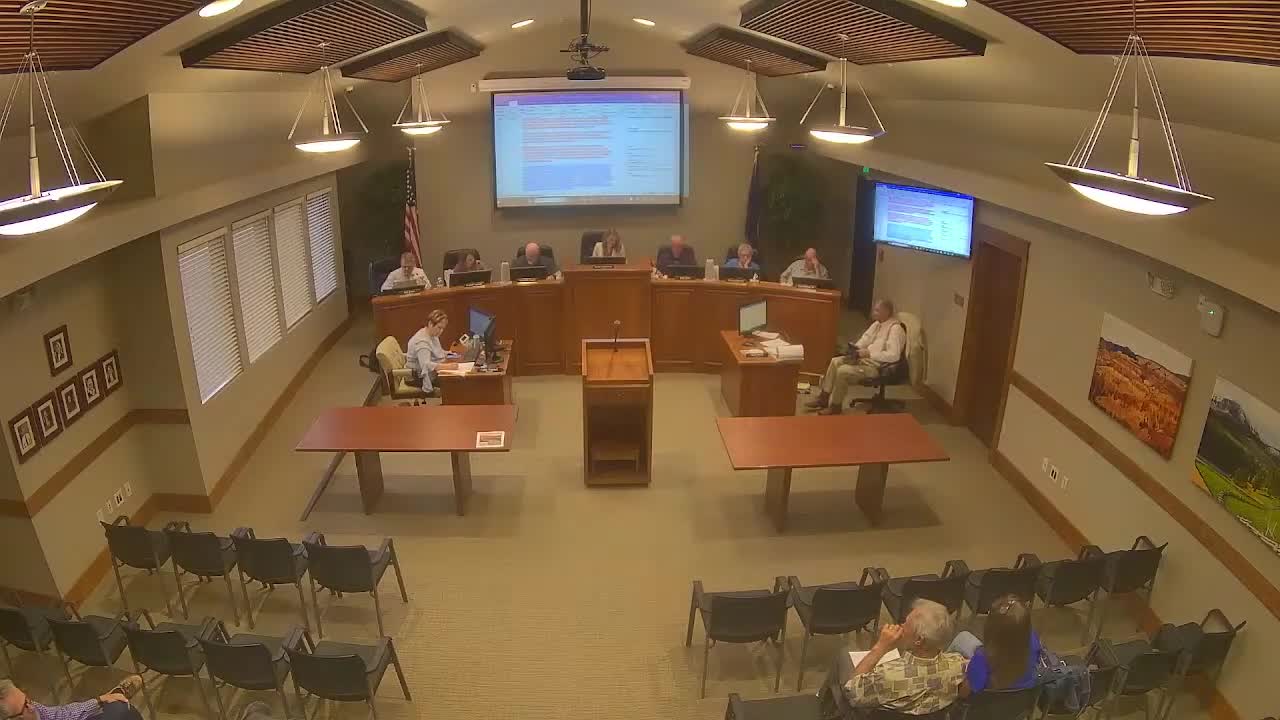
The Parowan City Council opened a policy discussion Aug. 14 on whether to limit turf (lawn) area in new construction to reduce water demand. Council Member Sharon Downey, who brought the item, argued the city should consider controls on lawn square footage for new builds to protect local water resources; other council members said they preferred incentives or rate‑based approaches and asked the Water Board to study options.
Why it matters: Parowan lies in a semi‑arid region where municipal and pressurized‑irrigation supplies are constrained. New residential development increases demand for potable and irrigation water; council members framed the debate as balancing property rights with long‑term water stewardship.
Key discussion points
- Proposal scope: Downey suggested restrictions would apply only to new construction — not existing yards — and recommended setting a maximum turf area tied to lot or driveway size. The council previously considered a state program and an optional turf‑buyback program but did not adopt binding limits for all new development.
- Alternatives discussed: Council Member Dan (city manager) and others suggested rate structures and voluntary opt‑in conservation tiers (e.g., a lower‑use pricing tier) as a way to incentivize reduced outdoor watering. Several members noted state law already offers model restrictions and buyback programs; one councilor referenced a typical policy that limits turf to 50% of landscaping area for new residential developments and bans turf in narrow strips or parking islands.
- Enforcement and equity: Council members raised implementation questions (how to measure turf areas, how to distinguish front yards from back yards, and how to treat planned open space or community parks). No ordinance language was proposed; the council instead asked the Water Board to analyze the options and return with recommendations.
Next steps
The council asked the Water Board to evaluate a menu of options — including a new‑construction turf limit, voluntary buyback incentives, and conservation‑focused rate tiers — and to return with a recommendation so the council can decide whether to pursue code changes or rely on pricing and voluntary programs.
Quote
“I just feel that we need to address it now because we are getting… we are not getting a lot of water,” Council Member Sharon Downey said, urging a proactive approach for new development.
Ending
The item remains in study: council asked the Water Board to take the lead on technical analysis and policy options and to return with findings and recommended implementation paths.
Why it matters: Parowan lies in a semi‑arid region where municipal and pressurized‑irrigation supplies are constrained. New residential development increases demand for potable and irrigation water; council members framed the debate as balancing property rights with long‑term water stewardship.
Key discussion points
- Proposal scope: Downey suggested restrictions would apply only to new construction — not existing yards — and recommended setting a maximum turf area tied to lot or driveway size. The council previously considered a state program and an optional turf‑buyback program but did not adopt binding limits for all new development.
- Alternatives discussed: Council Member Dan (city manager) and others suggested rate structures and voluntary opt‑in conservation tiers (e.g., a lower‑use pricing tier) as a way to incentivize reduced outdoor watering. Several members noted state law already offers model restrictions and buyback programs; one councilor referenced a typical policy that limits turf to 50% of landscaping area for new residential developments and bans turf in narrow strips or parking islands.
- Enforcement and equity: Council members raised implementation questions (how to measure turf areas, how to distinguish front yards from back yards, and how to treat planned open space or community parks). No ordinance language was proposed; the council instead asked the Water Board to analyze the options and return with recommendations.
Next steps
The council asked the Water Board to evaluate a menu of options — including a new‑construction turf limit, voluntary buyback incentives, and conservation‑focused rate tiers — and to return with a recommendation so the council can decide whether to pursue code changes or rely on pricing and voluntary programs.
Quote
“I just feel that we need to address it now because we are getting… we are not getting a lot of water,” Council Member Sharon Downey said, urging a proactive approach for new development.
Ending
The item remains in study: council asked the Water Board to take the lead on technical analysis and policy options and to return with findings and recommended implementation paths.
View the Full Meeting & All Its Details
This article offers just a summary. Unlock complete video, transcripts, and insights as a Founder Member.
✓
Watch full, unedited meeting videos
✓
Search every word spoken in unlimited transcripts
✓
AI summaries & real-time alerts (all government levels)
✓
Permanent access to expanding government content
30-day money-back guarantee
