APS board accepts monitoring report on postsecondary readiness, advances 'Academies of Albuquerque' pilot
August 21, 2025 | ALBUQUERQUE PUBLIC SCHOOLS, School Districts, New Mexico
This article was created by AI summarizing key points discussed. AI makes mistakes, so for full details and context, please refer to the video of the full meeting. Please report any errors so we can fix them. Report an error »
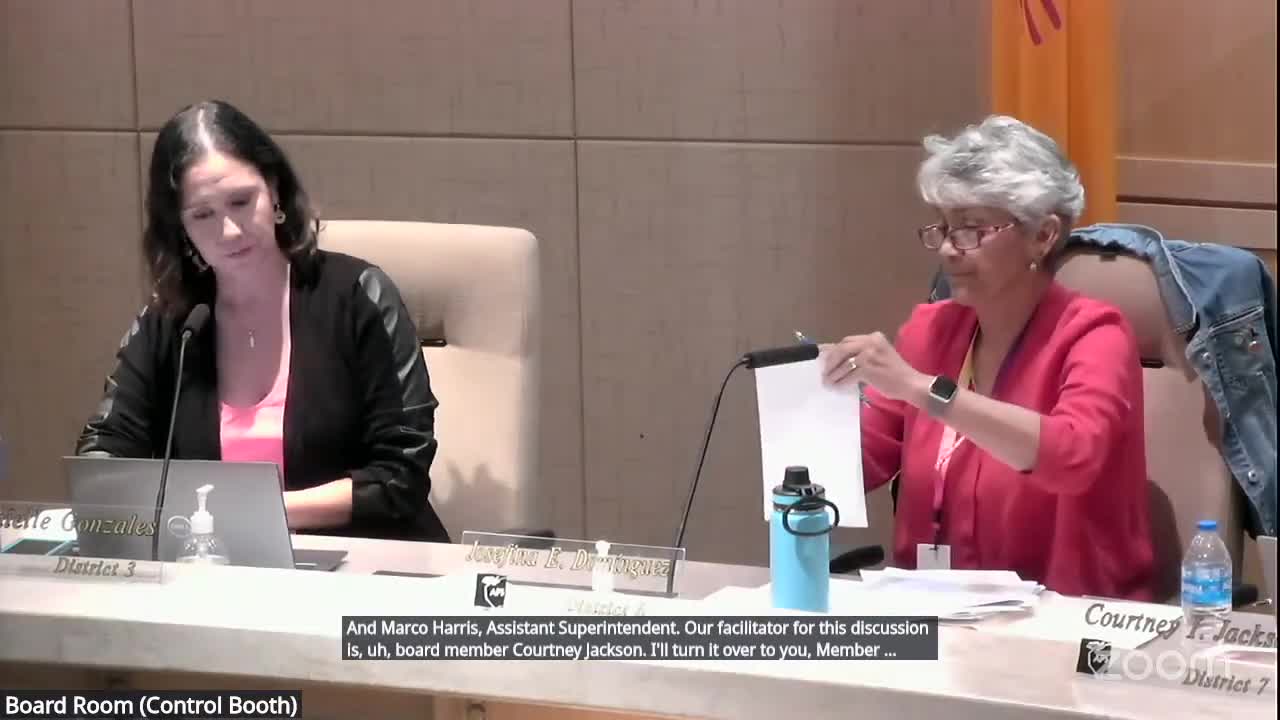
ALBUQUERQUE — The Albuquerque Public Schools Board of Education on Aug. 20 voted to accept the superintendent’s progress monitoring report on Goal 3, postsecondary readiness, endorsing a district plan that centers freshman academies, a student-success “early warning” system and stronger industry and community partnerships.
The vote came after a two-hour discussion with district staff that examined how the Academies of Albuquerque pilot — now operating at Manzano, Cibola and Highland high schools — will be sequenced and scaled across the district. Board member Courtney Jackson moved to accept the report; Josefina Domínguez seconded. A roll-call vote recorded unanimous approval.
The monitoring report describes multiple changes the administration says distinguish current efforts from a year ago: creation of dedicated student-success systems (an evolution of early-warning approaches), new staffing in priority schools including a student-success systems resource teacher, and districtwide changes to how students preregister for classes so planners know demand for AP, IB, dual-credit and CTE courses.
“Once the academies are determined and each school develops their pathways, there will be CTE opportunities for kids to take 1, 2, 3 completer classes that can ensure a student walks out with an industry certification,” said Marco Harris, assistant superintendent, describing course sequencing that the district says will combine CTE, advanced coursework and work-based learning.
Deputy Superintendent Dr. Antonio Gonzalez and Dr. Mellerwein, the district’s deputy superintendent of teaching and learning, told the board the academies’ pathways will include AP, IB, dual-enrollment and industry certificates and that district-level changes — including the recent legislative credit overhaul — have created room in student schedules to take those courses.
Board members and staff flagged equity, access and implementation questions throughout the discussion. Several board members pressed the administration for specifics on how the district will track ninth graders, support students with disabilities, and ensure students in non‑academy high schools can access the same opportunities while the pilot scales.
“We are creating a system,” Dr. Blakey said, framing academies as a districtwide approach rather than isolated school programs. She highlighted student-success systems that look weekly at attendance, grades and discipline and then mobilize supports with community partners.
Staff identified three recurring barriers to student access: scheduling and course placement limits, lack of student awareness of credential opportunities, and costs for exams and certifications. The district said it expects to address those within the academies model by using partners, internal funds and targeted coaching for principals and counselors.
Rodney Prunty, president and CEO of United Way of North Central New Mexico — a public forum speaker earlier in the meeting who said United Way will partner on the academies — told the board during public comment that the organization will convene businesses, nonprofits and higher-education partners to help scale work-based learning and internships.
The board’s acceptance of the monitoring report was procedural: Jackson explained accepting the report affirmed that board members had a satisfactory conversation with the superintendent, that the data aligned with the board’s vision and that a sufficient strategy and plan exist to cause growth toward the goal.
Next steps the administration described include continued piloting at the initial academies, monthly school-level data reviews to identify problems of practice, coordinated 90-day plans for principals, and convening community partners to expand internship and certification capacity. The board also directed staff to continue refining transition plans and to provide more disaggregated data on groups with lower outcomes, including students with disabilities, English-language learners and Native students.
Board action — motion and vote: Courtney Jackson moved to accept the Goal 3 progress monitoring report; Josefina Domínguez seconded. Roll-call recorded all board members voting yes; motion approved.
The board will review implementation progress at future meetings and the district said it will return with data on freshman academy tracking, expansion plans and the specific supports being deployed to address access for students with disabilities and other historically underserved groups.
The vote came after a two-hour discussion with district staff that examined how the Academies of Albuquerque pilot — now operating at Manzano, Cibola and Highland high schools — will be sequenced and scaled across the district. Board member Courtney Jackson moved to accept the report; Josefina Domínguez seconded. A roll-call vote recorded unanimous approval.
The monitoring report describes multiple changes the administration says distinguish current efforts from a year ago: creation of dedicated student-success systems (an evolution of early-warning approaches), new staffing in priority schools including a student-success systems resource teacher, and districtwide changes to how students preregister for classes so planners know demand for AP, IB, dual-credit and CTE courses.
“Once the academies are determined and each school develops their pathways, there will be CTE opportunities for kids to take 1, 2, 3 completer classes that can ensure a student walks out with an industry certification,” said Marco Harris, assistant superintendent, describing course sequencing that the district says will combine CTE, advanced coursework and work-based learning.
Deputy Superintendent Dr. Antonio Gonzalez and Dr. Mellerwein, the district’s deputy superintendent of teaching and learning, told the board the academies’ pathways will include AP, IB, dual-enrollment and industry certificates and that district-level changes — including the recent legislative credit overhaul — have created room in student schedules to take those courses.
Board members and staff flagged equity, access and implementation questions throughout the discussion. Several board members pressed the administration for specifics on how the district will track ninth graders, support students with disabilities, and ensure students in non‑academy high schools can access the same opportunities while the pilot scales.
“We are creating a system,” Dr. Blakey said, framing academies as a districtwide approach rather than isolated school programs. She highlighted student-success systems that look weekly at attendance, grades and discipline and then mobilize supports with community partners.
Staff identified three recurring barriers to student access: scheduling and course placement limits, lack of student awareness of credential opportunities, and costs for exams and certifications. The district said it expects to address those within the academies model by using partners, internal funds and targeted coaching for principals and counselors.
Rodney Prunty, president and CEO of United Way of North Central New Mexico — a public forum speaker earlier in the meeting who said United Way will partner on the academies — told the board during public comment that the organization will convene businesses, nonprofits and higher-education partners to help scale work-based learning and internships.
The board’s acceptance of the monitoring report was procedural: Jackson explained accepting the report affirmed that board members had a satisfactory conversation with the superintendent, that the data aligned with the board’s vision and that a sufficient strategy and plan exist to cause growth toward the goal.
Next steps the administration described include continued piloting at the initial academies, monthly school-level data reviews to identify problems of practice, coordinated 90-day plans for principals, and convening community partners to expand internship and certification capacity. The board also directed staff to continue refining transition plans and to provide more disaggregated data on groups with lower outcomes, including students with disabilities, English-language learners and Native students.
Board action — motion and vote: Courtney Jackson moved to accept the Goal 3 progress monitoring report; Josefina Domínguez seconded. Roll-call recorded all board members voting yes; motion approved.
The board will review implementation progress at future meetings and the district said it will return with data on freshman academy tracking, expansion plans and the specific supports being deployed to address access for students with disabilities and other historically underserved groups.
Don't Miss a Word: See the Full Meeting!
Go beyond summaries. Unlock every video, transcript, and key insight with a Founder Membership.
✓
Get instant access to full meeting videos
✓
Search and clip any phrase from complete transcripts
✓
Receive AI-powered summaries & custom alerts
✓
Enjoy lifetime, unrestricted access to government data
30-day money-back guarantee
