Gloucester planning staff outlines comprehensive plan update; county to start public surveys on rural character, housing and infrastructure
August 21, 2025 | Gloucester County, Virginia
This article was created by AI summarizing key points discussed. AI makes mistakes, so for full details and context, please refer to the video of the full meeting. Please report any errors so we can fix them. Report an error »
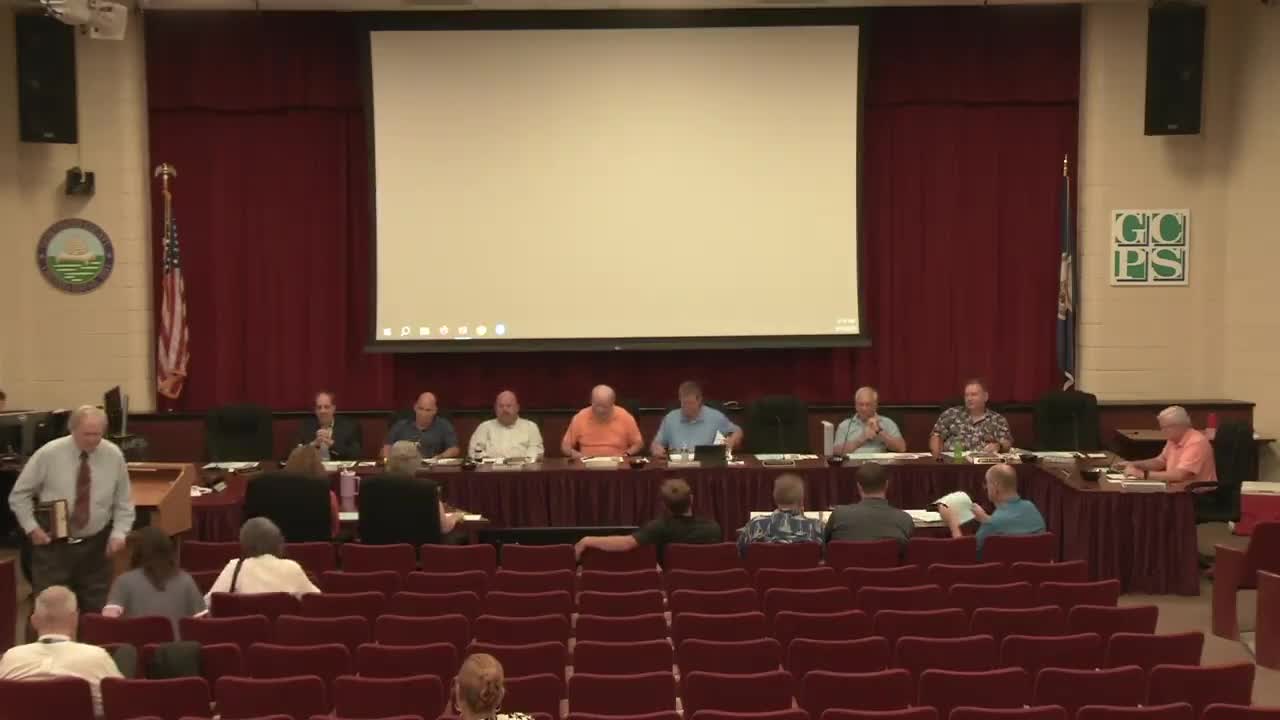
Gloucester County planning staff presented results of a summer review of the county's comprehensive plan and recommended a sequence of updates, public engagement and data work aimed at informing a revised draft to be considered in 2026. "We are recapping the comprehensive plan, discussion and review that was conducted over the summer," said Sean McNash, planning department staff, as he summarized methodology, findings and next steps at the joint meeting of the Gloucester County Board of Supervisors and the Planning Commission.
The planning department told the board that roughly three-quarters of the plan's text sections are governed by state code and that about 75% of text sections and nearly all tables and maps will need revision. McNash said the review identified a set of "low-hanging fruit" (demographic updates, outdated appendices and maps) to be completed in the next six months, followed by broader public engagement and policy decisions on land use, infrastructure and new guidance for energy and technology uses.
Why it matters: the comprehensive plan guides zoning, sewer and water extensions, school and parks planning, and capital projects. Several supervisors and staff said the removal of tolls on the Coleman Bridge will change growth pressures and that the plan should analyze those impacts. "We as a county must decide that an ordinance must be passed to forever block any and all future tolling of the Coleman Bridge and adjoining roads," said Carl Lindsey, a Gloucester resident who spoke during public comment. Planning staff said the plan will include narrative and data on potential impacts from the toll removal but that the level of detail depends on the time taken to finish the update.
Key findings and proposed revisions
- Methodology: staff reviewed the entire 2016 plan section by section, categorizing text as (a) required by state code or not and (b) requires update, remove or no change. McNash said many demographic tables and all maps need updating, and that some text sections can be removed if their requirements are met elsewhere in the plan.
- Land use and maps: staff proposed consolidating about 22 existing land-use categories into fewer, more readable existing-conditions categories while keeping a more detailed set of future-land-use categories to evaluate individually. The department recommended reevaluating the development-district boundary (where water, sewer and higher density are expected), and individually reassessing rural service centers and village development areas along Route 17.
- New text and appendices: staff recommended adding introductions to goal/objective/implementation sections for each chapter, moving planning-history material into a new appendix, removing outdated appendices (B'I) and creating new appendices for any surveys performed in this process.
- Special areas and topics: staff suggested adding state and federal parks as special-area considerations, more detailed prime-farmland mapping, century-farm information, and a new housing demographics table showing age-distribution changes over time.
Infrastructure, capacity and technical work
Planning staff and county administration described near-term technical work that will feed into the plan.
- Water and sewer: county staff described a near-term analysis of public water capacity that bubbles out service areas (roughly a 1,500-foot buffer was mentioned for initial analysis) and projects supply and demand over a 15-year outlook. County staff said the study will account for commercial growth trends, approved but undeveloped projects that have rights to service, planned improvements in the 10-year CIP, and potential reductions in treated-water loss; a preliminary result was expected within two to three weeks. The county noted that sewer capacity is a separate issue largely tied to Hampton Roads Sanitation District (HRSD) participation and funding decisions.
- Schools: Gloucester County Public Schools told staff that the capacity figures currently used in the plan are likely overstated; McNash said the county will coordinate with the school division to produce more accurate academic- and building-capacity numbers.
Affordable housing and rural character
Board members and the planning commission discussed how to define "affordable housing" for Gloucester. McNash said state code gives a statutory definition, but the planning commission and steering committee want a local definition that reflects who the county wants to serve (for example, entry-level workers and young families) rather than relying only on broad percent-of-median thresholds. Supervisor Steele asked about accepted definitions tied to grants and USDA rural definitions; staff noted USDA defines rural as places with population under 50,000, and that federal or state definitions could affect grant eligibility and should be described in the plan.
Staff also proposed a public engagement exercise to define "rural character" visually and geographically, with tailored survey questions for different parts of the county. McNash said the exercise would use mapping and images so residents can show what they mean by rural in different places (the courthouse village, Gloucester Point, the north county).
Working waterfront, aquaculture and other special topics
Planning staff said an intern's working-waterfront study included interviews and a 99-response survey and will inform further public outreach. The staff noted aquaculture is part of the working-waterfront recommendations and that implementation could include localized overlays or small-area approaches where industry exists (for example, Jarvis Street/Mobjack Seafood area) rather than county-wide rezoning.
Public engagement and schedule
Staff recommended starting an initial rural-character survey now, determining format and timing for vision-statement and parks-and-recreation surveys, updating demographic and GIS data over the next six months, and reporting progress to the planning commission and steering committee at October and December meetings. The planning commission and board discussed holding community meetings in 2026 after preliminary survey results are available. The board also asked staff to return with a suggested due date for a draft revised comprehensive plan at the January meeting to establish a timetable for completion.
Formal action and next administrative steps
The Board of Supervisors voted to hold the planning commission's remaining 2025 meetings at T.C. Walker to accommodate joint steering-committee meetings and larger public engagement sessions. Staff was directed to proceed with the technical updates described as "low-hanging fruit," begin the rural-character survey design, coordinate with Parks & Recreation and the school division on updated facility surveys and capacity figures, and return with a status update early next year.
What was not decided
No policy text changes were adopted at this meeting; major policy decisions (development-district boundary changes, specific affordable-housing targets, or mapping of proposed projects) remain for future deliberation after public input and technical updates.
Ending note
Planning staff said the department has preliminary mapping and table work underway and that members of the steering committee and planning commission will meet with staff in October and December to review progress. The board and commission signaled that questions about the Coleman Bridge toll removal, water/sewer capacity, school capacity and rural-character definitions will be priority topics as the county prepares a revised draft for public comment.
The planning department told the board that roughly three-quarters of the plan's text sections are governed by state code and that about 75% of text sections and nearly all tables and maps will need revision. McNash said the review identified a set of "low-hanging fruit" (demographic updates, outdated appendices and maps) to be completed in the next six months, followed by broader public engagement and policy decisions on land use, infrastructure and new guidance for energy and technology uses.
Why it matters: the comprehensive plan guides zoning, sewer and water extensions, school and parks planning, and capital projects. Several supervisors and staff said the removal of tolls on the Coleman Bridge will change growth pressures and that the plan should analyze those impacts. "We as a county must decide that an ordinance must be passed to forever block any and all future tolling of the Coleman Bridge and adjoining roads," said Carl Lindsey, a Gloucester resident who spoke during public comment. Planning staff said the plan will include narrative and data on potential impacts from the toll removal but that the level of detail depends on the time taken to finish the update.
Key findings and proposed revisions
- Methodology: staff reviewed the entire 2016 plan section by section, categorizing text as (a) required by state code or not and (b) requires update, remove or no change. McNash said many demographic tables and all maps need updating, and that some text sections can be removed if their requirements are met elsewhere in the plan.
- Land use and maps: staff proposed consolidating about 22 existing land-use categories into fewer, more readable existing-conditions categories while keeping a more detailed set of future-land-use categories to evaluate individually. The department recommended reevaluating the development-district boundary (where water, sewer and higher density are expected), and individually reassessing rural service centers and village development areas along Route 17.
- New text and appendices: staff recommended adding introductions to goal/objective/implementation sections for each chapter, moving planning-history material into a new appendix, removing outdated appendices (B'I) and creating new appendices for any surveys performed in this process.
- Special areas and topics: staff suggested adding state and federal parks as special-area considerations, more detailed prime-farmland mapping, century-farm information, and a new housing demographics table showing age-distribution changes over time.
Infrastructure, capacity and technical work
Planning staff and county administration described near-term technical work that will feed into the plan.
- Water and sewer: county staff described a near-term analysis of public water capacity that bubbles out service areas (roughly a 1,500-foot buffer was mentioned for initial analysis) and projects supply and demand over a 15-year outlook. County staff said the study will account for commercial growth trends, approved but undeveloped projects that have rights to service, planned improvements in the 10-year CIP, and potential reductions in treated-water loss; a preliminary result was expected within two to three weeks. The county noted that sewer capacity is a separate issue largely tied to Hampton Roads Sanitation District (HRSD) participation and funding decisions.
- Schools: Gloucester County Public Schools told staff that the capacity figures currently used in the plan are likely overstated; McNash said the county will coordinate with the school division to produce more accurate academic- and building-capacity numbers.
Affordable housing and rural character
Board members and the planning commission discussed how to define "affordable housing" for Gloucester. McNash said state code gives a statutory definition, but the planning commission and steering committee want a local definition that reflects who the county wants to serve (for example, entry-level workers and young families) rather than relying only on broad percent-of-median thresholds. Supervisor Steele asked about accepted definitions tied to grants and USDA rural definitions; staff noted USDA defines rural as places with population under 50,000, and that federal or state definitions could affect grant eligibility and should be described in the plan.
Staff also proposed a public engagement exercise to define "rural character" visually and geographically, with tailored survey questions for different parts of the county. McNash said the exercise would use mapping and images so residents can show what they mean by rural in different places (the courthouse village, Gloucester Point, the north county).
Working waterfront, aquaculture and other special topics
Planning staff said an intern's working-waterfront study included interviews and a 99-response survey and will inform further public outreach. The staff noted aquaculture is part of the working-waterfront recommendations and that implementation could include localized overlays or small-area approaches where industry exists (for example, Jarvis Street/Mobjack Seafood area) rather than county-wide rezoning.
Public engagement and schedule
Staff recommended starting an initial rural-character survey now, determining format and timing for vision-statement and parks-and-recreation surveys, updating demographic and GIS data over the next six months, and reporting progress to the planning commission and steering committee at October and December meetings. The planning commission and board discussed holding community meetings in 2026 after preliminary survey results are available. The board also asked staff to return with a suggested due date for a draft revised comprehensive plan at the January meeting to establish a timetable for completion.
Formal action and next administrative steps
The Board of Supervisors voted to hold the planning commission's remaining 2025 meetings at T.C. Walker to accommodate joint steering-committee meetings and larger public engagement sessions. Staff was directed to proceed with the technical updates described as "low-hanging fruit," begin the rural-character survey design, coordinate with Parks & Recreation and the school division on updated facility surveys and capacity figures, and return with a status update early next year.
What was not decided
No policy text changes were adopted at this meeting; major policy decisions (development-district boundary changes, specific affordable-housing targets, or mapping of proposed projects) remain for future deliberation after public input and technical updates.
Ending note
Planning staff said the department has preliminary mapping and table work underway and that members of the steering committee and planning commission will meet with staff in October and December to review progress. The board and commission signaled that questions about the Coleman Bridge toll removal, water/sewer capacity, school capacity and rural-character definitions will be priority topics as the county prepares a revised draft for public comment.
Don't Miss a Word: See the Full Meeting!
Go beyond summaries. Unlock every video, transcript, and key insight with a Founder Membership.
✓
Get instant access to full meeting videos
✓
Search and clip any phrase from complete transcripts
✓
Receive AI-powered summaries & custom alerts
✓
Enjoy lifetime, unrestricted access to government data
30-day money-back guarantee
