Norwalk council approves three charter questions for Nov. 4 ballot, finalizes language
August 20, 2025 | Norwalk City, Fairfield, Connecticut
This article was created by AI summarizing key points discussed. AI makes mistakes, so for full details and context, please refer to the video of the full meeting. Please report any errors so we can fix them. Report an error »
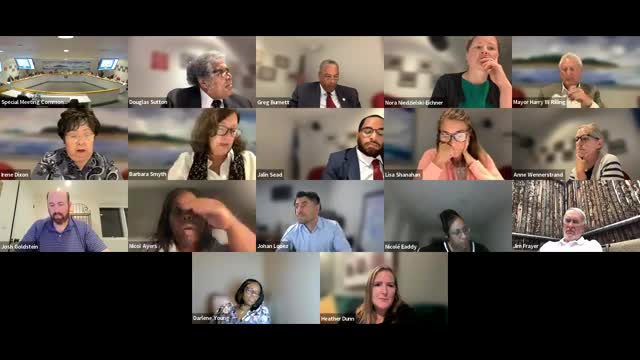
The Norwalk Common Council voted to place three separate charter referendum questions on the Nov. 4, 2025 ballot and approved the language to accompany them.
Attorney Mednick and council members discussed whether to present the charter changes as a single omnibus question, multiple questions or up to four questions. Concerns centered on ballot "real estate" (space available on a physical ballot), voter clarity, and the risk that bundling a contested item with broadly supported technical changes could cause voters to reject the entire package.
After debate, the council adopted a three-question structure and approved concise language for each item. As finalized by the council, the three questions read (summary):
1) Shall the charter be revised to permit separate expenditure caps on the general government and Board of Education; change the name of the Common Council to City Council; reduce petition requirements to facilitate public referenda; create a public applicant pool to publicize board and commission vacancies; and establish authority to expand the Board of Estimate and Taxation to include a member of the council as a non-voting ex officio member, as well as other revisions building on the 2023 charter revision?
2) Shall the charter be revised to create a four-year term for the mayor and town clerk beginning with the 2029 municipal election and for council members beginning with the 2031 municipal election?
3) Shall the charter be amended to provide each council member compensation equal to 3% of the mayor's budgeted salary effective following the 2029 municipal election (subject to state constitutional requirements)?
Council members asked the town clerk to prepare explanatory text and to publish the full charter and accompanying explanations as required under Connecticut law. The council approved the three-question approach by roll call and directed legal counsel and the town clerk to finalize any minor editorial changes before publication.
Council members said the goal was to balance clarity for voters with a faithful representation of substantive changes in the charter.
Attorney Mednick and council members discussed whether to present the charter changes as a single omnibus question, multiple questions or up to four questions. Concerns centered on ballot "real estate" (space available on a physical ballot), voter clarity, and the risk that bundling a contested item with broadly supported technical changes could cause voters to reject the entire package.
After debate, the council adopted a three-question structure and approved concise language for each item. As finalized by the council, the three questions read (summary):
1) Shall the charter be revised to permit separate expenditure caps on the general government and Board of Education; change the name of the Common Council to City Council; reduce petition requirements to facilitate public referenda; create a public applicant pool to publicize board and commission vacancies; and establish authority to expand the Board of Estimate and Taxation to include a member of the council as a non-voting ex officio member, as well as other revisions building on the 2023 charter revision?
2) Shall the charter be revised to create a four-year term for the mayor and town clerk beginning with the 2029 municipal election and for council members beginning with the 2031 municipal election?
3) Shall the charter be amended to provide each council member compensation equal to 3% of the mayor's budgeted salary effective following the 2029 municipal election (subject to state constitutional requirements)?
Council members asked the town clerk to prepare explanatory text and to publish the full charter and accompanying explanations as required under Connecticut law. The council approved the three-question approach by roll call and directed legal counsel and the town clerk to finalize any minor editorial changes before publication.
Council members said the goal was to balance clarity for voters with a faithful representation of substantive changes in the charter.
View the Full Meeting & All Its Details
This article offers just a summary. Unlock complete video, transcripts, and insights as a Founder Member.
✓
Watch full, unedited meeting videos
✓
Search every word spoken in unlimited transcripts
✓
AI summaries & real-time alerts (all government levels)
✓
Permanent access to expanding government content
30-day money-back guarantee
