Judge denies motion to quash torture indictment in case alleging repeated strikes to dog
August 27, 2025 | Judge Stephanie Boyd 187th District, District Court Judges, Judicial, Texas
This article was created by AI summarizing key points discussed. AI makes mistakes, so for full details and context, please refer to the video of the full meeting. Please report any errors so we can fix them. Report an error »
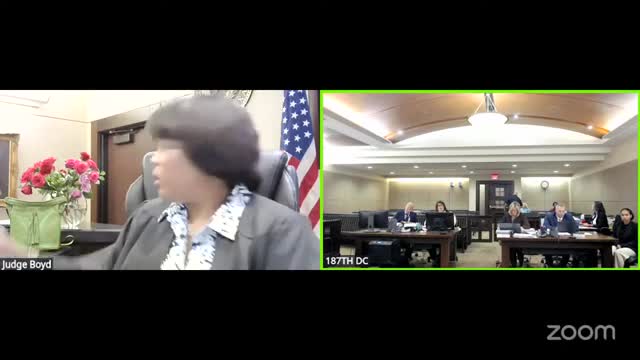
The court denied a defense motion to quash an indictment that charges Havana Dejanae Miller with torturing a dog, saying the indictment’s description of the alleged conduct provided sufficient notice and reserving factual disputes for a jury and later hearings.
Defense attorney Jody Sawyers argued the statutory language in chapter 42, section 42.092—particularly the provision criminalizing “torture” as “unjustifiable pain and suffering”—is overbroad and vague and could allow convictions where no bodily injury occurred. “This is so broad as to not give an ordinary citizen notice of what they’re being charged of,” Sawyers told the court. The defense also argued some parts of the statute permit conduct with the owner’s “effective consent” and that longstanding, socially accepted practices involving animals (for example, in racing or husbandry) show the statute lacks adequate limiting principles.
Assistant District Attorney Jason Gearingham told the court the indictment supplies the necessary particulars by linking the torture allegation to the alleged manner and means—“by repeatedly striking the animal”—and cited appellate authority that courts require such manner‑and‑means allegations to give notice. “Torture is any act that causes unjustifiable pain and suffering,” Gearingham said, arguing courts have sustained similar pleadings when the indictment identifies specific acts and the physical condition of the animal.
After hearing argument from both sides and reviewing the case law submitted, the judge ruled, “The motion to quash will be denied,” and left questions about the degree of harm, intent and factual sufficiency to the jury and evidentiary hearings.
The court resolved several related pretrial issues. It said there will be an out‑of‑presence hearing on any proposed expert testimony and a Daubert hearing set for Sept. 29 in the afternoon (the judge offered to set the Daubert hearing at about 1:30 p.m.). The court also directed the parties to confer and propose a juror screening question addressing whether prospective jurors have seen social‑media coverage or videos of the incident; the judge said she will ask that agreed question during voir dire. The judge also ruled there will be no admission of 404(b) evidence unless the state gives notice and ordered a hearing outside the presence of the jury if the state seeks to introduce evidence of the animal’s legal removal from the defendant’s custody.
Defense motions in limine remain pending: Sawyers asked for pretrial exclusion of references to social‑media commentary, argued that a late disclosure of an expert’s opinion (Dr. Gottbetter) requires an evidentiary hearing and objected to any testimony where a witness sees the dog 10 days after the event without showing continuity of custody. The court granted hearings outside the jury and required the state to disclose its expert subjects under the applicable rules before trial.
The court also addressed jury‑prejudice concerns after defense counsel noted widespread social‑media circulation of a video the defense said alleges 15–17 strikes and has led to threats. The judge directed the parties to draft a joint or agreed voir‑dire question about prior exposure to media about the incident; she said she does not know the facts of the case and will ask the agreed question to protect defendant’s right to a fair jury.
No formal penalties or final evidentiary rulings were entered at today’s hearing beyond the denial of the motion to quash and the scheduling orders. The court set the Daubert/expert hearing and instructed counsel to meet and submit the voir‑dire language before the parties leave the courthouse.
The issues now pending include the state’s proof of physical injury or pain to the animal, the admissibility and scope of expert testimony (and whether any testimony is admissible as lay versus expert opinion), and whether evidence of removal of the animal or extraneous acts will be admitted after appropriate hearings.
The case is scheduled for further pretrial hearings and, if not resolved, to proceed to jury selection following the Daubert hearing.
Defense attorney Jody Sawyers argued the statutory language in chapter 42, section 42.092—particularly the provision criminalizing “torture” as “unjustifiable pain and suffering”—is overbroad and vague and could allow convictions where no bodily injury occurred. “This is so broad as to not give an ordinary citizen notice of what they’re being charged of,” Sawyers told the court. The defense also argued some parts of the statute permit conduct with the owner’s “effective consent” and that longstanding, socially accepted practices involving animals (for example, in racing or husbandry) show the statute lacks adequate limiting principles.
Assistant District Attorney Jason Gearingham told the court the indictment supplies the necessary particulars by linking the torture allegation to the alleged manner and means—“by repeatedly striking the animal”—and cited appellate authority that courts require such manner‑and‑means allegations to give notice. “Torture is any act that causes unjustifiable pain and suffering,” Gearingham said, arguing courts have sustained similar pleadings when the indictment identifies specific acts and the physical condition of the animal.
After hearing argument from both sides and reviewing the case law submitted, the judge ruled, “The motion to quash will be denied,” and left questions about the degree of harm, intent and factual sufficiency to the jury and evidentiary hearings.
The court resolved several related pretrial issues. It said there will be an out‑of‑presence hearing on any proposed expert testimony and a Daubert hearing set for Sept. 29 in the afternoon (the judge offered to set the Daubert hearing at about 1:30 p.m.). The court also directed the parties to confer and propose a juror screening question addressing whether prospective jurors have seen social‑media coverage or videos of the incident; the judge said she will ask that agreed question during voir dire. The judge also ruled there will be no admission of 404(b) evidence unless the state gives notice and ordered a hearing outside the presence of the jury if the state seeks to introduce evidence of the animal’s legal removal from the defendant’s custody.
Defense motions in limine remain pending: Sawyers asked for pretrial exclusion of references to social‑media commentary, argued that a late disclosure of an expert’s opinion (Dr. Gottbetter) requires an evidentiary hearing and objected to any testimony where a witness sees the dog 10 days after the event without showing continuity of custody. The court granted hearings outside the jury and required the state to disclose its expert subjects under the applicable rules before trial.
The court also addressed jury‑prejudice concerns after defense counsel noted widespread social‑media circulation of a video the defense said alleges 15–17 strikes and has led to threats. The judge directed the parties to draft a joint or agreed voir‑dire question about prior exposure to media about the incident; she said she does not know the facts of the case and will ask the agreed question to protect defendant’s right to a fair jury.
No formal penalties or final evidentiary rulings were entered at today’s hearing beyond the denial of the motion to quash and the scheduling orders. The court set the Daubert/expert hearing and instructed counsel to meet and submit the voir‑dire language before the parties leave the courthouse.
The issues now pending include the state’s proof of physical injury or pain to the animal, the admissibility and scope of expert testimony (and whether any testimony is admissible as lay versus expert opinion), and whether evidence of removal of the animal or extraneous acts will be admitted after appropriate hearings.
The case is scheduled for further pretrial hearings and, if not resolved, to proceed to jury selection following the Daubert hearing.
View the Full Meeting & All Its Details
This article offers just a summary. Unlock complete video, transcripts, and insights as a Founder Member.
✓
Watch full, unedited meeting videos
✓
Search every word spoken in unlimited transcripts
✓
AI summaries & real-time alerts (all government levels)
✓
Permanent access to expanding government content
30-day money-back guarantee
