Pacific Grove trustees review governance handbook, complete book study and agree to clarify norm on personal beliefs
August 22, 2025 | Pacific Grove Unified, School Districts, California
This article was created by AI summarizing key points discussed. AI makes mistakes, so for full details and context, please refer to the video of the full meeting. Please report any errors so we can fix them. Report an error »
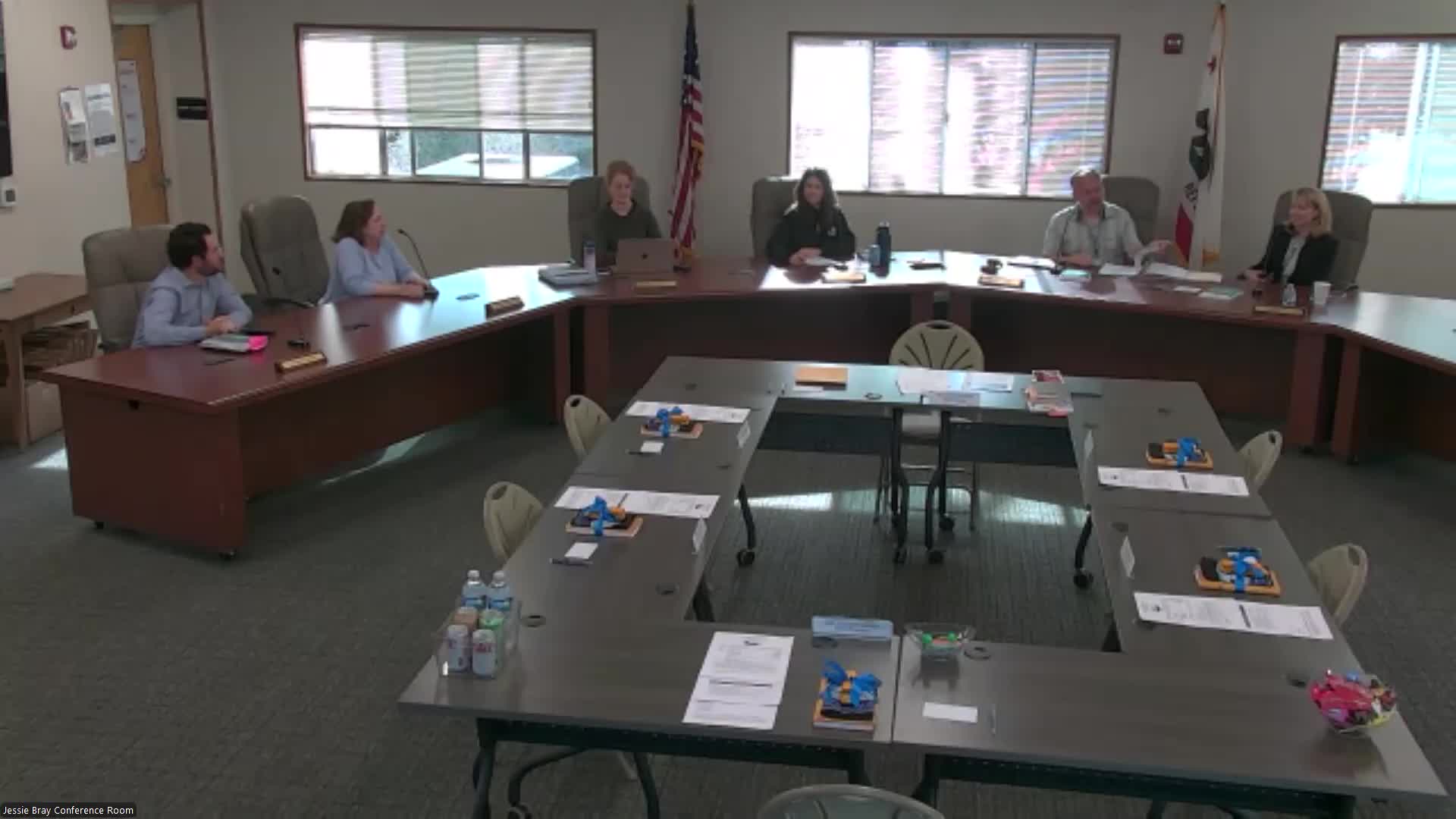
Pacific Grove Unified School District trustees spent a special meeting evening reviewing a governance handbook, completing a short book study and reaffirming their board norms, with one edit added to emphasize that personal beliefs should not override district priorities.
The meeting, convened by Board President Dr. Hazen and led in part by Superintendent Dr. Adamson, opened with a short study of The Energy Bus by John Gordon and a facilitated discussion about how trustees should "bring positive energy" to governance work. Dr. Adamson said, "I'm excited to be able to introduce this and have the time set aside this evening for governance." The board then read and discussed the six-norm governance handbook the board had adopted in a prior session and agreed to revisit the document as a standing agenda item at future governance meetings.
The change the board agreed to add reads: "We value our collective impact over individual interests or personal beliefs." Trustees debated the wording before adding it; some members said "beliefs" is clearer than "opinions" because an opinion can be informed and useful, while others said the addition should guard against bringing personal religious or political views into board decisions. No formal roll-call vote was recorded on that edit; the change was agreed to during the session and staff were directed to update the handbook language and supply printed copies for trustees' binders at the next meeting.
Members also discussed when abstentions are appropriate. A trustee asked whether abstentions are appropriate "when you feel you do not have enough information to make an informed decision," noting language in an external guide. Other trustees said they expect abstentions only for conflicts of interest and suggested the board consult legal counsel to clarify practice. The Brown Act was cited during the norms review as the governing open‑meetings law; trustees emphasized that handbook language and practice must stay consistent with that statute.
The board flagged additional governance items for follow-up: a formal board self-evaluation process (board members said the board policy calls for annual review), standard agendas that separate information and action items, and how to improve onboarding for new trustees. Trustees also noted a new state ethics training requirement discussed in the meeting; one member said a new ethics training rule takes effect January 2026 and recommended trustees use conference sessions or district-provided options to meet it.
Trustees closed the governance portion by reaffirming the handbook would be a living document. President Dr. Hazen said the handbook should be a regular governance agenda item so the board can "revisit them and remind ourselves of our commitment to each other." The board directed staff to place updated printed handbooks in trustees' meeting binders for the next regular meeting.
Ending: Trustees scheduled continuation of the book‑study and governance topics for future governance sessions and set the handbook as a recurring agenda item so the board can measure whether the handbook is guiding meeting practice and decisions.
The meeting, convened by Board President Dr. Hazen and led in part by Superintendent Dr. Adamson, opened with a short study of The Energy Bus by John Gordon and a facilitated discussion about how trustees should "bring positive energy" to governance work. Dr. Adamson said, "I'm excited to be able to introduce this and have the time set aside this evening for governance." The board then read and discussed the six-norm governance handbook the board had adopted in a prior session and agreed to revisit the document as a standing agenda item at future governance meetings.
The change the board agreed to add reads: "We value our collective impact over individual interests or personal beliefs." Trustees debated the wording before adding it; some members said "beliefs" is clearer than "opinions" because an opinion can be informed and useful, while others said the addition should guard against bringing personal religious or political views into board decisions. No formal roll-call vote was recorded on that edit; the change was agreed to during the session and staff were directed to update the handbook language and supply printed copies for trustees' binders at the next meeting.
Members also discussed when abstentions are appropriate. A trustee asked whether abstentions are appropriate "when you feel you do not have enough information to make an informed decision," noting language in an external guide. Other trustees said they expect abstentions only for conflicts of interest and suggested the board consult legal counsel to clarify practice. The Brown Act was cited during the norms review as the governing open‑meetings law; trustees emphasized that handbook language and practice must stay consistent with that statute.
The board flagged additional governance items for follow-up: a formal board self-evaluation process (board members said the board policy calls for annual review), standard agendas that separate information and action items, and how to improve onboarding for new trustees. Trustees also noted a new state ethics training requirement discussed in the meeting; one member said a new ethics training rule takes effect January 2026 and recommended trustees use conference sessions or district-provided options to meet it.
Trustees closed the governance portion by reaffirming the handbook would be a living document. President Dr. Hazen said the handbook should be a regular governance agenda item so the board can "revisit them and remind ourselves of our commitment to each other." The board directed staff to place updated printed handbooks in trustees' meeting binders for the next regular meeting.
Ending: Trustees scheduled continuation of the book‑study and governance topics for future governance sessions and set the handbook as a recurring agenda item so the board can measure whether the handbook is guiding meeting practice and decisions.
View the Full Meeting & All Its Details
This article offers just a summary. Unlock complete video, transcripts, and insights as a Founder Member.
✓
Watch full, unedited meeting videos
✓
Search every word spoken in unlimited transcripts
✓
AI summaries & real-time alerts (all government levels)
✓
Permanent access to expanding government content
30-day money-back guarantee
