Duluth schools show cohort reading gains; board hears MCA and North Star accountability results
September 05, 2025 | DULUTH PUBLIC SCHOOL DISTRICT, School Boards, Minnesota
This article was created by AI summarizing key points discussed. AI makes mistakes, so for full details and context, please refer to the video of the full meeting. Please report any errors so we can fix them. Report an error »
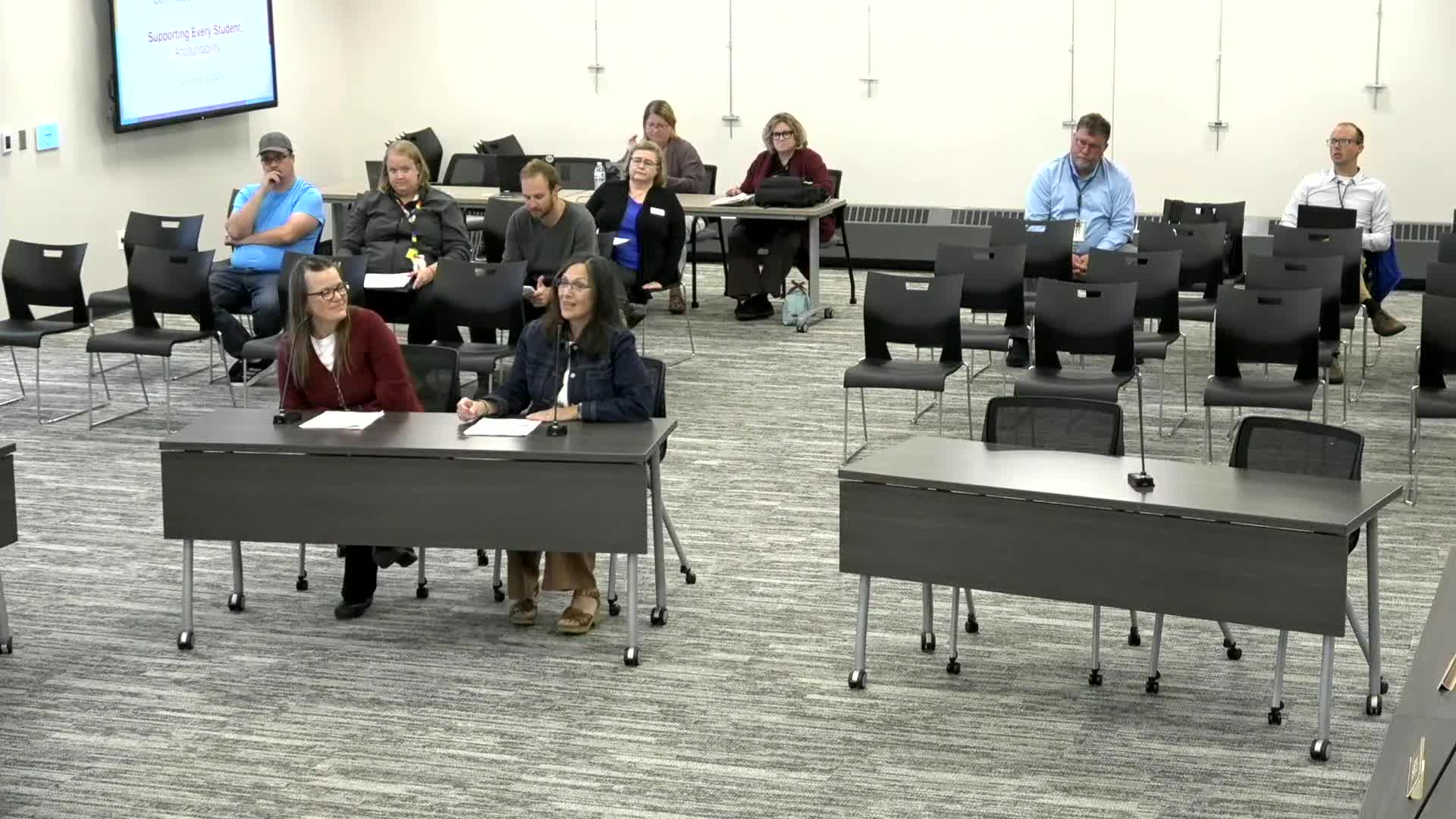
District academic leaders presented spring 2025 Minnesota Comprehensive Assessment (MCA) results, local early-grade FastBridge data, and the state's North Star accountability outcomes to the Duluth Public Schools board on Tuesday, reporting pockets of strong cohort growth in reading while acknowledging persistent racial and special-education achievement gaps and North Star identifications for multiple schools.
Brenda Spartz, director of elementary schools, and Jen Larva, director of secondary education, told the board the MCAs remain a “systems check” for standards implementation. Most MCA testing takes place in April within a six- to eight-week window, they said, and families retain an option to opt students out of the test.
Reading: Comparing district-to-district year-to-year, district leaders said Duluth outperformed the Minnesota average in every tested grade, though the district's overall reading score slipped about 1.1 percentage points from 2024 to 2025. Leaders emphasized that cohort analyses—tracking the same students from one grade to the next—showed stronger results: nearly 90% of cohorts realized growth, with several cohorts showing double-digit gains (for example, Stowe's cohort improved 6.1 percentage points from third to fourth grade and a later cohort rose 15.3 percentage points).
District staff credited early-grade investments in literacy: expanded literacy blocks in kindergarten (120 minutes), classroom libraries refreshed with culturally responsive texts, LETRS training for teachers, and a stronger multi-tiered system of supports (MTSS). They noted kindergarten results on FastBridge have improved after curriculum and schedule changes and additional paraeducator support in some schools.
Math: District leaders said math growth lagged reading. Compared to 2024 the district was down about 1.8 percentage points overall, though third, sixth and seventh grades showed gains. Leaders told the board the state will roll out new math standards in the coming years and the district expects to pilot new materials next year, with full implementation to follow.
Student groups: Presenters said reading gains were visible in several racial groups but that achievement gaps remain, especially for African American students (a cited gap of approximately ''10 percentage points in reading compared with statewide averages) and for students identified for special education. The district reported about 76 English learner students tested last year and noted EL outcomes compared favorably to the state average.
North Star accountability: The Minnesota North Star accountability system uses a three-year average and a multi-stage funnel to identify schools needing targeted or comprehensive support under state criteria tied to ESSA. The district reported six elementary schools and one secondary program were identified in the 2025 cycle. Schools listed in the presentation include Myers, Wilkins, Laura MacArthur, Stowe, Piedmont, Lowell and Congdon; the ALC independent study program was identified for comprehensive support based on graduation-rate measures. The district also reported two exits: the academic online program and the ALC seat-based program had exited their prior identifications.
Board members and staff discussed reasons identification can be persistent, including high concentrations of students with intensive special-education needs and attendance factors included in North Star calculations. Special-education director Jason Crane told the board that Duluth's inclusive model, in which many higher-need students attend neighborhood schools rather than separate facilities, contributes to lower tested proficiency in some buildings but reflects an intentional inclusion choice.
Directors presented local strategies tied to the district strategic plan to close gaps: culturally responsive classroom materials, morning community circles and advisory time, targeted interventions through MTSS, expanded professional development days, and targeted paraeducator support in high-need kindergarten classrooms. Staff said they would continue to bring detailed follow-up reports to the board, including lists of student counts by subgroup on request.
Brenda Spartz, director of elementary schools, and Jen Larva, director of secondary education, told the board the MCAs remain a “systems check” for standards implementation. Most MCA testing takes place in April within a six- to eight-week window, they said, and families retain an option to opt students out of the test.
Reading: Comparing district-to-district year-to-year, district leaders said Duluth outperformed the Minnesota average in every tested grade, though the district's overall reading score slipped about 1.1 percentage points from 2024 to 2025. Leaders emphasized that cohort analyses—tracking the same students from one grade to the next—showed stronger results: nearly 90% of cohorts realized growth, with several cohorts showing double-digit gains (for example, Stowe's cohort improved 6.1 percentage points from third to fourth grade and a later cohort rose 15.3 percentage points).
District staff credited early-grade investments in literacy: expanded literacy blocks in kindergarten (120 minutes), classroom libraries refreshed with culturally responsive texts, LETRS training for teachers, and a stronger multi-tiered system of supports (MTSS). They noted kindergarten results on FastBridge have improved after curriculum and schedule changes and additional paraeducator support in some schools.
Math: District leaders said math growth lagged reading. Compared to 2024 the district was down about 1.8 percentage points overall, though third, sixth and seventh grades showed gains. Leaders told the board the state will roll out new math standards in the coming years and the district expects to pilot new materials next year, with full implementation to follow.
Student groups: Presenters said reading gains were visible in several racial groups but that achievement gaps remain, especially for African American students (a cited gap of approximately ''10 percentage points in reading compared with statewide averages) and for students identified for special education. The district reported about 76 English learner students tested last year and noted EL outcomes compared favorably to the state average.
North Star accountability: The Minnesota North Star accountability system uses a three-year average and a multi-stage funnel to identify schools needing targeted or comprehensive support under state criteria tied to ESSA. The district reported six elementary schools and one secondary program were identified in the 2025 cycle. Schools listed in the presentation include Myers, Wilkins, Laura MacArthur, Stowe, Piedmont, Lowell and Congdon; the ALC independent study program was identified for comprehensive support based on graduation-rate measures. The district also reported two exits: the academic online program and the ALC seat-based program had exited their prior identifications.
Board members and staff discussed reasons identification can be persistent, including high concentrations of students with intensive special-education needs and attendance factors included in North Star calculations. Special-education director Jason Crane told the board that Duluth's inclusive model, in which many higher-need students attend neighborhood schools rather than separate facilities, contributes to lower tested proficiency in some buildings but reflects an intentional inclusion choice.
Directors presented local strategies tied to the district strategic plan to close gaps: culturally responsive classroom materials, morning community circles and advisory time, targeted interventions through MTSS, expanded professional development days, and targeted paraeducator support in high-need kindergarten classrooms. Staff said they would continue to bring detailed follow-up reports to the board, including lists of student counts by subgroup on request.
View the Full Meeting & All Its Details
This article offers just a summary. Unlock complete video, transcripts, and insights as a Founder Member.
✓
Watch full, unedited meeting videos
✓
Search every word spoken in unlimited transcripts
✓
AI summaries & real-time alerts (all government levels)
✓
Permanent access to expanding government content
30-day money-back guarantee
