Chief judge warns of rising interpreter costs, notes federal arrests at courthouses and limits to using AI for courtroom interpretation
August 15, 2025 | Kane County, Illinois
This article was created by AI summarizing key points discussed. AI makes mistakes, so for full details and context, please refer to the video of the full meeting. Please report any errors so we can fix them. Report an error »
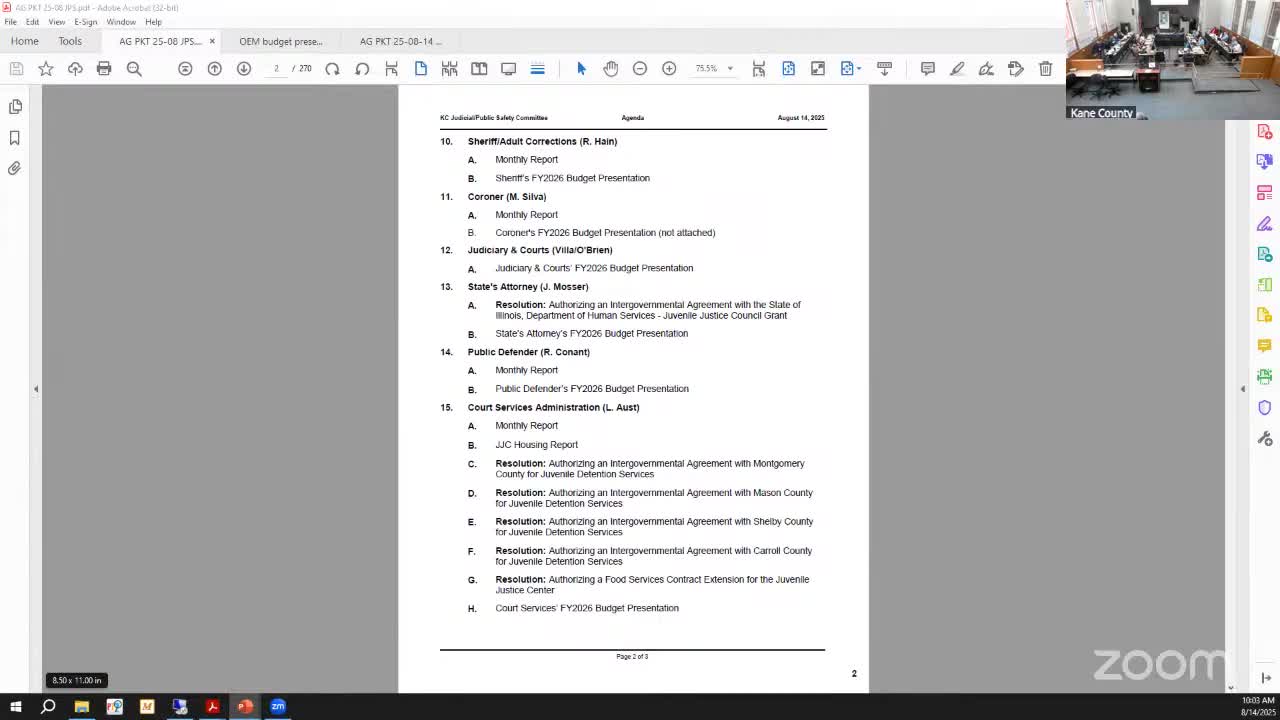
Chief Judge Robert Villa (title used as example) told the Judicial & Public Safety Committee on Aug. 14 that interpreter costs for courts are rising and that many language costs are reimbursed by the state, but some “exotic” languages currently generate unreimbursed contractual expenses.
The judge explained differences between reimbursable interpreter costs and exceptional cases where certified interpreters must be flown in or hired at high daily rates for rare languages. “We're reimbursed a 100% for interpreter services” in many routine cases, he said, but the court still budgets for contracted costs that the state does not reimburse.
Asked whether artificial intelligence could replace interpreters, the judge said AI could be useful in some settings but cautioned that the court system has different record‑keeping standards and that using AI for courtroom interpretation or court records would require acceptance by the Illinois Supreme Court. “Until it is, we can't do that in the court system,” he said, while noting AI is already used in other operational settings outside the courtroom.
The chief judge also described recent operations by federal law‑enforcement agents at county courthouses — for example, agents making arrests in public areas rather than relying on prior coordination—saying those agencies have worked in courthouses “for 20 some years.” He said local court security and the sheriff's office have managed these interactions so far without major incident, while noting the changed operational posture since the trust act’s implementation.
The judge urged the committee to consider the judiciary’s limited discretionary cuts because many judicial obligations are mandated by state law and because reimbursement and returned funds make direct budget comparisons to past years misleading. The court materials were accepted for review; no committee vote was taken on the budget.
The judge explained differences between reimbursable interpreter costs and exceptional cases where certified interpreters must be flown in or hired at high daily rates for rare languages. “We're reimbursed a 100% for interpreter services” in many routine cases, he said, but the court still budgets for contracted costs that the state does not reimburse.
Asked whether artificial intelligence could replace interpreters, the judge said AI could be useful in some settings but cautioned that the court system has different record‑keeping standards and that using AI for courtroom interpretation or court records would require acceptance by the Illinois Supreme Court. “Until it is, we can't do that in the court system,” he said, while noting AI is already used in other operational settings outside the courtroom.
The chief judge also described recent operations by federal law‑enforcement agents at county courthouses — for example, agents making arrests in public areas rather than relying on prior coordination—saying those agencies have worked in courthouses “for 20 some years.” He said local court security and the sheriff's office have managed these interactions so far without major incident, while noting the changed operational posture since the trust act’s implementation.
The judge urged the committee to consider the judiciary’s limited discretionary cuts because many judicial obligations are mandated by state law and because reimbursement and returned funds make direct budget comparisons to past years misleading. The court materials were accepted for review; no committee vote was taken on the budget.
Don't Miss a Word: See the Full Meeting!
Go beyond summaries. Unlock every video, transcript, and key insight with a Founder Membership.
✓
Get instant access to full meeting videos
✓
Search and clip any phrase from complete transcripts
✓
Receive AI-powered summaries & custom alerts
✓
Enjoy lifetime, unrestricted access to government data
30-day money-back guarantee
