Champaign County committee forwards Mahomet Solar 1 case to full board after hours of public opposition
September 05, 2025 | Champaign County, Illinois
This article was created by AI summarizing key points discussed. AI makes mistakes, so for full details and context, please refer to the video of the full meeting. Please report any errors so we can fix them. Report an error »
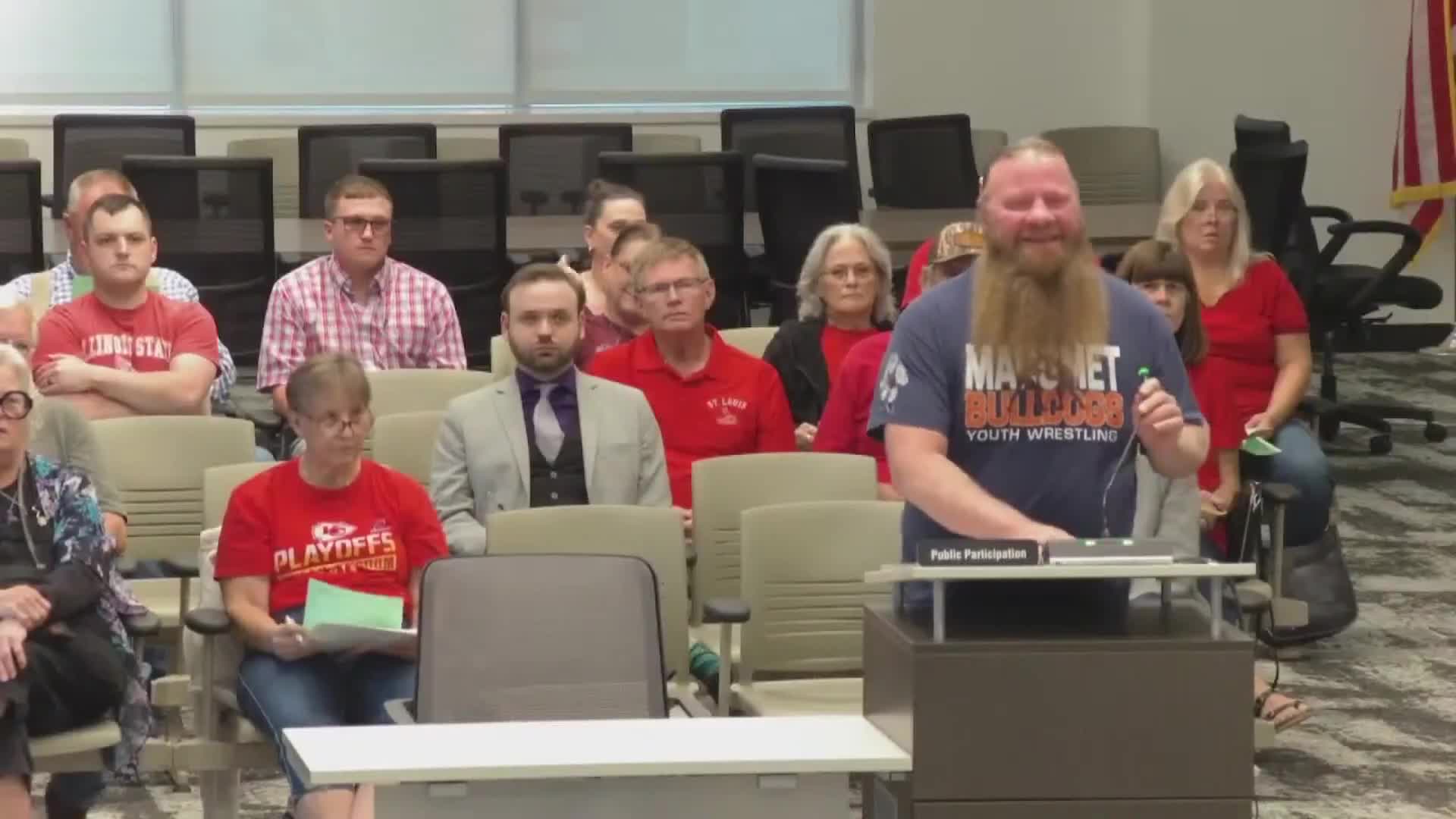
The Champaign County Environmental and Land Use Committee voted to forward a request by Mahomet Illinois Solar 1 LLC to the full county board after more than an hour of public comment and staff discussion. The application seeks permission for a 4.99 megawatt AC community photovoltaic solar farm on roughly 36 acres near Spring Lake in Mahomet Township.
Neighbors who live adjacent to the proposed site urged the committee to deny the project or require stricter conditions. Alexis Godby, a Spring Lake resident, told the committee, “Please take the voices of those who live closest, into consideration when making your decision.” Godby said a petition submitted to the zoning board had 370 signatures at the time of her remarks and asked the committee to deny requested waivers.
The project sponsor, identified in the record as Summit Ridge Energy, was represented by Moira Cronin, who described the proposal as a “4.99 megawatt AC community solar project” and said, “we are a long term owner and operator. We are not going to go away.” Cronin also told the committee the application had been submitted in accordance with Illinois statutory siting requirements and that environmental reviews had been completed by Illinois Department of Natural Resources, U.S. Fish and Wildlife Service through IPaC, and other consultants.
County staff summarized the zoning board of appeals (ZBA) findings for the committee. Staff member John told the committee, “the ZBA made affirmative findings for the waivers Part a, Part b, and Part c. They recommended denial of waiver Part d based on the testimony in the case.” The four waiver requests described in the case packet were: (a) a waiver related to entering into a road upgrade/maintenance agreement, (b) locating a PV solar farm closer than 1.5 miles to an incorporated municipality, (c) locating fencing 65 feet from a non‑participating line in lieu of the standard 240 feet, and (d) accepting a surety bond in lieu of a letter of credit or other specified financial assurance for decommissioning and site reclamation.
Several neighbors raised environmental and property‑value concerns, echoing themes heard at earlier zoning hearings. Speakers said the site sits over or near the Mahomet Aquifer, that Spring Lake could be affected, and that the project would replace prime farmland and remove trees. Matt Kore, a long‑time resident, said the site is “less than an acre from my property line” and urged the committee to consider wildlife and groundwater. Other speakers described inconsistent panel counts reported in packets (10,920; 12,696; 12,576 panels were all cited in different documents), concerns about maintenance and mowing practices observed at a comparable Market Street installation, and uncertainty about subscriber benefits and Ameren Illinois’ role in subscription administration.
The developer addressed several of those points. Cronin said the project will include a pollinator‑friendly seed mix submitted to county staff on May 29 and that US Fish and Wildlife had identified no critical habitat on the subject property. She also clarified, “I misspoke … there’s no trees being removed specifically for the panels to be placed,” later acknowledging that roughly one acre of trees would be cleared to avoid shading losses and to meet the interconnection size and engineering requirements.
Committee discussion focused heavily on waiver (d), the decommissioning financial assurance form. Cronin said the developer prefers using a surety bond or an escrow and described logistical difficulty obtaining letters of credit from some banks; staff and the county’s assistant state’s attorney said a letter of credit is generally more secure for the county but that escrow arrangements have been used for wind projects. Assistant State’s Attorney Andrew Mueller said the office had not yet examined escrow specifically for this solar case but would do so if requested.
Formally, the committee considered the zoning case (filed as Case 162S25) and took the following recorded action: motion to forward the case to the county board (motion on the record; second recorded). The roll call as read into the minutes and recorded at the meeting was: Rodriguez — no; Esri — no; Rogers — no; Varney — no; Locke — yes; Thorsland — yes. The chair announced the matter “will be at the full board in two weeks.” The record shows mixed votes on the committee; the case will be considered by the full Champaign County Board as the next decision body.
Separately, the committee also discussed and moved the related decommissioning and site reclamation plan (DSRP) for the project to the county board; staff said the plan’s total cost estimates fell within the range seen for comparable projects but that developers submit DSRPs in different formats, which makes line‑by‑line comparisons difficult.
What happens next: the committee’s decision to forward the case means the full county board will review the special‑use request and the requested waivers. County staff and the assistant state’s attorney said they would research escrow as a financial assurance option before the full board meeting; the developer said it would prefer an escrow or surety bond over a letter of credit. The committee chair asked residents to attend the county board meeting and encouraged continued communication between neighbors and the developer.
Note on sources: factual statements about the case, waiver text, and procedural steps are drawn from the meeting record and the petitioner’s application materials as presented in public comment and staff reports at the September 3, 2025 meeting of the Champaign County Environmental and Land Use Committee.
Neighbors who live adjacent to the proposed site urged the committee to deny the project or require stricter conditions. Alexis Godby, a Spring Lake resident, told the committee, “Please take the voices of those who live closest, into consideration when making your decision.” Godby said a petition submitted to the zoning board had 370 signatures at the time of her remarks and asked the committee to deny requested waivers.
The project sponsor, identified in the record as Summit Ridge Energy, was represented by Moira Cronin, who described the proposal as a “4.99 megawatt AC community solar project” and said, “we are a long term owner and operator. We are not going to go away.” Cronin also told the committee the application had been submitted in accordance with Illinois statutory siting requirements and that environmental reviews had been completed by Illinois Department of Natural Resources, U.S. Fish and Wildlife Service through IPaC, and other consultants.
County staff summarized the zoning board of appeals (ZBA) findings for the committee. Staff member John told the committee, “the ZBA made affirmative findings for the waivers Part a, Part b, and Part c. They recommended denial of waiver Part d based on the testimony in the case.” The four waiver requests described in the case packet were: (a) a waiver related to entering into a road upgrade/maintenance agreement, (b) locating a PV solar farm closer than 1.5 miles to an incorporated municipality, (c) locating fencing 65 feet from a non‑participating line in lieu of the standard 240 feet, and (d) accepting a surety bond in lieu of a letter of credit or other specified financial assurance for decommissioning and site reclamation.
Several neighbors raised environmental and property‑value concerns, echoing themes heard at earlier zoning hearings. Speakers said the site sits over or near the Mahomet Aquifer, that Spring Lake could be affected, and that the project would replace prime farmland and remove trees. Matt Kore, a long‑time resident, said the site is “less than an acre from my property line” and urged the committee to consider wildlife and groundwater. Other speakers described inconsistent panel counts reported in packets (10,920; 12,696; 12,576 panels were all cited in different documents), concerns about maintenance and mowing practices observed at a comparable Market Street installation, and uncertainty about subscriber benefits and Ameren Illinois’ role in subscription administration.
The developer addressed several of those points. Cronin said the project will include a pollinator‑friendly seed mix submitted to county staff on May 29 and that US Fish and Wildlife had identified no critical habitat on the subject property. She also clarified, “I misspoke … there’s no trees being removed specifically for the panels to be placed,” later acknowledging that roughly one acre of trees would be cleared to avoid shading losses and to meet the interconnection size and engineering requirements.
Committee discussion focused heavily on waiver (d), the decommissioning financial assurance form. Cronin said the developer prefers using a surety bond or an escrow and described logistical difficulty obtaining letters of credit from some banks; staff and the county’s assistant state’s attorney said a letter of credit is generally more secure for the county but that escrow arrangements have been used for wind projects. Assistant State’s Attorney Andrew Mueller said the office had not yet examined escrow specifically for this solar case but would do so if requested.
Formally, the committee considered the zoning case (filed as Case 162S25) and took the following recorded action: motion to forward the case to the county board (motion on the record; second recorded). The roll call as read into the minutes and recorded at the meeting was: Rodriguez — no; Esri — no; Rogers — no; Varney — no; Locke — yes; Thorsland — yes. The chair announced the matter “will be at the full board in two weeks.” The record shows mixed votes on the committee; the case will be considered by the full Champaign County Board as the next decision body.
Separately, the committee also discussed and moved the related decommissioning and site reclamation plan (DSRP) for the project to the county board; staff said the plan’s total cost estimates fell within the range seen for comparable projects but that developers submit DSRPs in different formats, which makes line‑by‑line comparisons difficult.
What happens next: the committee’s decision to forward the case means the full county board will review the special‑use request and the requested waivers. County staff and the assistant state’s attorney said they would research escrow as a financial assurance option before the full board meeting; the developer said it would prefer an escrow or surety bond over a letter of credit. The committee chair asked residents to attend the county board meeting and encouraged continued communication between neighbors and the developer.
Note on sources: factual statements about the case, waiver text, and procedural steps are drawn from the meeting record and the petitioner’s application materials as presented in public comment and staff reports at the September 3, 2025 meeting of the Champaign County Environmental and Land Use Committee.
Don't Miss a Word: See the Full Meeting!
Go beyond summaries. Unlock every video, transcript, and key insight with a Founder Membership.
✓
Get instant access to full meeting videos
✓
Search and clip any phrase from complete transcripts
✓
Receive AI-powered summaries & custom alerts
✓
Enjoy lifetime, unrestricted access to government data
30-day money-back guarantee
