Coaches discuss 2025 two-touch setter rule and how it may affect high-school play
September 05, 2025 | WARREN CO. R-III, School Districts, Missouri
This article was created by AI summarizing key points discussed. AI makes mistakes, so for full details and context, please refer to the video of the full meeting. Please report any errors so we can fix them. Report an error »
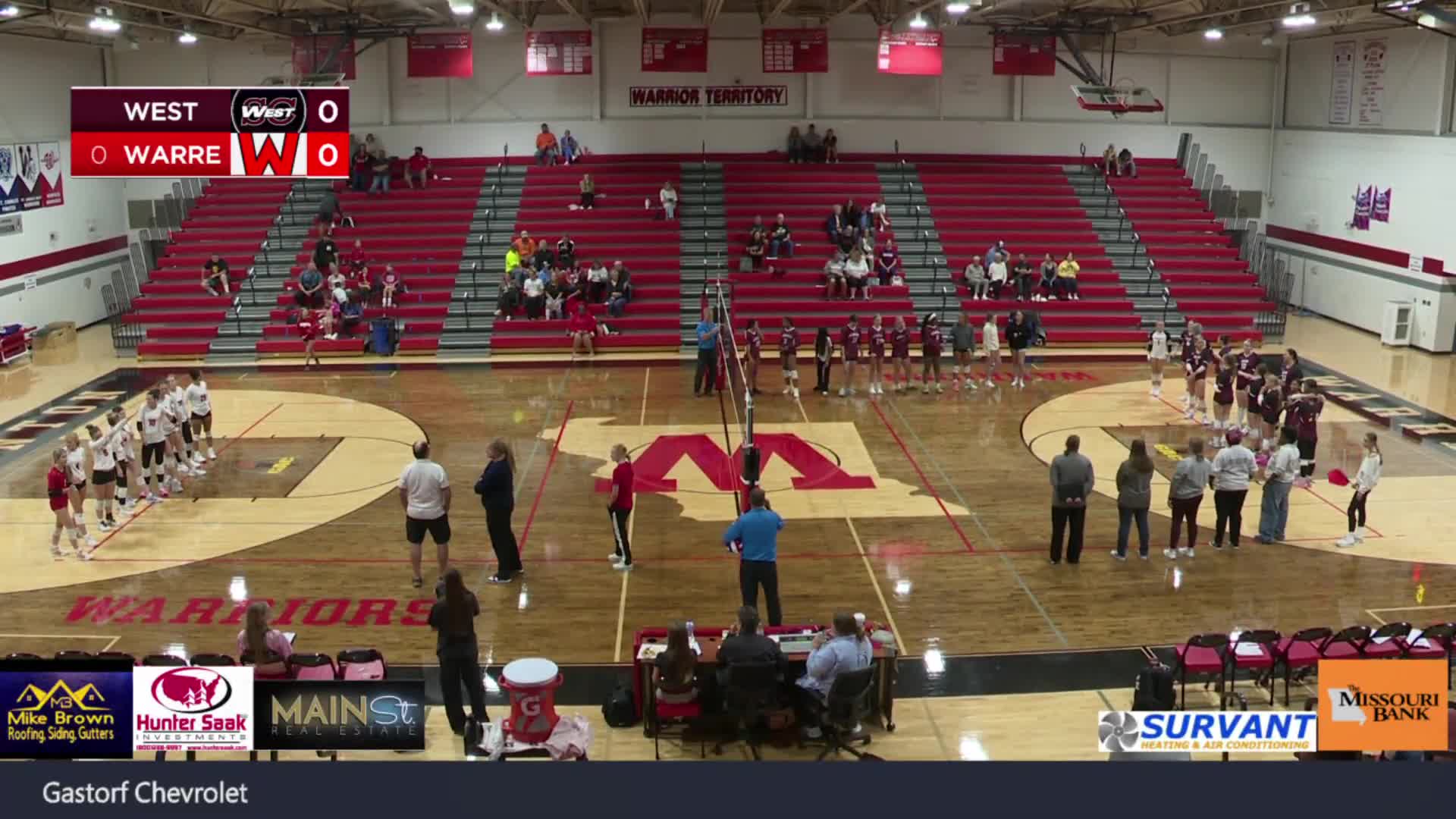
Warrington — During the pregame broadcast, broadcast analyst and Warrington coach Casey Dildine explained a rule change that will affect high school and college volleyball in 2025: under the new interpretation, a second touch by the setter that remains on the setter’s side of the net is playable, but if the ball crosses the net on that second touch or goes out, it is treated as a two-touch violation.
“The new rule is ... a 2 touch rule off the setter,” Dildine said on the broadcast. “... as long as if the second touch by the setter is touched twice and goes stays on your side, it's still playable. Once it crosses over or goes out of bounds on the other side, it is a 2 touch violation.”
Dildine and the announcer discussed likely impacts. Dildine said the change was intended to speed up the game and reduce subjective calls about double contacts. He also noted nuance for specific plays: when the ball contacts a player’s arm or shoulder in the back row and remains on the same side, referees may now treat that sequence differently than under the old standard.
“It is a very big change,” Dildine said, adding that the rule could lead to disputes between coaches and officials as teams and referees adjust to the new interpretation.
Broadcasters emphasized that how referees enforce the change will matter: while some sequences that previously were called for lifts or double hits may now be allowed, Dildine said the new standard still leaves room for judgment when contact appears to be a push or a controlled “lift.” He suggested the rule may benefit pace-of-play but predicted “it’ll be interesting to see how it's called or if there's any disputes between coaches and refs going up from here on.”
This discussion was presented as on-air analysis; the broadcast did not cite a specific rule book or governing-document citation during the segment. Coaches and teams should consult their state high-school association and official rule publications for the authoritative text and enforcement guidance.
“The new rule is ... a 2 touch rule off the setter,” Dildine said on the broadcast. “... as long as if the second touch by the setter is touched twice and goes stays on your side, it's still playable. Once it crosses over or goes out of bounds on the other side, it is a 2 touch violation.”
Dildine and the announcer discussed likely impacts. Dildine said the change was intended to speed up the game and reduce subjective calls about double contacts. He also noted nuance for specific plays: when the ball contacts a player’s arm or shoulder in the back row and remains on the same side, referees may now treat that sequence differently than under the old standard.
“It is a very big change,” Dildine said, adding that the rule could lead to disputes between coaches and officials as teams and referees adjust to the new interpretation.
Broadcasters emphasized that how referees enforce the change will matter: while some sequences that previously were called for lifts or double hits may now be allowed, Dildine said the new standard still leaves room for judgment when contact appears to be a push or a controlled “lift.” He suggested the rule may benefit pace-of-play but predicted “it’ll be interesting to see how it's called or if there's any disputes between coaches and refs going up from here on.”
This discussion was presented as on-air analysis; the broadcast did not cite a specific rule book or governing-document citation during the segment. Coaches and teams should consult their state high-school association and official rule publications for the authoritative text and enforcement guidance.
Don't Miss a Word: See the Full Meeting!
Go beyond summaries. Unlock every video, transcript, and key insight with a Founder Membership.
✓
Get instant access to full meeting videos
✓
Search and clip any phrase from complete transcripts
✓
Receive AI-powered summaries & custom alerts
✓
Enjoy lifetime, unrestricted access to government data
30-day money-back guarantee
