Putnam Legislature tables reconsideration of Rainmaker East ag-district inclusion after executive session and public comment
August 21, 2025 | Putnam County, New York
This article was created by AI summarizing key points discussed. AI makes mistakes, so for full details and context, please refer to the video of the full meeting. Please report any errors so we can fix them. Report an error »
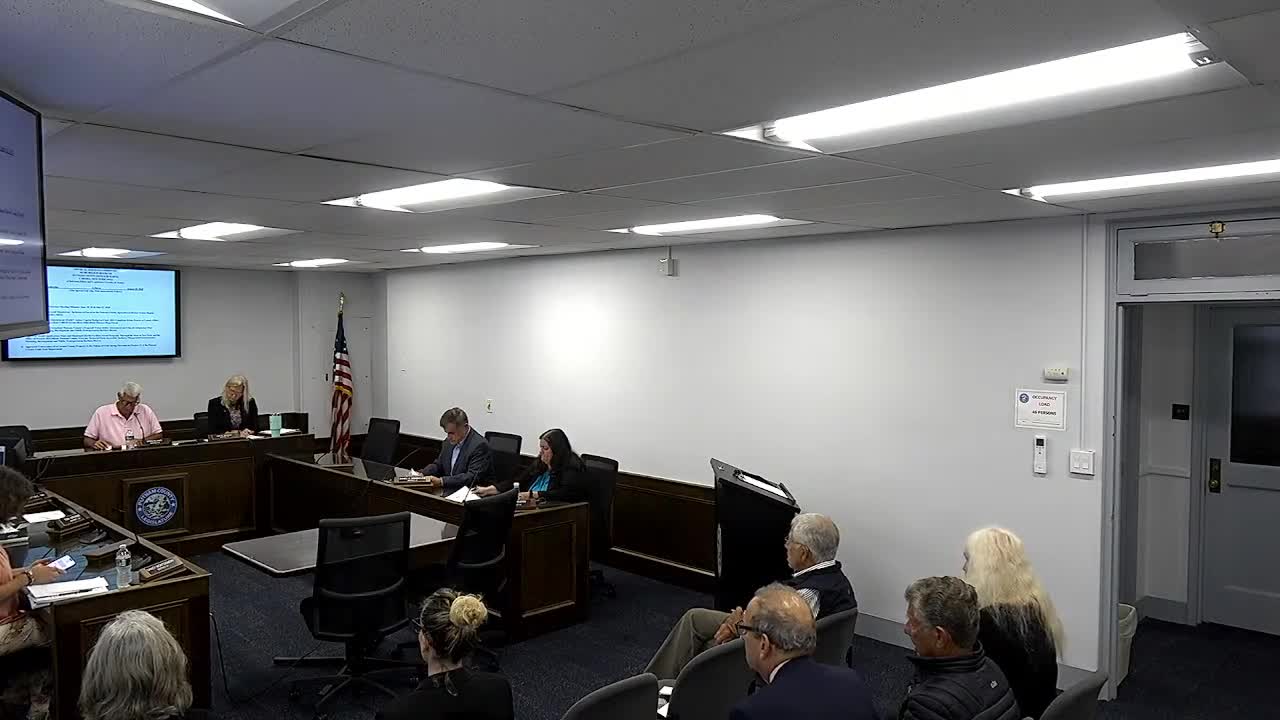
The Putnam County Legislature on Aug. 20 tabled a reconsideration over whether to include Rainmaker East LLC in the Putnam County Agricultural District after an executive session and extensive public comment.
The matter drew public speakers including farmers, the chair of the county agricultural board and counsel for Rainmaker East; an executive session was called citing pending litigation, and no formal settlement or action was announced from that closed session. Following the executive session the committee opened the floor for public comment and then voted to table the item.
Why it matters: inclusion in the Agricultural District confers procedural protections and can affect future development and regulatory review; some residents urged the legislature to apply inclusion criteria consistently, while the applicant’s counsel asked for a prompt special meeting to meet filing deadlines.
Committee discussion and executive session: Committee leadership moved into executive session citing pending litigation over the matter; the county law department characterized a submitted stipulation as a confidential settlement discussion. The committee entered executive session; when it reconvened at about 6:30 p.m., the chair said no action had been taken in executive session.
Public comment: Christina Stasi, chair of the Putnam County Agricultural Board, told legislators she was not invited to a pre-meeting that she said discussed rejection of the application and asserted that Rainmaker East lacked the on-site infrastructure and horses required under the county’s commercial-equine definition. Stasi said Rainmaker East’s application materials showed a building footprint without horse stalls and relied on contracts described as “donor mare” and “embryo rights purchaser,” rather than evidence of current equine operations.
Scott Steiner, an attorney with Hogan Rossi & Liguori representing Rainmaker East LLC, asked the committee to hold the matter over, schedule a special meeting promptly and have both the county attorney and legislative counsel available so the legislature could obtain legal advice; Steiner said the “merits of Mr. Lepler’s application speak for themselves” and noted litigation is pending in the matter.
Several local farmers and residents, including Jessica Jarrett of Lobster Hill Farm, Ariel Hanovich and Andrew Jarrett, said they had sought meetings with county officials previously and had not received responses; they warned that reversing standards would create a precedent favoring applicants with political connections and undermine the agricultural board’s advisory role. Brett (from Carmel Hamlet) and Cassandra Roth also urged adherence to the ag board’s recommendations and consistent application of criteria.
County law department response: Heather of the County Law Department said her office had responded to individual inquiries and clarified that under the county’s published standards an agricultural enterprise may qualify as a commercial equine operation if it is “proposed” or in its first or second year of operation; she said that a startup status alone is not dispositive and that a range of qualifications must be considered.
Timeline and clarifications offered in public comment: Speakers cited procedural deadlines for ag-district applications—applications accepted through April 30 with the inclusion period beginning April 1 and a roughly 30-day window for board site visits—and said the ag board had acted within those timeframes. Christina Stasi and other commenters referenced a sale and corporate dissolution dates in the application record (sale on or about 05/11/2023; dissolution noted 07/24/24) and said the application lacked evidence of horses being on the parcel at the time of the ag-board site visit. The public record also includes an Article 78 petition, which was cited by committee counsel as a public docket but said the proposed stipulation remained confidential.
Action: A motion to table reconsideration of item 4 (the ag-district inclusion and any related stipulation) was made and seconded; the committee voted to table the item and the motion carried. No additional motions or amendments were recorded in committee. The applicant’s counsel requested a prompt special meeting to meet an Aug. 28 deadline; the committee did not act on that request at the meeting and instead tabled the matter.
Next steps: The tabling preserves the committee’s ability to revisit the item; counsel for Rainmaker East has asked the legislature to schedule a special meeting so the parties can present legal advice and aim to meet deadlines referenced in the litigation record.
The matter drew public speakers including farmers, the chair of the county agricultural board and counsel for Rainmaker East; an executive session was called citing pending litigation, and no formal settlement or action was announced from that closed session. Following the executive session the committee opened the floor for public comment and then voted to table the item.
Why it matters: inclusion in the Agricultural District confers procedural protections and can affect future development and regulatory review; some residents urged the legislature to apply inclusion criteria consistently, while the applicant’s counsel asked for a prompt special meeting to meet filing deadlines.
Committee discussion and executive session: Committee leadership moved into executive session citing pending litigation over the matter; the county law department characterized a submitted stipulation as a confidential settlement discussion. The committee entered executive session; when it reconvened at about 6:30 p.m., the chair said no action had been taken in executive session.
Public comment: Christina Stasi, chair of the Putnam County Agricultural Board, told legislators she was not invited to a pre-meeting that she said discussed rejection of the application and asserted that Rainmaker East lacked the on-site infrastructure and horses required under the county’s commercial-equine definition. Stasi said Rainmaker East’s application materials showed a building footprint without horse stalls and relied on contracts described as “donor mare” and “embryo rights purchaser,” rather than evidence of current equine operations.
Scott Steiner, an attorney with Hogan Rossi & Liguori representing Rainmaker East LLC, asked the committee to hold the matter over, schedule a special meeting promptly and have both the county attorney and legislative counsel available so the legislature could obtain legal advice; Steiner said the “merits of Mr. Lepler’s application speak for themselves” and noted litigation is pending in the matter.
Several local farmers and residents, including Jessica Jarrett of Lobster Hill Farm, Ariel Hanovich and Andrew Jarrett, said they had sought meetings with county officials previously and had not received responses; they warned that reversing standards would create a precedent favoring applicants with political connections and undermine the agricultural board’s advisory role. Brett (from Carmel Hamlet) and Cassandra Roth also urged adherence to the ag board’s recommendations and consistent application of criteria.
County law department response: Heather of the County Law Department said her office had responded to individual inquiries and clarified that under the county’s published standards an agricultural enterprise may qualify as a commercial equine operation if it is “proposed” or in its first or second year of operation; she said that a startup status alone is not dispositive and that a range of qualifications must be considered.
Timeline and clarifications offered in public comment: Speakers cited procedural deadlines for ag-district applications—applications accepted through April 30 with the inclusion period beginning April 1 and a roughly 30-day window for board site visits—and said the ag board had acted within those timeframes. Christina Stasi and other commenters referenced a sale and corporate dissolution dates in the application record (sale on or about 05/11/2023; dissolution noted 07/24/24) and said the application lacked evidence of horses being on the parcel at the time of the ag-board site visit. The public record also includes an Article 78 petition, which was cited by committee counsel as a public docket but said the proposed stipulation remained confidential.
Action: A motion to table reconsideration of item 4 (the ag-district inclusion and any related stipulation) was made and seconded; the committee voted to table the item and the motion carried. No additional motions or amendments were recorded in committee. The applicant’s counsel requested a prompt special meeting to meet an Aug. 28 deadline; the committee did not act on that request at the meeting and instead tabled the matter.
Next steps: The tabling preserves the committee’s ability to revisit the item; counsel for Rainmaker East has asked the legislature to schedule a special meeting so the parties can present legal advice and aim to meet deadlines referenced in the litigation record.
View the Full Meeting & All Its Details
This article offers just a summary. Unlock complete video, transcripts, and insights as a Founder Member.
✓
Watch full, unedited meeting videos
✓
Search every word spoken in unlimited transcripts
✓
AI summaries & real-time alerts (all government levels)
✓
Permanent access to expanding government content
30-day money-back guarantee
