Addison staff outline $138M CIP and show bond program adds roughly one-third of promised tax increase
July 01, 2025 | Addison, Dallas County, Texas
This article was created by AI summarizing key points discussed. AI makes mistakes, so for full details and context, please refer to the video of the full meeting. Please report any errors so we can fix them. Report an error »
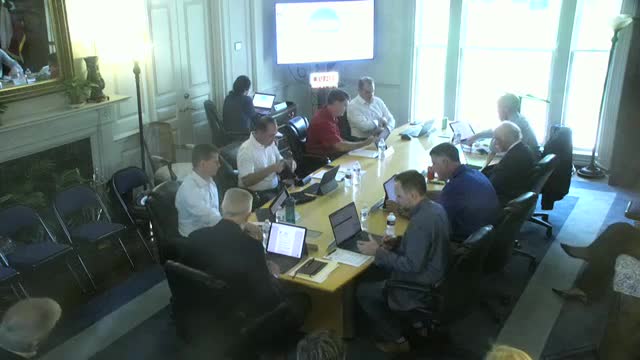
The Addison City Council heard a detailed presentation July 1 on the town’s proposed fiscal 2026 budget and five‑year capital improvement program that totals about $138.5 million across general government, airport, utility and stormwater funds. Steven (Chief Financial Officer) told council the package includes voter‑authorized projects, committed developer reimbursement obligations and one‑time, self‑funded requests.
Why it matters: the presentation tied the 2019 bond program to debt‑service tax impacts voters were shown in 2019 and to the actual tax‑rate effects now projected for 2026 and beyond. Staff said refinancing and low‑cost loans reduced the program’s net tax effect to roughly one‑third of the increase voters were told they would see in 2019.
City financial staff explained how the town mixes funding. Steven said the town uses grant dollars (about $20 million in the CIP), State Infrastructure Bank (SIB) loans for eligible roads, certificates of obligation and cash reserves from self‑funded special project funds. He said current interest paid on town debt is about 2.8% while the town’s investment portfolio yields roughly 3.8%, a factor in whether to cash‑fund or debt‑fund projects.
The presentation summarized the 2019 voter authorizations (noting a $3.03 million authorization from 2012 for a parking garage still unissued), then walked through Proposition A projects including Keller Springs Road (under construction) and Airport Parkway (designed, construction planned for 2027). Proposition B projects (Quorum Drive, Montfort Drive) have design funding and a State Infrastructure Bank loan of about $22.9 million for Quorum and $13.7 million for Montfort; construction is anticipated in FY2026.
On debt and the tax rate, staff compared the 2019 voter message—an expected debt‑service increase of about 10.3 cents—and the town’s current projection. Steven said the debt‑service tax rate tied to the 2019 program is projected near 17.5 cents for 2026 and could peak about 18.9 cents, roughly 6.8 cents lower than the 2019 estimate. He credited refinancings and low‑cost SIB loans for part of the difference.
Staff reviewed projects already funded and expected expenditures in FY2025–FY2026 (about $43.7 million in near‑term spending) and emphasized the town holds significant “self‑funded” cash reserves—about $7.8 million in the general self‑funded special projects fund and nearly $6.0 million in the street self‑funded projects fund—that can pay for one‑time requests without issuing debt.
What council asked: members pressed on bond timing, how bond proceeds are sold and drawn (staff said issuances are typically timed to construction and SIB loan draws can be staggered), the duration of the town’s investment portfolio (staff said overall pace to maturity is roughly 15–18 months but some securities extend beyond five years), and why Airport Parkway did not qualify for SIB funding (staff said the road did not meet TxDOT eligibility for on‑system or off‑system classification).
What’s next: staff flagged an upcoming refunding window for callable 2026 GEO bonds in February 2026 and said market conditions will determine whether to refund; they also said a potential new bond election for additional projects (including a police facility) would increase the maximum projected debt‑service tax rate by an estimated 4.5 cents if a $50 million issuance were added to the schedule. Council did not take action on a bond call at the session.
Ending note: Steven told council that as the budget process proceeds staff will bring refined project lists and funding recommendations to the council workshop and hearings so members can weigh one‑time cash‑fund requests versus new debt.
Why it matters: the presentation tied the 2019 bond program to debt‑service tax impacts voters were shown in 2019 and to the actual tax‑rate effects now projected for 2026 and beyond. Staff said refinancing and low‑cost loans reduced the program’s net tax effect to roughly one‑third of the increase voters were told they would see in 2019.
City financial staff explained how the town mixes funding. Steven said the town uses grant dollars (about $20 million in the CIP), State Infrastructure Bank (SIB) loans for eligible roads, certificates of obligation and cash reserves from self‑funded special project funds. He said current interest paid on town debt is about 2.8% while the town’s investment portfolio yields roughly 3.8%, a factor in whether to cash‑fund or debt‑fund projects.
The presentation summarized the 2019 voter authorizations (noting a $3.03 million authorization from 2012 for a parking garage still unissued), then walked through Proposition A projects including Keller Springs Road (under construction) and Airport Parkway (designed, construction planned for 2027). Proposition B projects (Quorum Drive, Montfort Drive) have design funding and a State Infrastructure Bank loan of about $22.9 million for Quorum and $13.7 million for Montfort; construction is anticipated in FY2026.
On debt and the tax rate, staff compared the 2019 voter message—an expected debt‑service increase of about 10.3 cents—and the town’s current projection. Steven said the debt‑service tax rate tied to the 2019 program is projected near 17.5 cents for 2026 and could peak about 18.9 cents, roughly 6.8 cents lower than the 2019 estimate. He credited refinancings and low‑cost SIB loans for part of the difference.
Staff reviewed projects already funded and expected expenditures in FY2025–FY2026 (about $43.7 million in near‑term spending) and emphasized the town holds significant “self‑funded” cash reserves—about $7.8 million in the general self‑funded special projects fund and nearly $6.0 million in the street self‑funded projects fund—that can pay for one‑time requests without issuing debt.
What council asked: members pressed on bond timing, how bond proceeds are sold and drawn (staff said issuances are typically timed to construction and SIB loan draws can be staggered), the duration of the town’s investment portfolio (staff said overall pace to maturity is roughly 15–18 months but some securities extend beyond five years), and why Airport Parkway did not qualify for SIB funding (staff said the road did not meet TxDOT eligibility for on‑system or off‑system classification).
What’s next: staff flagged an upcoming refunding window for callable 2026 GEO bonds in February 2026 and said market conditions will determine whether to refund; they also said a potential new bond election for additional projects (including a police facility) would increase the maximum projected debt‑service tax rate by an estimated 4.5 cents if a $50 million issuance were added to the schedule. Council did not take action on a bond call at the session.
Ending note: Steven told council that as the budget process proceeds staff will bring refined project lists and funding recommendations to the council workshop and hearings so members can weigh one‑time cash‑fund requests versus new debt.
Don't Miss a Word: See the Full Meeting!
Go beyond summaries. Unlock every video, transcript, and key insight with a Founder Membership.
✓
Get instant access to full meeting videos
✓
Search and clip any phrase from complete transcripts
✓
Receive AI-powered summaries & custom alerts
✓
Enjoy lifetime, unrestricted access to government data
30-day money-back guarantee
