Tazewell County staff recommends denial of Sauder Family Trust rezoning request; neighbors cite farmland, access and watershed concerns
July 01, 2025 | Tazewell County, Illinois
This article was created by AI summarizing key points discussed. AI makes mistakes, so for full details and context, please refer to the video of the full meeting. Please report any errors so we can fix them. Report an error »
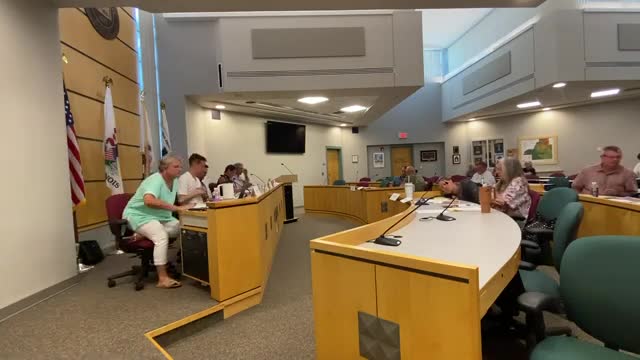
Sauder Family Trust trustee Brad Sauder asked the Tazewell County land-use committee to rezone about 25.6 acres near Lake Windermere from A-1 (agricultural preservation) to RR (rural residential), saying he intends to divide the tract into four single-family lots with a fifth rear parcel kept in agriculture.
County land-use staff recommended denial, citing the Tazewell County Comprehensive Plan and the site’s productive soils. "Staff does recommend denial of the request of rezone from A-1 to RR, primarily due to the site being utilized for agricultural currently and being still being productive soil," a county planner told the committee.
The dispute centered on competing claims about soil quality, access and local character. Sauder said the lots would be about four to five acres each, "very similar to the properties that are adjacent right across the road," and that the rear five-acre parcel would remain in farm use to provide a buffer. He said the majority of the 25 acres is a soil type with a productivity index of about 114, below a 125 threshold staff flagged as prime farmland.
Adjacent property owners and other nearby residents opposed the rezoning during the public comment period. Jared Beckendorf, whose property borders the subject parcel, said the change "is not a minor change" in the nature of nearby land use and raised concerns about vehicle traffic and loss of privacy. His brother, Noah Beckendorf, argued the application lacked a compliant preliminary plat and called the request "effectively a carte blanche rezone," saying the proposed lot lines include a parcel that would be landlocked without additional approvals.
Other neighbors raised environmental concerns tied to septic systems and lawn chemicals draining into local waterways. Kate Vandenberg, who said she and others have been restoring a parcel on the lakeshore to native prairie, described the tract as part of the "Mackinac River watershed" and warned of potential nutrient and pesticide runoff into Southern Pond. Several speakers said the small country road serving the area lacks shoulders and could become more hazardous with additional homes.
Land-use staff reviewed the county criteria for rezoning and reported mixed findings: some staff findings were positive — that similar residential uses exist in the area and that single-family homes typically do not pose public-health or safety risks — but staff concluded the proposal conflicts with the comprehensive plan’s future land-use map, which designates the property for agricultural use (A-2 on the map referenced by staff). The planner noted the site contains soils largely mapped as Rosetta silt loam (PI ~114) with a small area of Stronghurst (near PI 125), and that removal of productive farmland weighed against the amendment.
County staff also noted procedural limits: if the county board approves rezoning, the applicant must later submit a preliminary plat and secure approvals from the plat-review process, the road district and the health department. A county representative said well and septic permits "will be required prior to installation," and that Tremont Township Road Commissioner Todd Killers had provided a signed entrance permit for access.
Sauder acknowledged residents’ concerns and reiterated he had agricultural operations nearby and would continue farming if rezoning is not approved. He told the committee he planned four buildable sites at the road with a fifth lot accessed by an easement to remain in agricultural use.
The committee closed the public hearing at the end of the meeting; no final vote on the rezoning was recorded at that session. The committee indicated it will compile its paperwork and proceed to deliberation and recommendation to the Tazewell County Board, which has the final authority on the zoning change.
For now the matter remains pending: staff recommended denial based on the comprehensive plan and soil productivity; the county board will decide whether to accept that recommendation, and any approval would trigger subsequent plat and permitting reviews that could change the number or layout of future lots.
County land-use staff recommended denial, citing the Tazewell County Comprehensive Plan and the site’s productive soils. "Staff does recommend denial of the request of rezone from A-1 to RR, primarily due to the site being utilized for agricultural currently and being still being productive soil," a county planner told the committee.
The dispute centered on competing claims about soil quality, access and local character. Sauder said the lots would be about four to five acres each, "very similar to the properties that are adjacent right across the road," and that the rear five-acre parcel would remain in farm use to provide a buffer. He said the majority of the 25 acres is a soil type with a productivity index of about 114, below a 125 threshold staff flagged as prime farmland.
Adjacent property owners and other nearby residents opposed the rezoning during the public comment period. Jared Beckendorf, whose property borders the subject parcel, said the change "is not a minor change" in the nature of nearby land use and raised concerns about vehicle traffic and loss of privacy. His brother, Noah Beckendorf, argued the application lacked a compliant preliminary plat and called the request "effectively a carte blanche rezone," saying the proposed lot lines include a parcel that would be landlocked without additional approvals.
Other neighbors raised environmental concerns tied to septic systems and lawn chemicals draining into local waterways. Kate Vandenberg, who said she and others have been restoring a parcel on the lakeshore to native prairie, described the tract as part of the "Mackinac River watershed" and warned of potential nutrient and pesticide runoff into Southern Pond. Several speakers said the small country road serving the area lacks shoulders and could become more hazardous with additional homes.
Land-use staff reviewed the county criteria for rezoning and reported mixed findings: some staff findings were positive — that similar residential uses exist in the area and that single-family homes typically do not pose public-health or safety risks — but staff concluded the proposal conflicts with the comprehensive plan’s future land-use map, which designates the property for agricultural use (A-2 on the map referenced by staff). The planner noted the site contains soils largely mapped as Rosetta silt loam (PI ~114) with a small area of Stronghurst (near PI 125), and that removal of productive farmland weighed against the amendment.
County staff also noted procedural limits: if the county board approves rezoning, the applicant must later submit a preliminary plat and secure approvals from the plat-review process, the road district and the health department. A county representative said well and septic permits "will be required prior to installation," and that Tremont Township Road Commissioner Todd Killers had provided a signed entrance permit for access.
Sauder acknowledged residents’ concerns and reiterated he had agricultural operations nearby and would continue farming if rezoning is not approved. He told the committee he planned four buildable sites at the road with a fifth lot accessed by an easement to remain in agricultural use.
The committee closed the public hearing at the end of the meeting; no final vote on the rezoning was recorded at that session. The committee indicated it will compile its paperwork and proceed to deliberation and recommendation to the Tazewell County Board, which has the final authority on the zoning change.
For now the matter remains pending: staff recommended denial based on the comprehensive plan and soil productivity; the county board will decide whether to accept that recommendation, and any approval would trigger subsequent plat and permitting reviews that could change the number or layout of future lots.
Don't Miss a Word: See the Full Meeting!
Go beyond summaries. Unlock every video, transcript, and key insight with a Founder Membership.
✓
Get instant access to full meeting videos
✓
Search and clip any phrase from complete transcripts
✓
Receive AI-powered summaries & custom alerts
✓
Enjoy lifetime, unrestricted access to government data
30-day money-back guarantee
