Longmont officials urge clarity on Boulder County mental‑health tax proposal before ballot placement
August 20, 2025 | Longmont, Boulder County, Colorado
This article was created by AI summarizing key points discussed. AI makes mistakes, so for full details and context, please refer to the video of the full meeting. Please report any errors so we can fix them. Report an error »
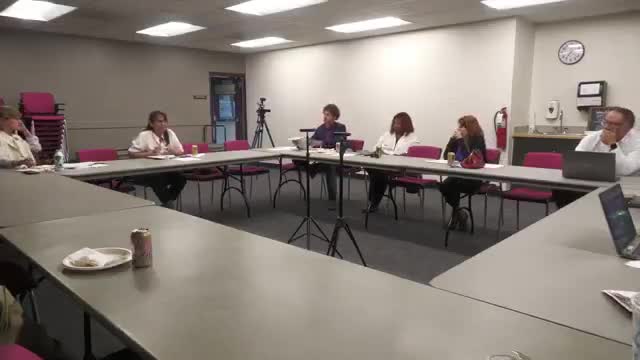
Longmont council members and city staff told state legislators and county contacts at an Aug. 18 legislative dinner that they support mental‑health investment but want clearer ballot language and municipal safeguards if Boulder County places a mental‑health sales tax before voters.
City staff and council members said they worry the county proposal, as drafted for the meeting, left open how dollars would be allocated across municipalities, how duplication with existing local programs would be avoided, and whether administrative overhead might consume funds intended for services. "If you're not clear on how you're going to allocate it, it turns into the hunger games among the agencies," one council member said.
Why this matters: Boulder County officials are considering a countywide tax to fund prevention, early intervention, crisis response and related services; Longmont officials said local programs such as CORE and LEAD are already in place and that funding language should allow municipalities to sustain or augment existing programs without being penalized for having had an earlier start. City staff recommended a municipality-specific plan and suggested including measurable outcomes and a sunset (time-limited authorization) to allow voters to reassess.
Details discussed:
- Uses cited in the draft language: prevention and early intervention, crisis response not involving law enforcement (the draft text the council reviewed included that phrase), and wraparound services for housing and supportive services.
- Duration and oversight: Longmont staff said a time-limited approach (examples discussed in the meeting included three years as a starting point) would let voters and officials review outcomes and avoid creating permanent unfunded commitments that local governments must absorb.
- Duplication and measurement: City staff asked for clearer metrics and a plan to limit duplication with existing programs funded by ARPA, county grants or municipal budgets; officials noted that some outcomes (e.g., reduced hospitalizations or avoided arrests) are more straightforward to measure than others.
Next steps: City officials said they would continue to request refined ballot language and data from Boulder County and would offer to help craft municipal allocation or oversight language. Several council members urged their county counterparts to provide a clear, measurable plan before asking voters to approve a tax.
Ending: Longmont officials said they support mental‑health investment but emphasized that the ballot question needs clearer allocation, measurable outcomes and protections for municipalities that already operate effective programs.
City staff and council members said they worry the county proposal, as drafted for the meeting, left open how dollars would be allocated across municipalities, how duplication with existing local programs would be avoided, and whether administrative overhead might consume funds intended for services. "If you're not clear on how you're going to allocate it, it turns into the hunger games among the agencies," one council member said.
Why this matters: Boulder County officials are considering a countywide tax to fund prevention, early intervention, crisis response and related services; Longmont officials said local programs such as CORE and LEAD are already in place and that funding language should allow municipalities to sustain or augment existing programs without being penalized for having had an earlier start. City staff recommended a municipality-specific plan and suggested including measurable outcomes and a sunset (time-limited authorization) to allow voters to reassess.
Details discussed:
- Uses cited in the draft language: prevention and early intervention, crisis response not involving law enforcement (the draft text the council reviewed included that phrase), and wraparound services for housing and supportive services.
- Duration and oversight: Longmont staff said a time-limited approach (examples discussed in the meeting included three years as a starting point) would let voters and officials review outcomes and avoid creating permanent unfunded commitments that local governments must absorb.
- Duplication and measurement: City staff asked for clearer metrics and a plan to limit duplication with existing programs funded by ARPA, county grants or municipal budgets; officials noted that some outcomes (e.g., reduced hospitalizations or avoided arrests) are more straightforward to measure than others.
Next steps: City officials said they would continue to request refined ballot language and data from Boulder County and would offer to help craft municipal allocation or oversight language. Several council members urged their county counterparts to provide a clear, measurable plan before asking voters to approve a tax.
Ending: Longmont officials said they support mental‑health investment but emphasized that the ballot question needs clearer allocation, measurable outcomes and protections for municipalities that already operate effective programs.
View the Full Meeting & All Its Details
This article offers just a summary. Unlock complete video, transcripts, and insights as a Founder Member.
✓
Watch full, unedited meeting videos
✓
Search every word spoken in unlimited transcripts
✓
AI summaries & real-time alerts (all government levels)
✓
Permanent access to expanding government content
30-day money-back guarantee
