Milton equestrian panel backs package of large‑lot incentives; staff to draft code changes
August 21, 2025 | Milton, Fulton County, Georgia
This article was created by AI summarizing key points discussed. AI makes mistakes, so for full details and context, please refer to the video of the full meeting. Please report any errors so we can fix them. Report an error »
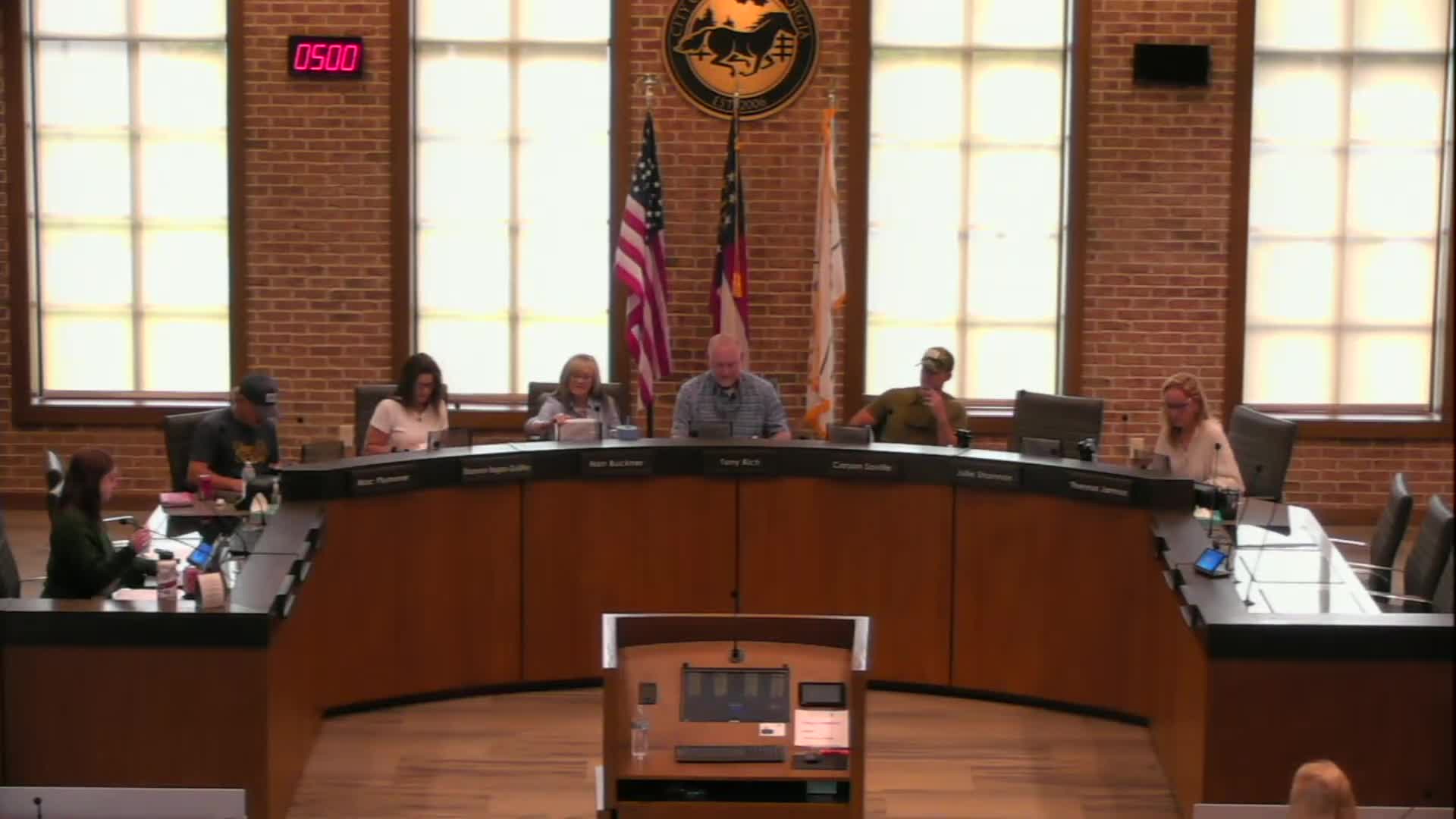
The Milton Equestrian Committee on Aug. 20 continued its multi‑month review of proposed large‑lot incentives and signaled support for a package of code changes staff will draft for later public and Planning Commission review. Community Development staff summarized a slate of incentives and asked committee members which items they wanted the city to pursue.
The incentives under discussion included allowing separate driveway access for lots of 3 acres or greater, converting covered riding‑arena approvals on 10‑acre parcels from a public use‑permit process to an administrative permit if specific criteria are met, stormwater credits and special design allowances for large lots, permitting certain home‑based businesses in accessory buildings on lots of 3 acres or larger, a residential buffer standard when an adjacent parcel is subdivided at double the existing lot count, and a waiver of the city business‑license fee for horse farms.
"Tonight, we are continuing our discussion on large lot incentives," Community Development staff said when opening the item and walked the committee through the proposals. Staff described one access option recommended by Public Works: when a parcel of 3 acres or greater is subdivided, each new lot could be allowed its own dedicated driveway rather than being limited to the number of existing access points.
On covered riding arenas, staff proposed changing the current requirement for a public hearing (use permit) to an administrative permit for arenas on 10 acres or greater that meet a specified set of criteria. Staff said the suggested criteria are based on a prior approval on Wood Road and would include limits such as an arena no larger than about 24,000 square feet, parking set back at least 75 feet from property lines, maximum arena height of 30 feet, a prohibition on loudspeakers, compliance with the Unified Development Code lighting standards for residential areas, and preserving a minimum 25 percent tree canopy on the property. Staff emphasized that applicants who cannot meet those standards would still be able to seek approval through the public hearing process.
Committee members generally supported the covered‑arena administrative path but asked staff to clarify details such as lighting and tree‑canopy requirements and how the rules would apply to existing pasture sites. On stormwater, staff proposed adding a provision to UDC section 11.4 to allow state‑approved best management practices for large lots — dry wells, infiltration trenches, rainwater harvesting and regenerative stormwater conveyances — and to permit recorded conservation easements to be excluded from stormwater acreage calculations. Staff also proposed that the director be allowed to approve variances or alternate stormwater design methods on a case‑by‑case basis. Committee members responded favorably to the proposed flexibility but requested assurances about alignment with state requirements.
On home‑based businesses, staff proposed allowing home occupations to use accessory buildings on lots larger than 3 acres with administrative review, provided they meet the existing home‑occupation limits (no nonresident employees, 750‑square‑foot maximum for the home occupation, no exterior signage or visible storage or displays, limits on patrons, and nuisance‑control requirements). Several members raised questions about equestrian businesses that may need instructors or trainers who are not residents; staff noted that uses that exceed the home‑occupation limits would still require the special‑use or public hearing pathway.
The committee also discussed a residential buffer standard that would require a 50‑foot or 75‑foot undisturbed vegetative buffer along shared boundaries when a proposed subdivision creates two or more times the number of lots adjacent to an existing large lot; the distances would match existing commercial‑to‑residential buffer thresholds (50 feet for sites of 4 acres or less, 75 feet for larger sites). Members asked for clarified planting and maintenance rules for buffers that are sparsely vegetated.
Committee members voiced support for waiving the $175 business‑license fee for horse farms as an incentive to encourage registration and improve the city’s ability to compile an accurate registry of local equestrian businesses. Committee members also asked staff to draft an AG‑exempt application process that would make clear what materials an applicant must submit and to place the application and review in the committee’s meeting process so applicants would present and the committee could advise.
Several committee requests to staff emerged as next steps: provide written draft code language for the proposed incentives; show parcel‑level case examples and illustrations demonstrating how driveway access might change subdivision layouts; provide sample administrative permit forms and the AG‑exempt application; and verify state stormwater and other regulatory alignment. Staff said it would return with examples and draft language at a future meeting. No formal motions or votes on any of these incentive items were taken at the Aug. 20 meeting.
Why this matters: The changes under discussion would alter how the city treats development and accessory uses on larger parcels, with potential effects on subdivision design, tree canopy, stormwater infrastructure, and the availability of equestrian‑scale facilities without a public hearing. Committee members emphasized the goal of creating incentives to preserve a rural/equestrian character while maintaining neighbor protections and regulatory compliance.
Staff will bring draft ordinance language and parcel scenarios back to the committee and then follow the city’s Unified Development Code amendment process, which includes outreach, Planning Commission review and City Council action.
The incentives under discussion included allowing separate driveway access for lots of 3 acres or greater, converting covered riding‑arena approvals on 10‑acre parcels from a public use‑permit process to an administrative permit if specific criteria are met, stormwater credits and special design allowances for large lots, permitting certain home‑based businesses in accessory buildings on lots of 3 acres or larger, a residential buffer standard when an adjacent parcel is subdivided at double the existing lot count, and a waiver of the city business‑license fee for horse farms.
"Tonight, we are continuing our discussion on large lot incentives," Community Development staff said when opening the item and walked the committee through the proposals. Staff described one access option recommended by Public Works: when a parcel of 3 acres or greater is subdivided, each new lot could be allowed its own dedicated driveway rather than being limited to the number of existing access points.
On covered riding arenas, staff proposed changing the current requirement for a public hearing (use permit) to an administrative permit for arenas on 10 acres or greater that meet a specified set of criteria. Staff said the suggested criteria are based on a prior approval on Wood Road and would include limits such as an arena no larger than about 24,000 square feet, parking set back at least 75 feet from property lines, maximum arena height of 30 feet, a prohibition on loudspeakers, compliance with the Unified Development Code lighting standards for residential areas, and preserving a minimum 25 percent tree canopy on the property. Staff emphasized that applicants who cannot meet those standards would still be able to seek approval through the public hearing process.
Committee members generally supported the covered‑arena administrative path but asked staff to clarify details such as lighting and tree‑canopy requirements and how the rules would apply to existing pasture sites. On stormwater, staff proposed adding a provision to UDC section 11.4 to allow state‑approved best management practices for large lots — dry wells, infiltration trenches, rainwater harvesting and regenerative stormwater conveyances — and to permit recorded conservation easements to be excluded from stormwater acreage calculations. Staff also proposed that the director be allowed to approve variances or alternate stormwater design methods on a case‑by‑case basis. Committee members responded favorably to the proposed flexibility but requested assurances about alignment with state requirements.
On home‑based businesses, staff proposed allowing home occupations to use accessory buildings on lots larger than 3 acres with administrative review, provided they meet the existing home‑occupation limits (no nonresident employees, 750‑square‑foot maximum for the home occupation, no exterior signage or visible storage or displays, limits on patrons, and nuisance‑control requirements). Several members raised questions about equestrian businesses that may need instructors or trainers who are not residents; staff noted that uses that exceed the home‑occupation limits would still require the special‑use or public hearing pathway.
The committee also discussed a residential buffer standard that would require a 50‑foot or 75‑foot undisturbed vegetative buffer along shared boundaries when a proposed subdivision creates two or more times the number of lots adjacent to an existing large lot; the distances would match existing commercial‑to‑residential buffer thresholds (50 feet for sites of 4 acres or less, 75 feet for larger sites). Members asked for clarified planting and maintenance rules for buffers that are sparsely vegetated.
Committee members voiced support for waiving the $175 business‑license fee for horse farms as an incentive to encourage registration and improve the city’s ability to compile an accurate registry of local equestrian businesses. Committee members also asked staff to draft an AG‑exempt application process that would make clear what materials an applicant must submit and to place the application and review in the committee’s meeting process so applicants would present and the committee could advise.
Several committee requests to staff emerged as next steps: provide written draft code language for the proposed incentives; show parcel‑level case examples and illustrations demonstrating how driveway access might change subdivision layouts; provide sample administrative permit forms and the AG‑exempt application; and verify state stormwater and other regulatory alignment. Staff said it would return with examples and draft language at a future meeting. No formal motions or votes on any of these incentive items were taken at the Aug. 20 meeting.
Why this matters: The changes under discussion would alter how the city treats development and accessory uses on larger parcels, with potential effects on subdivision design, tree canopy, stormwater infrastructure, and the availability of equestrian‑scale facilities without a public hearing. Committee members emphasized the goal of creating incentives to preserve a rural/equestrian character while maintaining neighbor protections and regulatory compliance.
Staff will bring draft ordinance language and parcel scenarios back to the committee and then follow the city’s Unified Development Code amendment process, which includes outreach, Planning Commission review and City Council action.
Don't Miss a Word: See the Full Meeting!
Go beyond summaries. Unlock every video, transcript, and key insight with a Founder Membership.
✓
Get instant access to full meeting videos
✓
Search and clip any phrase from complete transcripts
✓
Receive AI-powered summaries & custom alerts
✓
Enjoy lifetime, unrestricted access to government data
30-day money-back guarantee
