Cary board debates electric bikes and scooters at schools; administration to gather input
August 15, 2025 | Cary CCSD 26, School Boards, Illinois
This article was created by AI summarizing key points discussed. AI makes mistakes, so for full details and context, please refer to the video of the full meeting. Please report any errors so we can fix them. Report an error »
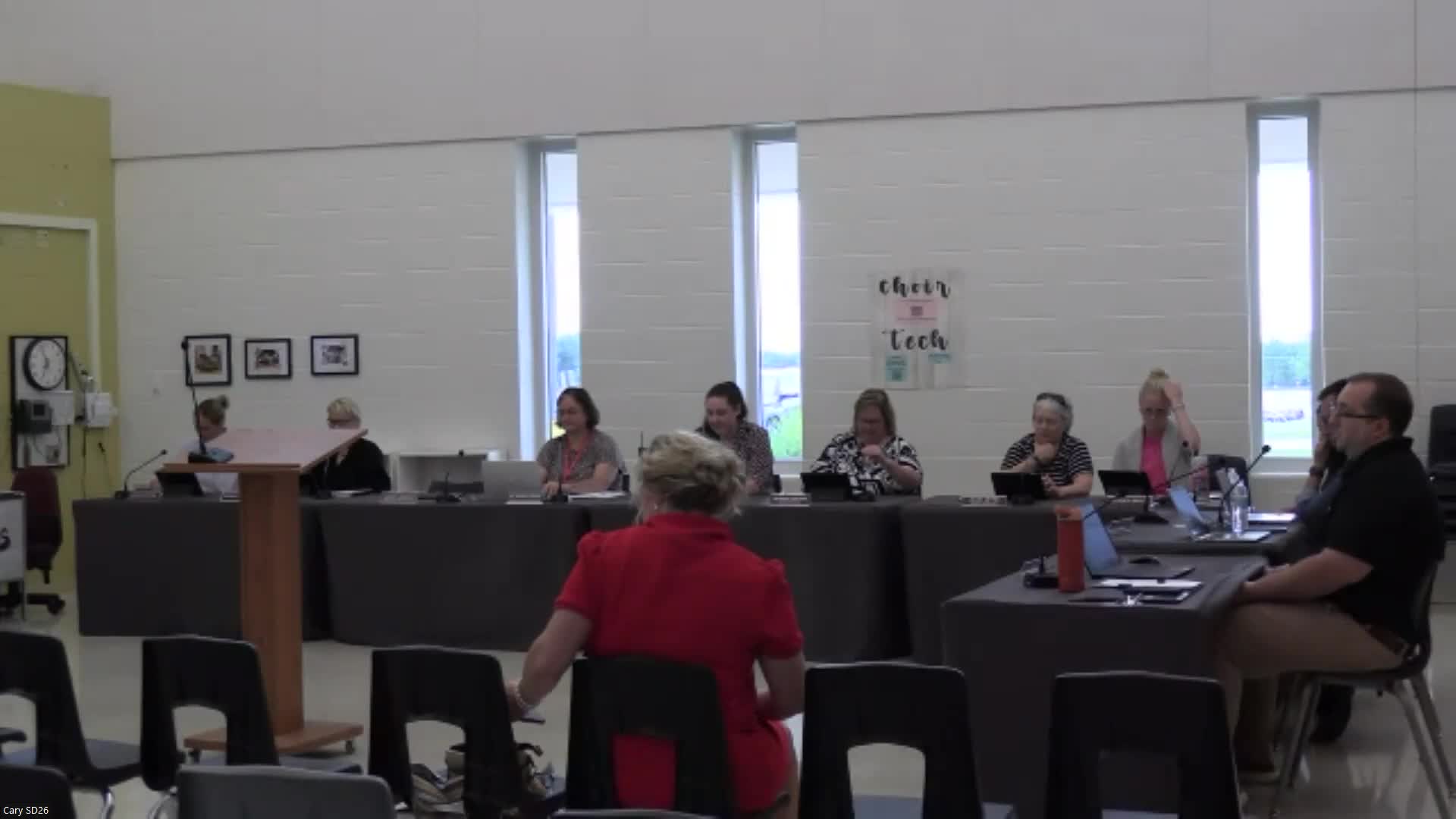
The Cary School District committee of the whole discussed electric bikes and motorized scooters during its Aug. 11, 2025 meeting, with board members raising safety, helmet use and liability concerns and administrators agreeing to gather additional information from building leaders before proposing formal policy changes.
"I am kind of concerned about the prolific use of mostly the scooters," Board member Julie Jetty said, citing neighborhood observations of students riding scooters in the middle of streets and failing to stop at stop signs. Jetty asked her colleagues whether the district should adopt a policy restricting or regulating motorized devices on school property.
Administrators and board members raised three recurring issues: student age and equipment class distinctions, enforcement and monitoring limits for school staff and police, and whether the district should pursue signage or education rather than an outright ban. Dr. Thomas (district administration) said police would not typically enforce device-specific rules during school hours unless an individual was trespassing or laws were broken; building administrators told board members they currently see more electric-bike use than scooters at some campuses but reported few discipline incidents to date.
Board members proposed a range of responses: a districtwide education push emphasizing helmets and safe riding, better signage clarifying that the district is not responsible for lost or stolen devices, and gathering building-level data on device usage and incidents. "We can definitely bring that to you — the administrative team will gather more information, and then talk about, do we put in place a safety course or curriculum," Dr. Thomas said.
Why it matters: Discussion focused on pre K–8 campuses where many students walk from nearby neighborhoods. Board members said motorized devices can travel faster than pedal bikes and create a higher risk of injury if riders do not wear helmets. Administrators noted enforcement challenges: monitoring sidewalks and paths during arrival and dismissal would be resource intensive and police told district officials they would intervene only in trespassing or criminal situations.
No formal policy change or vote occurred. The board directed administration to collect usage and incident information from building principals, to consider signage reminding families the district is not responsible for personal devices, and to explore safety-education options for students and families.
Ending: The board asked administration to return with recommendations after gathering input from building leaders, the junior high and other schools, and to include communications options such as a district safety video or social-media outreach if education is recommended.
"I am kind of concerned about the prolific use of mostly the scooters," Board member Julie Jetty said, citing neighborhood observations of students riding scooters in the middle of streets and failing to stop at stop signs. Jetty asked her colleagues whether the district should adopt a policy restricting or regulating motorized devices on school property.
Administrators and board members raised three recurring issues: student age and equipment class distinctions, enforcement and monitoring limits for school staff and police, and whether the district should pursue signage or education rather than an outright ban. Dr. Thomas (district administration) said police would not typically enforce device-specific rules during school hours unless an individual was trespassing or laws were broken; building administrators told board members they currently see more electric-bike use than scooters at some campuses but reported few discipline incidents to date.
Board members proposed a range of responses: a districtwide education push emphasizing helmets and safe riding, better signage clarifying that the district is not responsible for lost or stolen devices, and gathering building-level data on device usage and incidents. "We can definitely bring that to you — the administrative team will gather more information, and then talk about, do we put in place a safety course or curriculum," Dr. Thomas said.
Why it matters: Discussion focused on pre K–8 campuses where many students walk from nearby neighborhoods. Board members said motorized devices can travel faster than pedal bikes and create a higher risk of injury if riders do not wear helmets. Administrators noted enforcement challenges: monitoring sidewalks and paths during arrival and dismissal would be resource intensive and police told district officials they would intervene only in trespassing or criminal situations.
No formal policy change or vote occurred. The board directed administration to collect usage and incident information from building principals, to consider signage reminding families the district is not responsible for personal devices, and to explore safety-education options for students and families.
Ending: The board asked administration to return with recommendations after gathering input from building leaders, the junior high and other schools, and to include communications options such as a district safety video or social-media outreach if education is recommended.
Don't Miss a Word: See the Full Meeting!
Go beyond summaries. Unlock every video, transcript, and key insight with a Founder Membership.
✓
Get instant access to full meeting videos
✓
Search and clip any phrase from complete transcripts
✓
Receive AI-powered summaries & custom alerts
✓
Enjoy lifetime, unrestricted access to government data
30-day money-back guarantee
