Euclid opens 30-day comment period on 2025–29 HUD consolidated plan, outlines $998,865 CDBG allocation for 2025
June 12, 2025 | Euclid City Boards & Commissions, Euclid, Cuyahoga County, Ohio
This article was created by AI summarizing key points discussed. AI makes mistakes, so for full details and context, please refer to the video of the full meeting. Please report any errors so we can fix them. Report an error »
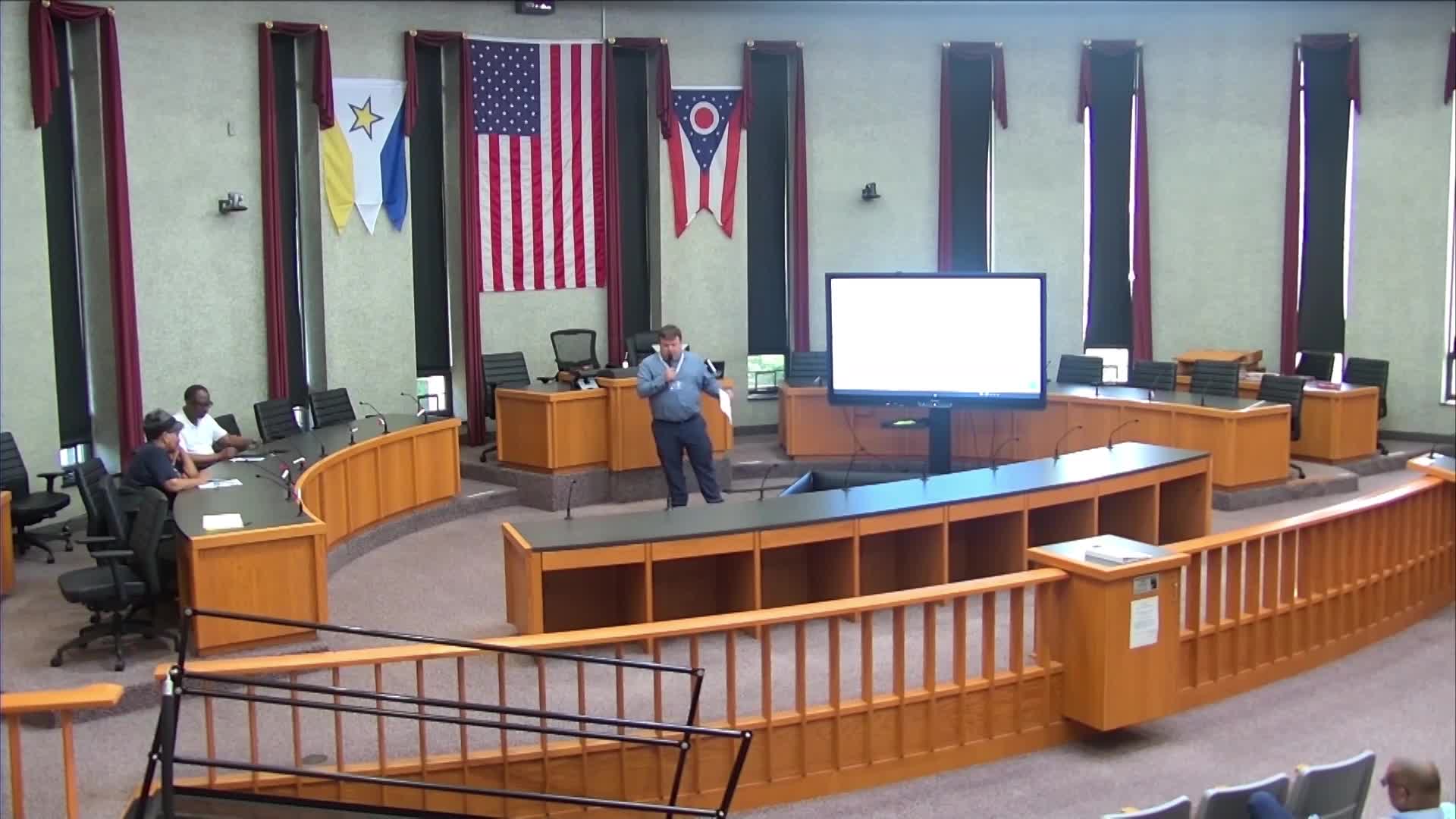
City of Euclid Community Development Manager Ed Chenock presented a draft five‑year consolidated plan for 2025–2029 and the city's 2025 annual action plan, describing proposed uses of Community Development Block Grant (CDBG) funds and related programs and seeking public comment during a 30‑day comment period that closes Saturday, July 5.
The consolidated plan, prepared with consultants from Historic Preservation Group and local advisory committee members, summarizes housing and demographic trends in Euclid, sets broad goals — maintain, improve and expand affordable housing; revitalize residential neighborhoods; provide needed public services; and increase economic opportunities — and identifies program types the city may use under HUD rules. The annual action plan translates those goals into specific 2025 spending proposals and project budgets.
Chenock told attendees the city will submit the consolidated plan and accompanying documents to HUD jointly with nearby jurisdictions through the Cuyahoga Housing Consortium, and emphasized that HUD technical data sets and the American Community Survey introduce reporting lags that affect some published statistics.
Consultant Rick Stica of Historic Preservation Group summarized the community profile in the draft consolidated plan, showing maps and census‑derived measures of median household income, renter/owner mix, age of housing stock and housing cost burden. Stica said large portions of Euclid have median household incomes in the mid‑$30,000s to mid‑$40,000s (2020 figures prepopulated by HUD), and noted the housing stock in many neighborhoods dates to the pre‑ and immediate post‑World War II eras, increasing the likelihood of cyclical repair needs for roofs, furnaces, plumbing and other systems.
City staff and consultants listed program examples eligible under CDBG national objectives: housing rehabilitation and limited replacement (owners and renters who meet income thresholds); public‑infrastructure projects located in low‑ and moderate‑income areas (sidewalks, crosswalks, parks, trails); public services targeted at low‑ and moderate‑income clientele (senior services, youth programs, services for people with disabilities); limited economic development activity to support low‑ and moderate‑income jobs; and, rarely used, slum‑and‑blight activities tied to an inventory or study.
Chenock reviewed Euclid's recent CDBG outputs from the prior five‑year program (2020–2024) used as context for the draft plan: exterior paint work on 70 houses; replacement of five furnaces; vinyl siding on 21 dwellings; roof replacements on nine homes; demolition of three vacant swimming pools to increase green space; summer camp slots for 73 children through public service contracts; assistance to 10 small businesses through a storefront renovation program; sidewalk and crosswalk replacement on 14 neighborhood streets; replacement of four playgrounds and construction of one new basketball court; planting of 309 street trees in parks and rights‑of‑way; installation of a multipurpose trail at Heritage (Hero) Park; delivery of services to 2,847 seniors through congregate and home‑delivered meals and adult day services; and installation of eight wheelchair ramps.
For program year 2025 the draft allocation and related funds are: a new CDBG allocation of $998,865 and prior‑year committed or unspent CDBG funds totaling $1,174,916.84. The draft budget breakdown as presented in the meeting packet was: $128,000 in new funds (plus $97,534.10 prior funds) for housing programs; $447,120.45 in new funds (plus $762,918.76 prior funds) for neighborhood revitalization and public infrastructure; $149,744.55 in new funds (plus $33,477.98 prior funds) for public services; $125,000 in new funds (plus $280,986 prior funds) for economic opportunity programs; and $149,000 for general administration.
Planned or proposed 2025 programs described during the hearing include a low‑interest home repair loan administered by the Euclid Development Corporation (EDCOR) with interest rates no higher than 3 percent; an exterior paint program limited to wood and aluminum‑sided houses (vinyl siding is excluded from painting); a furnace safety program providing cleaning, inspection and replacement when units are unsafe; a new roof replacement matching grant that will match up to $7,500 based on income for roofs that are visibly deteriorated and cited by the Department of Building and Housing; and a forthcoming home accessibility and rehabilitation matching grant (details under design and pending HUD, Finance and Law Department review). Chenock said the roof matching grant and the accessibility/rehab program are expected to be rolled out after internal and HUD reviews, with the roof match program targeted for launch no later than September.
Neighborhood revitalization projects proposed in the draft plan include a sidewalk and crosswalk replacement program (with ADA upgrades), replacement of the pedestrian/bicycle trail near E. 215th Street that connects to Arbor and nearby streets, streetscape work on North Lakeland Boulevard, playground replacements at Russell Avenue Park and Sims Park, and additional trail and amenities in Heritage (Hero) Park. Economic activities in the draft plan include a storefront renovation program that has seen increased interest from local businesses and plans for a future revolving loan fund for economic development under the five‑year plan.
Staff stressed eligible and ineligible CDBG activities. Examples of ineligible uses noted at the hearing included general government salaries, routine maintenance (potholes, routine tree trimming, street light bulb changes), direct income payments (food or clothing giveaways), purchase of personal vehicles or household furniture, entertainment events, and political activity. Chenock advised applicants and residents that CDBG funds must meet HUD national objectives and other federal requirements.
A resident during public comment asked whether the city has programs to help homeowners replace windows. Chenock replied that the existing option is a low‑interest loan through EDCOR that can be used for window replacement and that the forthcoming $7,500 matching grant could also be applied to windows; any costs above the $7,500 cap would be the homeowner's responsibility to cover by loan or out‑of‑pocket.
The draft plan and annual action plan are available for public review in a binder at Euclid City Hall and online; staff offered appointments during business hours for questions. Following the comment period staff will finalize the documents for joint submission to HUD as part of the Cuyahoga Housing Consortium. No formal votes were taken at the hearing.
Community members and organizations who want to comment were reminded the 30‑day public comment period closes Saturday, July 5, and were encouraged to submit written comments in addition to speaking at the hearing.
The consolidated plan, prepared with consultants from Historic Preservation Group and local advisory committee members, summarizes housing and demographic trends in Euclid, sets broad goals — maintain, improve and expand affordable housing; revitalize residential neighborhoods; provide needed public services; and increase economic opportunities — and identifies program types the city may use under HUD rules. The annual action plan translates those goals into specific 2025 spending proposals and project budgets.
Chenock told attendees the city will submit the consolidated plan and accompanying documents to HUD jointly with nearby jurisdictions through the Cuyahoga Housing Consortium, and emphasized that HUD technical data sets and the American Community Survey introduce reporting lags that affect some published statistics.
Consultant Rick Stica of Historic Preservation Group summarized the community profile in the draft consolidated plan, showing maps and census‑derived measures of median household income, renter/owner mix, age of housing stock and housing cost burden. Stica said large portions of Euclid have median household incomes in the mid‑$30,000s to mid‑$40,000s (2020 figures prepopulated by HUD), and noted the housing stock in many neighborhoods dates to the pre‑ and immediate post‑World War II eras, increasing the likelihood of cyclical repair needs for roofs, furnaces, plumbing and other systems.
City staff and consultants listed program examples eligible under CDBG national objectives: housing rehabilitation and limited replacement (owners and renters who meet income thresholds); public‑infrastructure projects located in low‑ and moderate‑income areas (sidewalks, crosswalks, parks, trails); public services targeted at low‑ and moderate‑income clientele (senior services, youth programs, services for people with disabilities); limited economic development activity to support low‑ and moderate‑income jobs; and, rarely used, slum‑and‑blight activities tied to an inventory or study.
Chenock reviewed Euclid's recent CDBG outputs from the prior five‑year program (2020–2024) used as context for the draft plan: exterior paint work on 70 houses; replacement of five furnaces; vinyl siding on 21 dwellings; roof replacements on nine homes; demolition of three vacant swimming pools to increase green space; summer camp slots for 73 children through public service contracts; assistance to 10 small businesses through a storefront renovation program; sidewalk and crosswalk replacement on 14 neighborhood streets; replacement of four playgrounds and construction of one new basketball court; planting of 309 street trees in parks and rights‑of‑way; installation of a multipurpose trail at Heritage (Hero) Park; delivery of services to 2,847 seniors through congregate and home‑delivered meals and adult day services; and installation of eight wheelchair ramps.
For program year 2025 the draft allocation and related funds are: a new CDBG allocation of $998,865 and prior‑year committed or unspent CDBG funds totaling $1,174,916.84. The draft budget breakdown as presented in the meeting packet was: $128,000 in new funds (plus $97,534.10 prior funds) for housing programs; $447,120.45 in new funds (plus $762,918.76 prior funds) for neighborhood revitalization and public infrastructure; $149,744.55 in new funds (plus $33,477.98 prior funds) for public services; $125,000 in new funds (plus $280,986 prior funds) for economic opportunity programs; and $149,000 for general administration.
Planned or proposed 2025 programs described during the hearing include a low‑interest home repair loan administered by the Euclid Development Corporation (EDCOR) with interest rates no higher than 3 percent; an exterior paint program limited to wood and aluminum‑sided houses (vinyl siding is excluded from painting); a furnace safety program providing cleaning, inspection and replacement when units are unsafe; a new roof replacement matching grant that will match up to $7,500 based on income for roofs that are visibly deteriorated and cited by the Department of Building and Housing; and a forthcoming home accessibility and rehabilitation matching grant (details under design and pending HUD, Finance and Law Department review). Chenock said the roof matching grant and the accessibility/rehab program are expected to be rolled out after internal and HUD reviews, with the roof match program targeted for launch no later than September.
Neighborhood revitalization projects proposed in the draft plan include a sidewalk and crosswalk replacement program (with ADA upgrades), replacement of the pedestrian/bicycle trail near E. 215th Street that connects to Arbor and nearby streets, streetscape work on North Lakeland Boulevard, playground replacements at Russell Avenue Park and Sims Park, and additional trail and amenities in Heritage (Hero) Park. Economic activities in the draft plan include a storefront renovation program that has seen increased interest from local businesses and plans for a future revolving loan fund for economic development under the five‑year plan.
Staff stressed eligible and ineligible CDBG activities. Examples of ineligible uses noted at the hearing included general government salaries, routine maintenance (potholes, routine tree trimming, street light bulb changes), direct income payments (food or clothing giveaways), purchase of personal vehicles or household furniture, entertainment events, and political activity. Chenock advised applicants and residents that CDBG funds must meet HUD national objectives and other federal requirements.
A resident during public comment asked whether the city has programs to help homeowners replace windows. Chenock replied that the existing option is a low‑interest loan through EDCOR that can be used for window replacement and that the forthcoming $7,500 matching grant could also be applied to windows; any costs above the $7,500 cap would be the homeowner's responsibility to cover by loan or out‑of‑pocket.
The draft plan and annual action plan are available for public review in a binder at Euclid City Hall and online; staff offered appointments during business hours for questions. Following the comment period staff will finalize the documents for joint submission to HUD as part of the Cuyahoga Housing Consortium. No formal votes were taken at the hearing.
Community members and organizations who want to comment were reminded the 30‑day public comment period closes Saturday, July 5, and were encouraged to submit written comments in addition to speaking at the hearing.
View the Full Meeting & All Its Details
This article offers just a summary. Unlock complete video, transcripts, and insights as a Founder Member.
✓
Watch full, unedited meeting videos
✓
Search every word spoken in unlimited transcripts
✓
AI summaries & real-time alerts (all government levels)
✓
Permanent access to expanding government content
30-day money-back guarantee
