Mount Vernon council keeps comprehensive-plan hearing open after heated public forum over single‑family zoning
October 15, 2025 | Mount Vernon, Westchester County, New York
This article was created by AI summarizing key points discussed. AI makes mistakes, so for full details and context, please refer to the video of the full meeting. Please report any errors so we can fix them. Report an error »
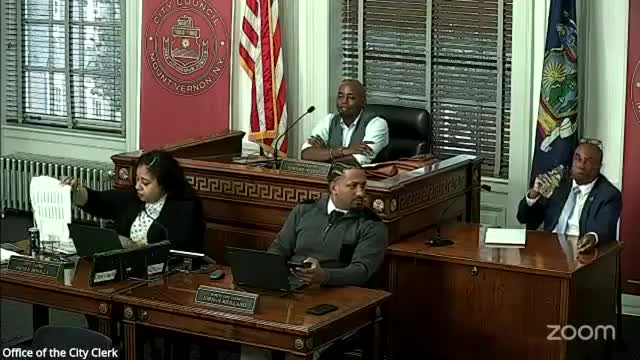
A Mount Vernon City Council public hearing on the draft Envision Mount Vernon comprehensive plan on Oct. 14 drew hours of testimony from residents who urged the council to protect single‑family neighborhoods, demanded more detailed fiscal and environmental analyses and challenged proposed changes that could allow duplexes and triplexes in existing single‑family zones.
Acting Council President Ed Poteet opened the hearing and said the panel would accept comments; after nearly three hours of testimony the council voted to keep the public hearing open for 10 business days to allow revisions and additional public input. The council then closed that night’s meeting but left the hearing record open.
The hearing focused on language in the draft that opponents said is vague and could effectively upzone large portions of the city. “I do not support any plan or proposal that seeks to eliminate single family zoning in the city of Mount Vernon,” said Mayor (unnamed), who told the council she had submitted a letter and wanted to reaffirm her opposition to eliminating single‑family zoning. Pat Cleary of Cleary Consulting, the planning consultant, told the audience, “There is nothing in the plan that calls for eliminating single family zones.”
Speakers representing a cross section of the city told council members that the draft’s land‑use recommendations risked reducing property values, worsening parking problems and overburdening aging infrastructure. Former Mayor Richard Thomas called the draft “a vision without vitality” and said it resembled “The Walking Dead” in its approach. Other residents pointed to long‑running sewer and flooding problems and questioned whether the city has funds to support more development; several asked the council to complete a generic environmental impact statement (GEIS) and a fiscal‑impact analysis before adopting major zoning changes.
Some speakers supported parts of the draft. Ray Hollingsworth Falu, president‑elect of the Hudson Gateway Association of Realtors (speaking online), praised the document’s housing goals and said Mount Vernon needs more mixed‑income housing options to address affordability. An online commenter also endorsed co‑housing and transit‑oriented development around train stations.
Commissioner James Rouse, the city’s planning commissioner, and the consulting team acknowledged that the plan’s placemaking and low‑density language had been written broadly by design, and said the zoning rewrite that follows the comprehensive plan will be the venue for detailed rules. Rouse told the room the plan is intended as a long‑range vision and that a third of the city is currently made up of single‑family housing; he said the team will revise wording to make protections and intended locations for density clearer.
What residents asked for
- Clear statement that single‑family zoning will be retained where the community expects it and specification of which neighborhoods are to remain low density.
- A published fiscal impact analysis of proposed pilots and tax‑exemption agreements before zoning changes are adopted.
- Completion and publication of environmental review (GEIS) and traffic/stormwater impact studies prior to any final zoning update.
- Clarification of any “by right” changes that would permit duplexes, triplexes, ADUs or other housing types without case‑by‑case review.
Clarifying details from the meeting
- Draft length: approximately 475 pages (referred to repeatedly by residents).
- Consultant contract cited by speakers: $600,000 (mentioned by several speakers as the cost of producing the plan).
- State infrastructure support: the mayor said New York State provided about $170,000,000 for sewer/stormwater projects.
- School enrollment: the mayor said district enrollment fell from roughly 10,000 to about 6,500 students (a decline of about 35% over 10–15 years, as stated).
- Existing housing mix: commissioners said roughly one‑third of the city is single‑family housing and about 46% is one‑ and two‑family homes combined.
- Consultant note on ADUs: Cleary said ADUs and small multifamily options were suggestions among roughly 50 housing recommendations and that many communities regulate ADUs by requiring owner‑occupancy to prevent absentee ownership.
Votes at a glance
- Motion: Keep the public hearing on the draft Envision Mount Vernon comprehensive plan open for 10 business days (mover/second not specified on the record). Vote (roll call): Councilman Boxhill — Aye; Councilor McCaymond Gleeson — Aye; Councilman Thompson — Aye; Acting Council President Ed Poteet — Aye. Outcome: passed. Tally: yes 4, no 0.
- Motion: Close the public meeting for Oct. 14 (procedural close of that evening’s session). Vote (roll call): Councilman Boxhill — Aye; Councilor McCaymond Gleeson — Aye; Councilman Thompson — Aye; Acting Council President Ed Poteet — Aye. Outcome: passed. Tally: yes 4, no 0.
What happens next
Planning staff and the consulting team said they will review the written and oral comments, revise the draft where wording caused confusion—particularly in the placemaking and low‑density sections—and return an updated draft. The planning commissioner said the zoning ordinance rewrite that follows the comprehensive plan will contain the detailed rules, and the council left the hearing record open to receive additional written comments and responses during the 10‑business‑day period.
The public record and how to comment
The city clerk said the clerk’s office had received 34 written comments by the evening of Oct. 14; copies are available on the city website and in the public record. The commissioner and the clerks invited residents to submit additional written input during the period the hearing remains open.
Acting Council President Ed Poteet opened the hearing and said the panel would accept comments; after nearly three hours of testimony the council voted to keep the public hearing open for 10 business days to allow revisions and additional public input. The council then closed that night’s meeting but left the hearing record open.
The hearing focused on language in the draft that opponents said is vague and could effectively upzone large portions of the city. “I do not support any plan or proposal that seeks to eliminate single family zoning in the city of Mount Vernon,” said Mayor (unnamed), who told the council she had submitted a letter and wanted to reaffirm her opposition to eliminating single‑family zoning. Pat Cleary of Cleary Consulting, the planning consultant, told the audience, “There is nothing in the plan that calls for eliminating single family zones.”
Speakers representing a cross section of the city told council members that the draft’s land‑use recommendations risked reducing property values, worsening parking problems and overburdening aging infrastructure. Former Mayor Richard Thomas called the draft “a vision without vitality” and said it resembled “The Walking Dead” in its approach. Other residents pointed to long‑running sewer and flooding problems and questioned whether the city has funds to support more development; several asked the council to complete a generic environmental impact statement (GEIS) and a fiscal‑impact analysis before adopting major zoning changes.
Some speakers supported parts of the draft. Ray Hollingsworth Falu, president‑elect of the Hudson Gateway Association of Realtors (speaking online), praised the document’s housing goals and said Mount Vernon needs more mixed‑income housing options to address affordability. An online commenter also endorsed co‑housing and transit‑oriented development around train stations.
Commissioner James Rouse, the city’s planning commissioner, and the consulting team acknowledged that the plan’s placemaking and low‑density language had been written broadly by design, and said the zoning rewrite that follows the comprehensive plan will be the venue for detailed rules. Rouse told the room the plan is intended as a long‑range vision and that a third of the city is currently made up of single‑family housing; he said the team will revise wording to make protections and intended locations for density clearer.
What residents asked for
- Clear statement that single‑family zoning will be retained where the community expects it and specification of which neighborhoods are to remain low density.
- A published fiscal impact analysis of proposed pilots and tax‑exemption agreements before zoning changes are adopted.
- Completion and publication of environmental review (GEIS) and traffic/stormwater impact studies prior to any final zoning update.
- Clarification of any “by right” changes that would permit duplexes, triplexes, ADUs or other housing types without case‑by‑case review.
Clarifying details from the meeting
- Draft length: approximately 475 pages (referred to repeatedly by residents).
- Consultant contract cited by speakers: $600,000 (mentioned by several speakers as the cost of producing the plan).
- State infrastructure support: the mayor said New York State provided about $170,000,000 for sewer/stormwater projects.
- School enrollment: the mayor said district enrollment fell from roughly 10,000 to about 6,500 students (a decline of about 35% over 10–15 years, as stated).
- Existing housing mix: commissioners said roughly one‑third of the city is single‑family housing and about 46% is one‑ and two‑family homes combined.
- Consultant note on ADUs: Cleary said ADUs and small multifamily options were suggestions among roughly 50 housing recommendations and that many communities regulate ADUs by requiring owner‑occupancy to prevent absentee ownership.
Votes at a glance
- Motion: Keep the public hearing on the draft Envision Mount Vernon comprehensive plan open for 10 business days (mover/second not specified on the record). Vote (roll call): Councilman Boxhill — Aye; Councilor McCaymond Gleeson — Aye; Councilman Thompson — Aye; Acting Council President Ed Poteet — Aye. Outcome: passed. Tally: yes 4, no 0.
- Motion: Close the public meeting for Oct. 14 (procedural close of that evening’s session). Vote (roll call): Councilman Boxhill — Aye; Councilor McCaymond Gleeson — Aye; Councilman Thompson — Aye; Acting Council President Ed Poteet — Aye. Outcome: passed. Tally: yes 4, no 0.
What happens next
Planning staff and the consulting team said they will review the written and oral comments, revise the draft where wording caused confusion—particularly in the placemaking and low‑density sections—and return an updated draft. The planning commissioner said the zoning ordinance rewrite that follows the comprehensive plan will contain the detailed rules, and the council left the hearing record open to receive additional written comments and responses during the 10‑business‑day period.
The public record and how to comment
The city clerk said the clerk’s office had received 34 written comments by the evening of Oct. 14; copies are available on the city website and in the public record. The commissioner and the clerks invited residents to submit additional written input during the period the hearing remains open.
Don't Miss a Word: See the Full Meeting!
Go beyond summaries. Unlock every video, transcript, and key insight with a Founder Membership.
✓
Get instant access to full meeting videos
✓
Search and clip any phrase from complete transcripts
✓
Receive AI-powered summaries & custom alerts
✓
Enjoy lifetime, unrestricted access to government data
30-day money-back guarantee
