Mayor�agenda calls for larger Pensacola Energy transfer as council raises questions
August 12, 2025 | Pensacola, Escambia County, Florida
This article was created by AI summarizing key points discussed. AI makes mistakes, so for full details and context, please refer to the video of the full meeting. Please report any errors so we can fix them. Report an error »
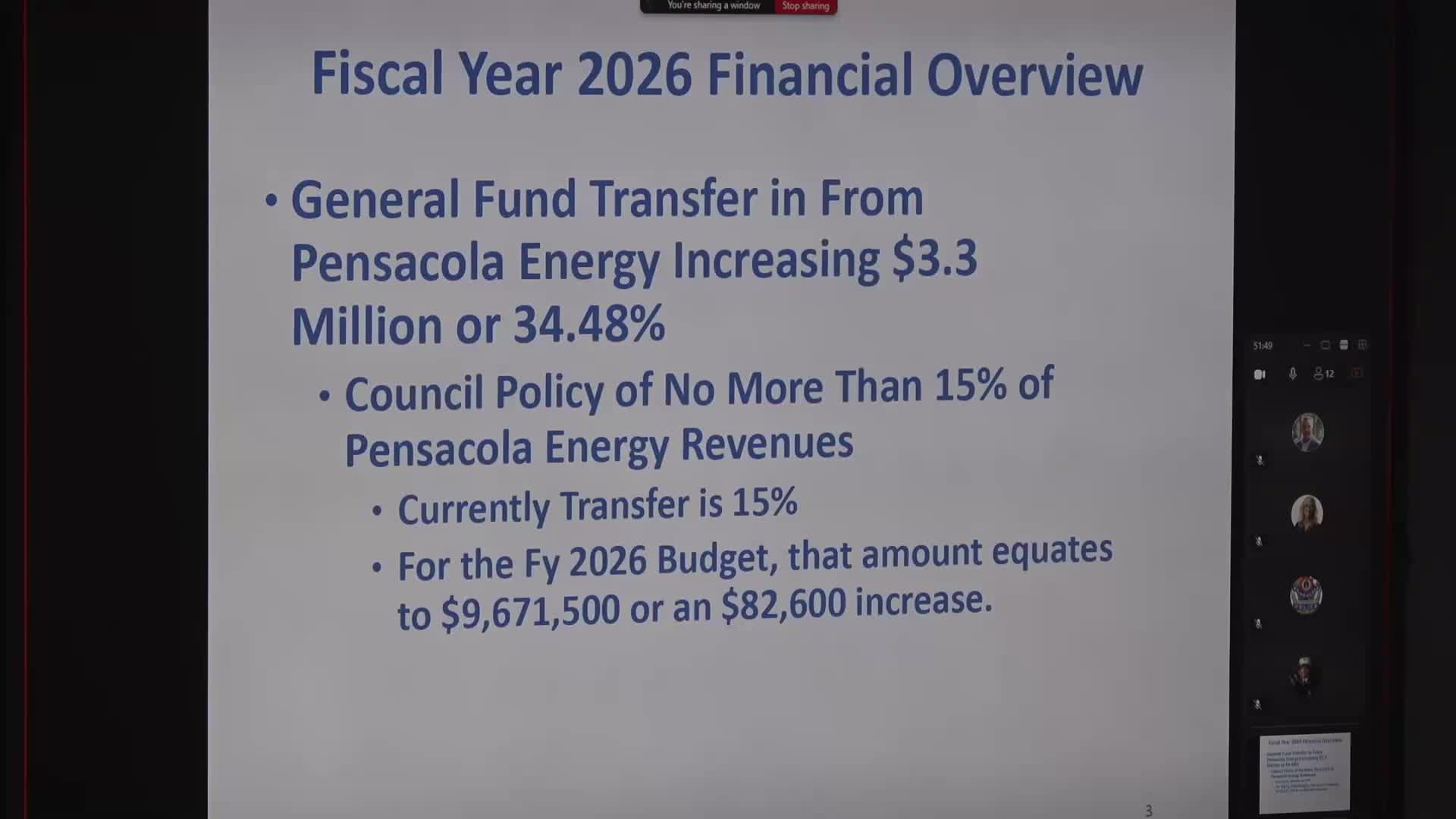
City finance officials told the City Council during an annual budget workshop that the proposed fiscal 2026 budget relies heavily on a larger transfer from Pensacola Energy, and invited council questions about risks and alternatives. Finance Director Yvettedescribed a proposal to raise the portion of Pensacola Energy revenues transferred into the general fund from the councilpolicy cap of 15% toward 20%, saying: “The general fund transfer in from Pensacola Energy is increasing 3,300,000.0 or 34.48.”
Mayor Tim Reeves and finance staff said the increase is meant to replace a previously steady revenue source that is no longer available and to help maintain services while other major local revenues remain flat. The mayor framed the change as part of a longer-term plan to protect core services and to fund employee pay adjustments and asset maintenance; he and staff stressed the move was intended to be temporary and to be revisited when other fiscal reliefs arrive.
Several council members pressed administration officials for more detail. Council Vice President Patton said she was uncomfortable increasing an enterprise transfer while the utility plans a bond issuance and rate proposal, and asked for a separate workshop on Pensacola Energy finances. Patton said she was unsettled by “too many moving parts” and wanted clarity about how bond proceeds, reserves and future rate changes would be used. Council member Baer asked staff whether the proposed higher transfer had been used to offset a specific lost revenue source and how the transfer levels compared historically.
Finance staff pointed to the historical variability of Pensacola Energy revenues and noted the general fundtransfer has ranged in prior years; they said the proposed change would not exceed levels the city had sometimes reached in earlier years. Staff also warned that raising the enterprise transfer percentage could be a credit consideration for rating agencies. "The increased percentage of the transfer to the general fund could possibly cause a negative rating when going out to the bond market," the finance presentation said, adding that analysts at Fitch, Moodys and S&P consider such transfers when assessing enterprise and general fund linkages.
Council members asked for more specifics before voting on the final budget: which projects or operating needs the extra transfer would support, whether the proposed bond issuance would replenish utility reserves, and whether the transfer would push the city past prudent thresholds. The administration asked council to consider changes at the first public hearing in September, to let finance staff finish transitioning to a new financial system and to avoid last-minute changes during the software go-live. Council members requested follow-up briefings on the Pensacola Energy bond plan and a clearer accounting of how the proposed transfer affects ongoing utility customers and the citygeneral fund.
The workshop schedule sets the first public hearing for Sept. 3 and the final hearing for Sept. 10, when the city will consider the mayorproposed budget and any council amendments.
Mayor Tim Reeves and finance staff said the increase is meant to replace a previously steady revenue source that is no longer available and to help maintain services while other major local revenues remain flat. The mayor framed the change as part of a longer-term plan to protect core services and to fund employee pay adjustments and asset maintenance; he and staff stressed the move was intended to be temporary and to be revisited when other fiscal reliefs arrive.
Several council members pressed administration officials for more detail. Council Vice President Patton said she was uncomfortable increasing an enterprise transfer while the utility plans a bond issuance and rate proposal, and asked for a separate workshop on Pensacola Energy finances. Patton said she was unsettled by “too many moving parts” and wanted clarity about how bond proceeds, reserves and future rate changes would be used. Council member Baer asked staff whether the proposed higher transfer had been used to offset a specific lost revenue source and how the transfer levels compared historically.
Finance staff pointed to the historical variability of Pensacola Energy revenues and noted the general fundtransfer has ranged in prior years; they said the proposed change would not exceed levels the city had sometimes reached in earlier years. Staff also warned that raising the enterprise transfer percentage could be a credit consideration for rating agencies. "The increased percentage of the transfer to the general fund could possibly cause a negative rating when going out to the bond market," the finance presentation said, adding that analysts at Fitch, Moodys and S&P consider such transfers when assessing enterprise and general fund linkages.
Council members asked for more specifics before voting on the final budget: which projects or operating needs the extra transfer would support, whether the proposed bond issuance would replenish utility reserves, and whether the transfer would push the city past prudent thresholds. The administration asked council to consider changes at the first public hearing in September, to let finance staff finish transitioning to a new financial system and to avoid last-minute changes during the software go-live. Council members requested follow-up briefings on the Pensacola Energy bond plan and a clearer accounting of how the proposed transfer affects ongoing utility customers and the citygeneral fund.
The workshop schedule sets the first public hearing for Sept. 3 and the final hearing for Sept. 10, when the city will consider the mayorproposed budget and any council amendments.
Don't Miss a Word: See the Full Meeting!
Go beyond summaries. Unlock every video, transcript, and key insight with a Founder Membership.
✓
Get instant access to full meeting videos
✓
Search and clip any phrase from complete transcripts
✓
Receive AI-powered summaries & custom alerts
✓
Enjoy lifetime, unrestricted access to government data
30-day money-back guarantee
