City council candidates debate housing, Picture Main Street, climate and business support at NHS forum
September 30, 2025 | Northampton City, Hampshire County, Massachusetts
This article was created by AI summarizing key points discussed. AI makes mistakes, so for full details and context, please refer to the video of the full meeting. Please report any errors so we can fix them. Report an error »
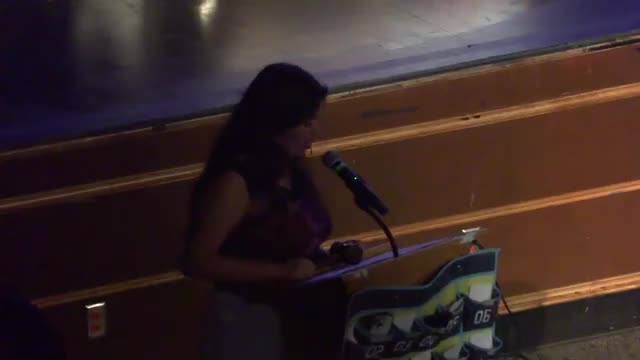
Northampton — At a candidate forum held at Northampton High School, city council hopefuls addressed a range of municipal issues that residents have raised during a busy local campaign: persistent housing affordability challenges, the contested Picture Main Street downtown redesign, climate and energy initiatives, small‑business support during construction, and community questions about L3Harris and Smith College.
The city council segment opened after a student‑union intermission and drew multiple at‑large candidates, including Deb Henson, Benjamin Spencer, Garrick Perry, Meg Robbins and others. The discussion alternated between policy proposals and critiques of current city practice.
Why it matters: Candidates framed housing and downtown design as central to long‑term economic and demographic outcomes. Several said housing shortages and high rent push younger residents out and make it harder for long‑time residents to remain. Picture Main Street — a multi‑year redesign of Main Street that candidates said is tied to state funding and infrastructure work — was debated for safety, public process and potential construction impacts on downtown businesses.
Housing and affordability: Candidates described a complex market. Meg Robbins and others urged more by‑right duplexes and accessory dwelling units, lowering parking requirements and state/federal advocacy to ease costs for developers of affordable units. One candidate cited “282 units” coming (Prospect Place was named in the forum) and said their lottery had about 3,600 applicants for roughly 60 units, a sign of high demand.
Proposals ranged from encouraging developers to include set‑asides of affordable and ADA‑compliant units to pursuing rent‑stabilization measures, implementing a vacant‑storefront tax or registry, and exploring rent‑to‑own models. Some candidates recommended reducing barriers for small developers and improving code and permitting to let more housing be built where infrastructure exists.
Picture Main Street: The downtown redesign drew sharp debate. Supporters said MassDOT classified Main Street as a high crash cluster and the design — which candidates said is accompanied by roughly $26 million in state transportation grant funding — will improve pedestrian and cyclist safety, accessibility and underground infrastructure. Opponents and cautious candidates called for a trial run, clearer answers on snow removal and delivery logistics, and greater local input; some argued the prior planning process did not disaggregate resident responses and that downtown businesses fear extended construction harm.
Business and economic development: Candidates emphasized that small businesses need assistance during any downtown construction and that vacancy and high rents are already straining the commercial corridor. Proposals included a vacant‑storefront tax, incentives through the Massachusetts Vacant Storefront Program, better landlord accountability for building conditions, and expanded support for marketing and access to low‑cost loans and grants. The mayoral and council offices' partnership with local nonprofit developers such as Valley CDC and Habitat for Humanity was noted as progress on subsidized housing.
Climate and energy: Several candidates cited the city’s Climate Action and Project Administration (CAPA) department and local initiatives: energy reductions in municipal buildings, Valley Green Energy, a climate mitigation stabilization fund and a shared energy‑advocate program with neighboring towns. Candidates supported incentives for electrification, rooftop solar, geothermal projects and free or subsidized transit (one candidate suggested free school buses) to reduce vehicle use. Smith College’s geothermal project was highlighted as a positive local example.
Smith College and L3Harris: Candidates described a mixed relationship with Smith College: the college provides student access to some classes, sponsors downtown events, and has recently committed funds for city needs; candidates said the city should seek recurring payments in lieu of taxes (PILOT) or other sustained commitments. On L3Harris — a defense contractor that many in the community oppose for its role in weapons production — candidates repeatedly said city government has limited legal mechanisms to force the company to leave a privately owned site. Several suggested using zoning policy proactively, asking for clawbacks of past incentives, or pushing for broader state/federal action, while acknowledging legal constraints.
Accessibility and infrastructure: Candidates raised sidewalk and road maintenance and ADA access as persistent operational problems. Some said the city has increased capital investment in FY26 with larger sidewalk and road repaving allocations and chapter 90 funds, while challengers said residents still face impassable sidewalks in winter and asked for clearer prioritization of operational funding versus reserve build‑up.
Budget and overrides: Debate over the city’s fiscal stability plan and periodic overrides surfaced repeatedly. Some candidates defended the fiscal stability plan as a tool to smooth recurring budget challenges and avoid annual cuts; others argued the plan prioritizes reserves over current operations and urged a budgeting approach that funds present‑day essential services first.
The forum closed with closing statements urging voter participation; candidates asked students to encourage neighbors to vote and emphasized that local choices will affect housing, downtown design and school funding in the years ahead.
Sources: Candidate remarks at the NHS auditorium forum, recorded and livestreamed by Northampton Open Media. Quoted figures (lottery applications, state grant amounts, capital appropriation increases) were referenced on stage and are reported here as stated by candidates.
The city council segment opened after a student‑union intermission and drew multiple at‑large candidates, including Deb Henson, Benjamin Spencer, Garrick Perry, Meg Robbins and others. The discussion alternated between policy proposals and critiques of current city practice.
Why it matters: Candidates framed housing and downtown design as central to long‑term economic and demographic outcomes. Several said housing shortages and high rent push younger residents out and make it harder for long‑time residents to remain. Picture Main Street — a multi‑year redesign of Main Street that candidates said is tied to state funding and infrastructure work — was debated for safety, public process and potential construction impacts on downtown businesses.
Housing and affordability: Candidates described a complex market. Meg Robbins and others urged more by‑right duplexes and accessory dwelling units, lowering parking requirements and state/federal advocacy to ease costs for developers of affordable units. One candidate cited “282 units” coming (Prospect Place was named in the forum) and said their lottery had about 3,600 applicants for roughly 60 units, a sign of high demand.
Proposals ranged from encouraging developers to include set‑asides of affordable and ADA‑compliant units to pursuing rent‑stabilization measures, implementing a vacant‑storefront tax or registry, and exploring rent‑to‑own models. Some candidates recommended reducing barriers for small developers and improving code and permitting to let more housing be built where infrastructure exists.
Picture Main Street: The downtown redesign drew sharp debate. Supporters said MassDOT classified Main Street as a high crash cluster and the design — which candidates said is accompanied by roughly $26 million in state transportation grant funding — will improve pedestrian and cyclist safety, accessibility and underground infrastructure. Opponents and cautious candidates called for a trial run, clearer answers on snow removal and delivery logistics, and greater local input; some argued the prior planning process did not disaggregate resident responses and that downtown businesses fear extended construction harm.
Business and economic development: Candidates emphasized that small businesses need assistance during any downtown construction and that vacancy and high rents are already straining the commercial corridor. Proposals included a vacant‑storefront tax, incentives through the Massachusetts Vacant Storefront Program, better landlord accountability for building conditions, and expanded support for marketing and access to low‑cost loans and grants. The mayoral and council offices' partnership with local nonprofit developers such as Valley CDC and Habitat for Humanity was noted as progress on subsidized housing.
Climate and energy: Several candidates cited the city’s Climate Action and Project Administration (CAPA) department and local initiatives: energy reductions in municipal buildings, Valley Green Energy, a climate mitigation stabilization fund and a shared energy‑advocate program with neighboring towns. Candidates supported incentives for electrification, rooftop solar, geothermal projects and free or subsidized transit (one candidate suggested free school buses) to reduce vehicle use. Smith College’s geothermal project was highlighted as a positive local example.
Smith College and L3Harris: Candidates described a mixed relationship with Smith College: the college provides student access to some classes, sponsors downtown events, and has recently committed funds for city needs; candidates said the city should seek recurring payments in lieu of taxes (PILOT) or other sustained commitments. On L3Harris — a defense contractor that many in the community oppose for its role in weapons production — candidates repeatedly said city government has limited legal mechanisms to force the company to leave a privately owned site. Several suggested using zoning policy proactively, asking for clawbacks of past incentives, or pushing for broader state/federal action, while acknowledging legal constraints.
Accessibility and infrastructure: Candidates raised sidewalk and road maintenance and ADA access as persistent operational problems. Some said the city has increased capital investment in FY26 with larger sidewalk and road repaving allocations and chapter 90 funds, while challengers said residents still face impassable sidewalks in winter and asked for clearer prioritization of operational funding versus reserve build‑up.
Budget and overrides: Debate over the city’s fiscal stability plan and periodic overrides surfaced repeatedly. Some candidates defended the fiscal stability plan as a tool to smooth recurring budget challenges and avoid annual cuts; others argued the plan prioritizes reserves over current operations and urged a budgeting approach that funds present‑day essential services first.
The forum closed with closing statements urging voter participation; candidates asked students to encourage neighbors to vote and emphasized that local choices will affect housing, downtown design and school funding in the years ahead.
Sources: Candidate remarks at the NHS auditorium forum, recorded and livestreamed by Northampton Open Media. Quoted figures (lottery applications, state grant amounts, capital appropriation increases) were referenced on stage and are reported here as stated by candidates.
View the Full Meeting & All Its Details
This article offers just a summary. Unlock complete video, transcripts, and insights as a Founder Member.
✓
Watch full, unedited meeting videos
✓
Search every word spoken in unlimited transcripts
✓
AI summaries & real-time alerts (all government levels)
✓
Permanent access to expanding government content
30-day money-back guarantee
