City reports CDBG year‑2024 results: $243,482 spent, emergency home repairs and services for low‑income residents
September 12, 2025 | Bristol, Washington County, Virginia
This article was created by AI summarizing key points discussed. AI makes mistakes, so for full details and context, please refer to the video of the full meeting. Please report any errors so we can fix them. Report an error »
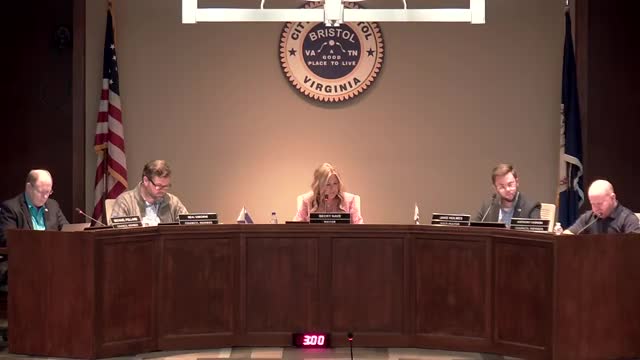
City staff presented the City of Bristol’s CDBG (Community Development Block Grant) CAPER for program year 2024 during the Sept. 9 council meeting, reporting how federal entitlement funds were used to support housing repairs, public services and community programs.
Ellen Tolton, CDBG program staff, said the city’s allocation for the year was $259,696 and that $243,482.55 in entitlement funds were spent during the program year (which ended June 30). Six public‑service agencies received $41,950 under the CDBG public‑service cap; the agencies leveraged roughly $740,000 and more than 5,000 volunteer hours, Tolton said.
Tolton listed outcomes paid from the CDBG award: nine home rehabilitations completed; 238 uninsured individuals received medical care and prescriptions; 95 people received job skills and computer literacy training; 117 neglected or abused children were assisted; and 31 disabled persons received case management and advocacy services. Tolton said 98.81% of the monies spent directly benefited low‑to‑moderate‑income persons, well above HUD’s 70% threshold.
City staff reported $78,154.38 spent through the emergency home repair program during the year. Tolton provided examples of repairs funded through that program: two emergency plumbing repairs, four HVAC replacements, three roof replacements and one radon mitigation installation. She said HUD now requires radon testing for all homes receiving repair services and mitigation when levels exceed HUD thresholds.
Tolton also summarized projects supported by CDBG funds including software and supplies for the Bristol Regional Speech and Hearing Center, security cameras for Girls Inc., and administrative expenses and code‑enforcement staff (about 31% of the award funded portions of staff salaries and administration). Tolton invited questions and said the CAPER was before council for public comment prior to HUD submission.
Council members asked how applicants are referred. Tolton said referrals come from a mix of direct contact, public‑service partner referrals (for example, District 3 caseworkers), a CDBG newsletter and word‑of‑mouth, and that the application is documentation‑heavy and administratively supported by staff and partner caseworkers.
The public hearing was opened and closed during the meeting; no vote on the CAPER was recorded in the transcript during the hearing portion recorded in the session notes.
Ellen Tolton, CDBG program staff, said the city’s allocation for the year was $259,696 and that $243,482.55 in entitlement funds were spent during the program year (which ended June 30). Six public‑service agencies received $41,950 under the CDBG public‑service cap; the agencies leveraged roughly $740,000 and more than 5,000 volunteer hours, Tolton said.
Tolton listed outcomes paid from the CDBG award: nine home rehabilitations completed; 238 uninsured individuals received medical care and prescriptions; 95 people received job skills and computer literacy training; 117 neglected or abused children were assisted; and 31 disabled persons received case management and advocacy services. Tolton said 98.81% of the monies spent directly benefited low‑to‑moderate‑income persons, well above HUD’s 70% threshold.
City staff reported $78,154.38 spent through the emergency home repair program during the year. Tolton provided examples of repairs funded through that program: two emergency plumbing repairs, four HVAC replacements, three roof replacements and one radon mitigation installation. She said HUD now requires radon testing for all homes receiving repair services and mitigation when levels exceed HUD thresholds.
Tolton also summarized projects supported by CDBG funds including software and supplies for the Bristol Regional Speech and Hearing Center, security cameras for Girls Inc., and administrative expenses and code‑enforcement staff (about 31% of the award funded portions of staff salaries and administration). Tolton invited questions and said the CAPER was before council for public comment prior to HUD submission.
Council members asked how applicants are referred. Tolton said referrals come from a mix of direct contact, public‑service partner referrals (for example, District 3 caseworkers), a CDBG newsletter and word‑of‑mouth, and that the application is documentation‑heavy and administratively supported by staff and partner caseworkers.
The public hearing was opened and closed during the meeting; no vote on the CAPER was recorded in the transcript during the hearing portion recorded in the session notes.
Don't Miss a Word: See the Full Meeting!
Go beyond summaries. Unlock every video, transcript, and key insight with a Founder Membership.
✓
Get instant access to full meeting videos
✓
Search and clip any phrase from complete transcripts
✓
Receive AI-powered summaries & custom alerts
✓
Enjoy lifetime, unrestricted access to government data
30-day money-back guarantee
