Waukegan board adopts FY2025–26 budget after public hearing, staff warns of tighter finances
September 12, 2025 | Waukegan CUSD 60, School Boards, Illinois
This article was created by AI summarizing key points discussed. AI makes mistakes, so for full details and context, please refer to the video of the full meeting. Please report any errors so we can fix them. Report an error »
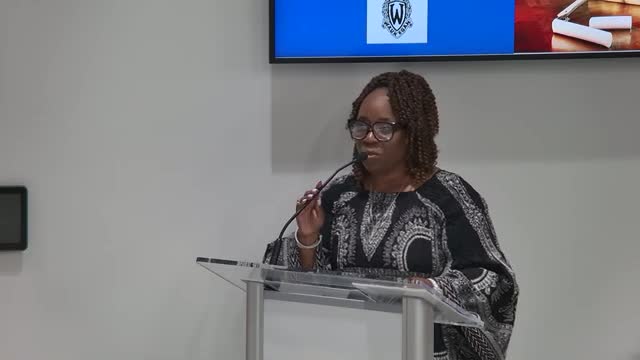
The Waukegan Public Schools Board of Education voted unanimously Sept. 9 to adopt the district's FY2025–26 original budget following a public hearing and a detailed presentation from finance staff.
Board President Rodriguez and other members approved the budget after hearing that the administration’s updated estimates reduced some revenue projections and that the district is planning cost‑cutting measures to limit impact on classroom instruction.
The board heard from Chief Financial Officer (CFO) Jasmine Polk, who opened the presentation: “It is our pleasure tonight to present to you, the original budget adoption information for FY 26,” and who outlined the district’s strategic budget process and assumptions.
Polk told the board that updated grant numbers released since the last budget workshop reduced the district’s estimates by about $2.8 million, largely because evidence‑based funding and other grant carryover amounts were lower than originally projected. She said the loss in evidence‑based funding was the largest single change, describing it as roughly $2.2 million below the earlier estimate.
Polk said the budget assumes taxes will remain level and that the Teachers’ Retirement System will not shift employer costs to local districts; she also listed conservative assumptions about compensation, categorical aid, and grant timing. “We made assumptions based on historical data,” Polk said, adding that the district is implementing cost‑cutting measures and has prioritized recently approved salary increases.
Board members pressed for specifics. Member Hannah asked where the proposed $3.9 million in reductions would come from and urged cuts to nonessential spending first, naming outside venue rentals, use of outside consultants, administrative travel and use of district food service for events as examples. Polk and Superintendent Placentia (as referenced in board discussion) said administration has already been meeting weekly to identify savings and that the adopted budget reflects reductions that align with those discussions.
Polk provided the major figures used in the presentation: the education fund beginning balance was projected at about $51.0 million with a projected June 30, 2026 ending balance near $28.0 million; the district’s projected operating revenue (education, O&M, transportation and working cash) was presented at roughly $267.0 million and projected expenditures totaled approximately $294.7 million across funds. Polk emphasized that the budget presented is the district’s working projection and described it as a conservative or “worst‑case” scenario for planning purposes.
The presentation showed projected expenditures by object and function: salaries were the largest single expense (about $268.0 million) and instruction‑related line items comprised the largest share of spending. Polk also noted that some nonoperating funds carry long‑standing deficits that the district intends to address over time and that about $18.0 million of working‑cash balances relate to bond proceeds that will be moved into capital projects.
After board members asked questions and discussed the budget assumptions and monitoring plans, the board voted to close the hearing and then to adopt the budget as presented on the official Illinois State Board of Education (ISBE) format. Roll call for budget adoption: Miss Fabian — yes; Miss Hannah — yes; Miss Lensing — yes; Mr. McBride — yes; Miss Ramirez — yes; President Rodriguez — yes. Motion carries.
The superintendent and Polk told the board the next steps are for the signed ISBE budget documents to be submitted to the state and regional ISBE office for publication. The administration said it plans regular, detailed financial reporting to the board during the year so elected members and the public can track revenue and expenditure performance.
Why it matters: District financial health will affect staffing, programming and capital projects. Board members and administration emphasized protecting direct services to students — tutoring, extracurriculars and classroom instruction — while pursuing efficiency in noninstructional spending.
For the record: Polk repeatedly described the budget assumptions as conservative and said the district will continue to monitor revenues, grant allocations and expenditures monthly and at periodic financial updates to the board.
Board President Rodriguez and other members approved the budget after hearing that the administration’s updated estimates reduced some revenue projections and that the district is planning cost‑cutting measures to limit impact on classroom instruction.
The board heard from Chief Financial Officer (CFO) Jasmine Polk, who opened the presentation: “It is our pleasure tonight to present to you, the original budget adoption information for FY 26,” and who outlined the district’s strategic budget process and assumptions.
Polk told the board that updated grant numbers released since the last budget workshop reduced the district’s estimates by about $2.8 million, largely because evidence‑based funding and other grant carryover amounts were lower than originally projected. She said the loss in evidence‑based funding was the largest single change, describing it as roughly $2.2 million below the earlier estimate.
Polk said the budget assumes taxes will remain level and that the Teachers’ Retirement System will not shift employer costs to local districts; she also listed conservative assumptions about compensation, categorical aid, and grant timing. “We made assumptions based on historical data,” Polk said, adding that the district is implementing cost‑cutting measures and has prioritized recently approved salary increases.
Board members pressed for specifics. Member Hannah asked where the proposed $3.9 million in reductions would come from and urged cuts to nonessential spending first, naming outside venue rentals, use of outside consultants, administrative travel and use of district food service for events as examples. Polk and Superintendent Placentia (as referenced in board discussion) said administration has already been meeting weekly to identify savings and that the adopted budget reflects reductions that align with those discussions.
Polk provided the major figures used in the presentation: the education fund beginning balance was projected at about $51.0 million with a projected June 30, 2026 ending balance near $28.0 million; the district’s projected operating revenue (education, O&M, transportation and working cash) was presented at roughly $267.0 million and projected expenditures totaled approximately $294.7 million across funds. Polk emphasized that the budget presented is the district’s working projection and described it as a conservative or “worst‑case” scenario for planning purposes.
The presentation showed projected expenditures by object and function: salaries were the largest single expense (about $268.0 million) and instruction‑related line items comprised the largest share of spending. Polk also noted that some nonoperating funds carry long‑standing deficits that the district intends to address over time and that about $18.0 million of working‑cash balances relate to bond proceeds that will be moved into capital projects.
After board members asked questions and discussed the budget assumptions and monitoring plans, the board voted to close the hearing and then to adopt the budget as presented on the official Illinois State Board of Education (ISBE) format. Roll call for budget adoption: Miss Fabian — yes; Miss Hannah — yes; Miss Lensing — yes; Mr. McBride — yes; Miss Ramirez — yes; President Rodriguez — yes. Motion carries.
The superintendent and Polk told the board the next steps are for the signed ISBE budget documents to be submitted to the state and regional ISBE office for publication. The administration said it plans regular, detailed financial reporting to the board during the year so elected members and the public can track revenue and expenditure performance.
Why it matters: District financial health will affect staffing, programming and capital projects. Board members and administration emphasized protecting direct services to students — tutoring, extracurriculars and classroom instruction — while pursuing efficiency in noninstructional spending.
For the record: Polk repeatedly described the budget assumptions as conservative and said the district will continue to monitor revenues, grant allocations and expenditures monthly and at periodic financial updates to the board.
Don't Miss a Word: See the Full Meeting!
Go beyond summaries. Unlock every video, transcript, and key insight with a Founder Membership.
✓
Get instant access to full meeting videos
✓
Search and clip any phrase from complete transcripts
✓
Receive AI-powered summaries & custom alerts
✓
Enjoy lifetime, unrestricted access to government data
30-day money-back guarantee
