District moves to accelerate literacy training with LETRS train‑the‑trainer plan
September 12, 2025 | Waukegan CUSD 60, School Boards, Illinois
This article was created by AI summarizing key points discussed. AI makes mistakes, so for full details and context, please refer to the video of the full meeting. Please report any errors so we can fix them. Report an error »
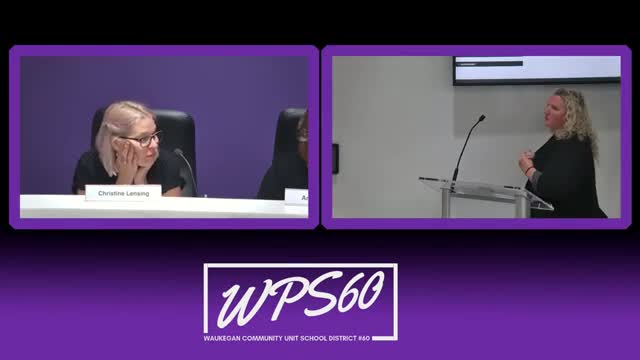
Waukegan Public Schools staff described Sept. 9 how the district plans to scale intensive phonics training using LETRS (Language Essentials for Teachers of Reading and Spelling) and to expand reading interventions across grades.
Deputy and instructional leaders said the district started LETRS training two years ago with opt‑in participants and that, by the end of the current year, about 40 teachers will have participated. The administration’s proposed “train‑the‑trainer” model will certify district facilitators so the district can train every K–5 classroom teacher within approximately two years at a lower cost than outsourcing.
Instructional leaders framed LETRS as part of a broader PreK–12 literacy roadmap. Assistant and curriculum staff emphasized that the district’s “literacy for all” strategy pairs early foundational instruction (K–5) with disciplinary literacy supports in middle and high school so students who still struggle receive targeted interventions.
Assistant Superintendent Royce de la Sanchez (as identified in the discussion) explained that middle schools are implementing intervention blocks and using I‑Ready to identify students who need either comprehension‑level supports or more intensive phonics intervention. She said the district has added intervention time in middle schools and established LitLab courses in high school for ninth‑ and tenth‑grade students needing literacy intervention.
The plan presented to the board said the train‑the‑trainer approach will reduce the time to certify all teachers from a multi‑decade pace under prior implementation levels to roughly two years, with an estimated in‑district training cost of about $350,000 for that scale‑up. The district said the LETRS work is aligned to its stated literacy goals and to district‑wide initiatives to improve reading attainment.
Why it matters: District leaders stressed that systematically building teacher capacity in explicit phonics and disciplinary literacy is central to raising attainment and reducing the number of students who need intensive remediation later. Board members asked for opportunities to observe intervention instruction in schools and for periodic reporting on implementation and student outcomes.
Provenance: LETRS and literacy implementation appear in the student‑achievement committee discussion and related information items; staff provided counts of trained staff and described the train‑the‑trainer economics.
Deputy and instructional leaders said the district started LETRS training two years ago with opt‑in participants and that, by the end of the current year, about 40 teachers will have participated. The administration’s proposed “train‑the‑trainer” model will certify district facilitators so the district can train every K–5 classroom teacher within approximately two years at a lower cost than outsourcing.
Instructional leaders framed LETRS as part of a broader PreK–12 literacy roadmap. Assistant and curriculum staff emphasized that the district’s “literacy for all” strategy pairs early foundational instruction (K–5) with disciplinary literacy supports in middle and high school so students who still struggle receive targeted interventions.
Assistant Superintendent Royce de la Sanchez (as identified in the discussion) explained that middle schools are implementing intervention blocks and using I‑Ready to identify students who need either comprehension‑level supports or more intensive phonics intervention. She said the district has added intervention time in middle schools and established LitLab courses in high school for ninth‑ and tenth‑grade students needing literacy intervention.
The plan presented to the board said the train‑the‑trainer approach will reduce the time to certify all teachers from a multi‑decade pace under prior implementation levels to roughly two years, with an estimated in‑district training cost of about $350,000 for that scale‑up. The district said the LETRS work is aligned to its stated literacy goals and to district‑wide initiatives to improve reading attainment.
Why it matters: District leaders stressed that systematically building teacher capacity in explicit phonics and disciplinary literacy is central to raising attainment and reducing the number of students who need intensive remediation later. Board members asked for opportunities to observe intervention instruction in schools and for periodic reporting on implementation and student outcomes.
Provenance: LETRS and literacy implementation appear in the student‑achievement committee discussion and related information items; staff provided counts of trained staff and described the train‑the‑trainer economics.
View the Full Meeting & All Its Details
This article offers just a summary. Unlock complete video, transcripts, and insights as a Founder Member.
✓
Watch full, unedited meeting videos
✓
Search every word spoken in unlimited transcripts
✓
AI summaries & real-time alerts (all government levels)
✓
Permanent access to expanding government content
30-day money-back guarantee
