City outlines Flock ALPR camera system, audits and transparency portal
September 15, 2025 | Cedar Rapids, Linn County, Iowa
This article was created by AI summarizing key points discussed. AI makes mistakes, so for full details and context, please refer to the video of the full meeting. Please report any errors so we can fix them. Report an error »
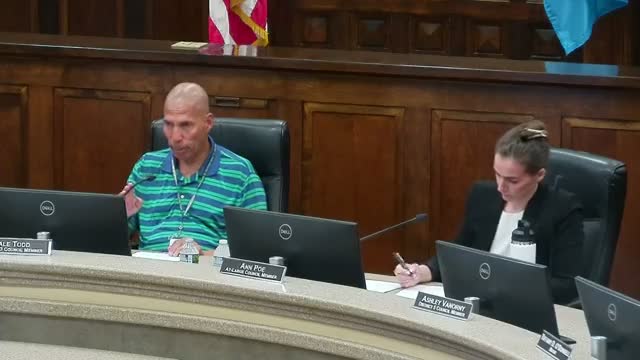
Captain Cody Hessling, captain of the Criminal Investigation Division, and Lieutenant Robinson briefed the Public Safety Committee on the city's network of stationary and mobile public-safety cameras and automated license-plate recognition (ALPR) technology operated by Flock Safety.
Cody Hessling said the camera program is part of a "broader and broader integrated network" that includes traffic-engineering cameras, law enforcement cameras in city buildings and parks, and that the Flock units capture vehicle information but not people. "They're solar powered," Hessling said, "they operate on LTE technology, so there's like still no infrastructure. They're easily moved and deployed to different locations depending on, how that looks and we evaluate that on a pretty regular basis."
Lieutenant Robinson described successful uses, including locating a driver with dementia and identifying a vehicle involved in a January drive-by shooting. "We were able to locate that vehicle by the time and the date of when that vehicle went by it, give us, a vehicle description, with the plate number," he said, adding that the evidence led to an arrest and additional search-warrant results.
Councilmember Vianney raised concerns about oversight after she noted other cities have canceled contracts and cited risks of federal overreach and misuse (including immigration enforcement). "If the harm outweighs the benefit, then I think, you know, we just need to be very careful of how this is being used," Vianney said.
Hessling and Lieutenant Robinson said the city maintains a transparency portal with camera locations, an evidence-usage policy on the city website, 30-day data retention and monthly internal audits of searches. "Every search is logged, and so it's always gonna be there," Hessling said. He said no inappropriate access had been found during his reviews.
The committee did not vote on changes to the camera program; members said they expect ongoing review of placement, audit reports and community concerns about targeting and equity.
Cody Hessling said the camera program is part of a "broader and broader integrated network" that includes traffic-engineering cameras, law enforcement cameras in city buildings and parks, and that the Flock units capture vehicle information but not people. "They're solar powered," Hessling said, "they operate on LTE technology, so there's like still no infrastructure. They're easily moved and deployed to different locations depending on, how that looks and we evaluate that on a pretty regular basis."
Lieutenant Robinson described successful uses, including locating a driver with dementia and identifying a vehicle involved in a January drive-by shooting. "We were able to locate that vehicle by the time and the date of when that vehicle went by it, give us, a vehicle description, with the plate number," he said, adding that the evidence led to an arrest and additional search-warrant results.
Councilmember Vianney raised concerns about oversight after she noted other cities have canceled contracts and cited risks of federal overreach and misuse (including immigration enforcement). "If the harm outweighs the benefit, then I think, you know, we just need to be very careful of how this is being used," Vianney said.
Hessling and Lieutenant Robinson said the city maintains a transparency portal with camera locations, an evidence-usage policy on the city website, 30-day data retention and monthly internal audits of searches. "Every search is logged, and so it's always gonna be there," Hessling said. He said no inappropriate access had been found during his reviews.
The committee did not vote on changes to the camera program; members said they expect ongoing review of placement, audit reports and community concerns about targeting and equity.
View the Full Meeting & All Its Details
This article offers just a summary. Unlock complete video, transcripts, and insights as a Founder Member.
✓
Watch full, unedited meeting videos
✓
Search every word spoken in unlimited transcripts
✓
AI summaries & real-time alerts (all government levels)
✓
Permanent access to expanding government content
30-day money-back guarantee
