Board debates handbook language on agenda requests, "three-to-agree" practice and out-of-meeting direction
September 17, 2025 | Salt Lake School District , School Boards, Utah
This article was created by AI summarizing key points discussed. AI makes mistakes, so for full details and context, please refer to the video of the full meeting. Please report any errors so we can fix them. Report an error »
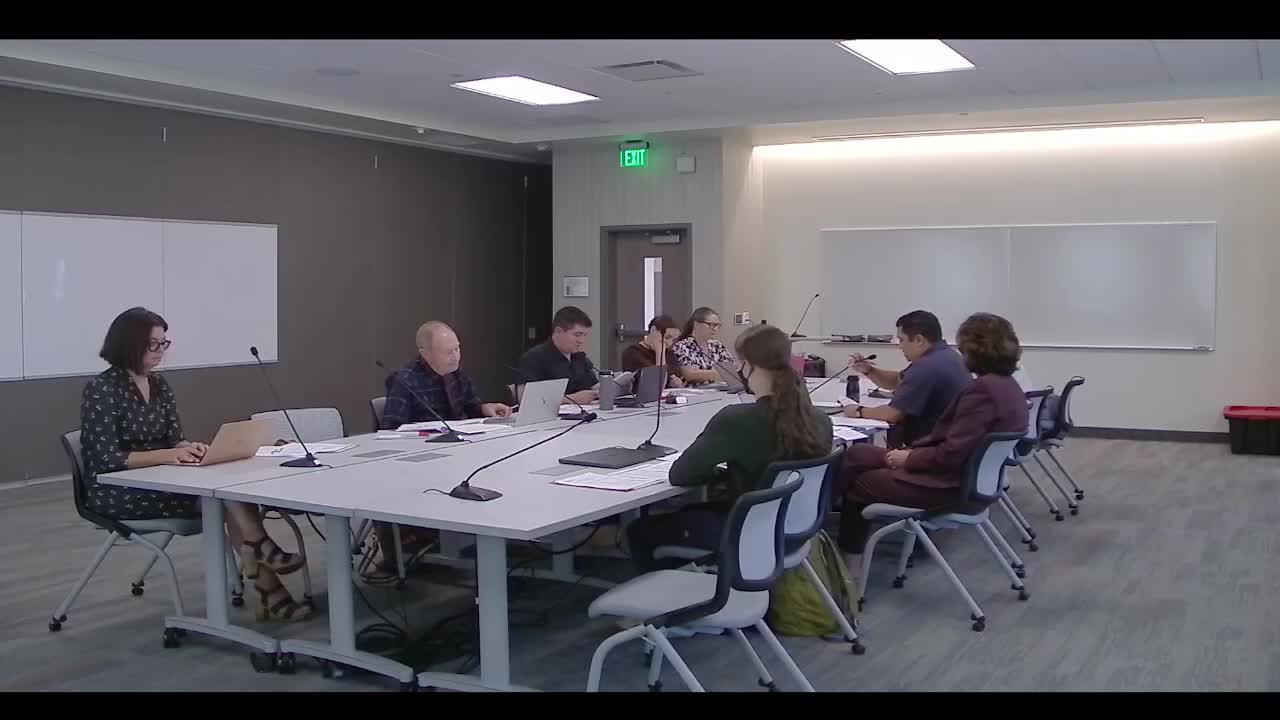
At a recent school board meeting, members discussed proposed revisions to the board handbook that would clarify how to request items for the agenda, limit how many times an item may be reviewed, and address communications or directions given to staff outside a public meeting.
Board members and staff spent the bulk of the discussion debating a practice described by one member as a “three-to-agree” process used in another district, and whether any similar informal practice would be appropriate for their board. A member described the outside-district process as three board members agreeing on an action and the superintendent emailing the full board; if four members object, the action stops. The discussion noted that the outside-district practice, as explained in the meeting, was limited to non-voting tasks such as adding items to a web page or requesting a study—not formal board votes.
The nuts and bolts of the proposed handbook edits focused on two areas: (1) how and when a board member may request an item be placed on a meeting agenda or study session, including a timeline for requests, and (2) expectations around subcommittee and personnel-related communications. One speaker said the handbook draft includes a requirement that reports on personnel conversations or subcommittee work be returned to the full board "within the week," language that had been recently added to the draft.
Several participants warned against formalizing a rule that would permit board members to direct staff outside a public meeting. One member said they would find it “concerning” to create a mechanism that authorizes direction to staff outside a public meeting and noted the board currently lacks a structure for such out-of-meeting directives. Another participant cautioned that personnel conversations are sensitive and that it would be difficult to write a single rule to cover all circumstances; the participant suggested the important safeguard is that any substantive unofficial conversation be reported back to the full board.
The staff presenter said the draft did not change board policy but included two minor handbook edits and asked whether the board preferred those edits to go to discussion, to a study session, or directly onto the consent calendar because of their minor nature. The presenter characterized the circulated document as a working reference rather than a final proposed ordinance or policy.
No motion was recorded in the meeting excerpt and no final adoption of handbook language took place during the discussion. Board members indicated differing comfort levels about written limits on informal communications; the suggested next steps, as described by staff, were to decide where the item should appear on a future agenda (discussion/study session or consent) and to return an updated draft for further consideration.
The discussion included repeated requests for clarity about timelines for submitting agenda items and how subcommittee attendance expectations would be stated in the handbook. The meeting record shows substantive debate about transparency and the limits of board authority to act outside of public meetings, with some members urging tighter reporting back to the full board when off-agenda discussions occur.
Looking ahead, staff said they would revise the handbook text based on the conversation and return it for additional direction; the board did not adopt any changes in the excerpted discussion.
Board members and staff spent the bulk of the discussion debating a practice described by one member as a “three-to-agree” process used in another district, and whether any similar informal practice would be appropriate for their board. A member described the outside-district process as three board members agreeing on an action and the superintendent emailing the full board; if four members object, the action stops. The discussion noted that the outside-district practice, as explained in the meeting, was limited to non-voting tasks such as adding items to a web page or requesting a study—not formal board votes.
The nuts and bolts of the proposed handbook edits focused on two areas: (1) how and when a board member may request an item be placed on a meeting agenda or study session, including a timeline for requests, and (2) expectations around subcommittee and personnel-related communications. One speaker said the handbook draft includes a requirement that reports on personnel conversations or subcommittee work be returned to the full board "within the week," language that had been recently added to the draft.
Several participants warned against formalizing a rule that would permit board members to direct staff outside a public meeting. One member said they would find it “concerning” to create a mechanism that authorizes direction to staff outside a public meeting and noted the board currently lacks a structure for such out-of-meeting directives. Another participant cautioned that personnel conversations are sensitive and that it would be difficult to write a single rule to cover all circumstances; the participant suggested the important safeguard is that any substantive unofficial conversation be reported back to the full board.
The staff presenter said the draft did not change board policy but included two minor handbook edits and asked whether the board preferred those edits to go to discussion, to a study session, or directly onto the consent calendar because of their minor nature. The presenter characterized the circulated document as a working reference rather than a final proposed ordinance or policy.
No motion was recorded in the meeting excerpt and no final adoption of handbook language took place during the discussion. Board members indicated differing comfort levels about written limits on informal communications; the suggested next steps, as described by staff, were to decide where the item should appear on a future agenda (discussion/study session or consent) and to return an updated draft for further consideration.
The discussion included repeated requests for clarity about timelines for submitting agenda items and how subcommittee attendance expectations would be stated in the handbook. The meeting record shows substantive debate about transparency and the limits of board authority to act outside of public meetings, with some members urging tighter reporting back to the full board when off-agenda discussions occur.
Looking ahead, staff said they would revise the handbook text based on the conversation and return it for additional direction; the board did not adopt any changes in the excerpted discussion.
Don't Miss a Word: See the Full Meeting!
Go beyond summaries. Unlock every video, transcript, and key insight with a Founder Membership.
✓
Get instant access to full meeting videos
✓
Search and clip any phrase from complete transcripts
✓
Receive AI-powered summaries & custom alerts
✓
Enjoy lifetime, unrestricted access to government data
30-day money-back guarantee
