Hamilton County Commission to try 4 p.m. meetings on trial basis; $48,900 budgeted for change
September 18, 2025 | Hamilton County, Tennessee
This article was created by AI summarizing key points discussed. AI makes mistakes, so for full details and context, please refer to the video of the full meeting. Please report any errors so we can fix them. Report an error »
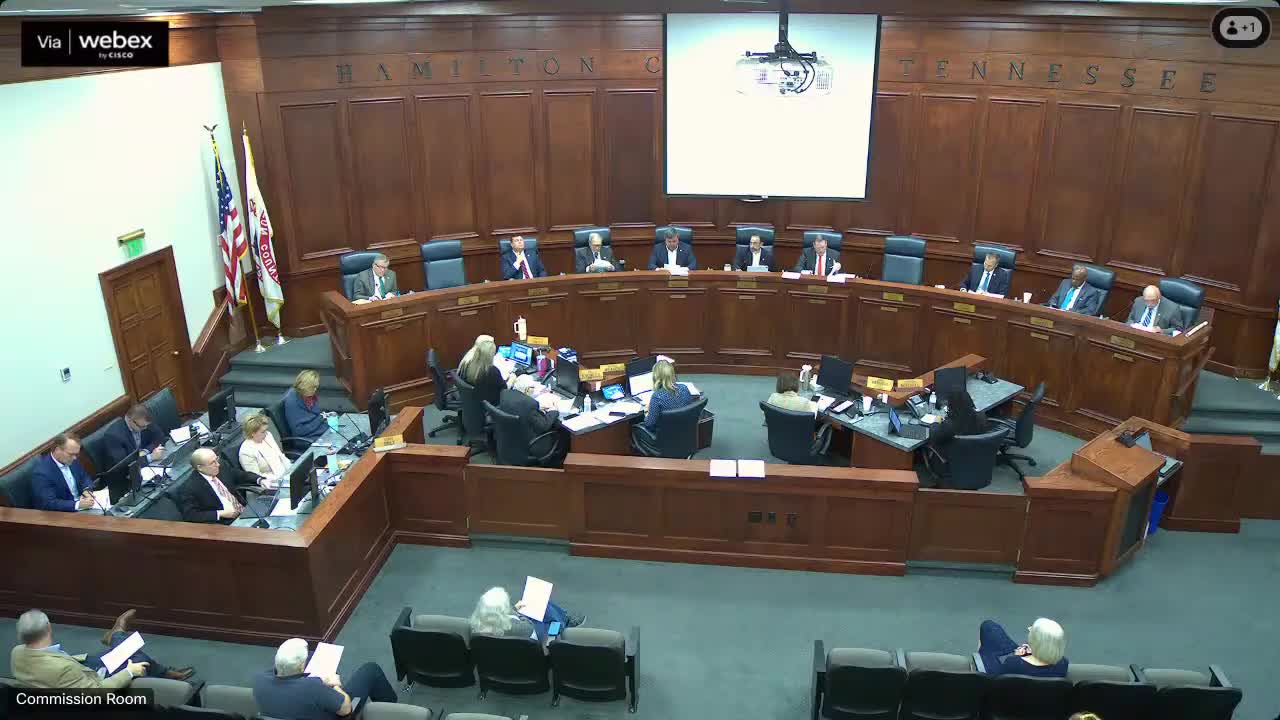
The Hamilton County Board of Commissioners voted Sept. 17 to hold its weekly meetings at 4 p.m. on Wednesdays on a 60‑day trial basis, beginning Nov. 5 and running through Jan. 7, 2026, and amended the general fund budget by $48,900 to cover costs associated with the change.
Supporters said the later hour is intended to increase public participation by giving working residents more opportunity to attend. “It’s about how do we get more citizens involved in our meetings,” Commissioner Eversol said during debate, urging the commission to try the revised schedule.
The trial had been amended during the meeting so that legal notices and department planning could be completed; the original resolution called for an Oct. 1 start date. Commissioner Hilton moved the amendment to begin Nov. 5; Commissioner Highlander seconded. Following roll call, the amended resolution passed.
Commissioners who spoke for the change said many peer counties start meetings after normal work hours and that a temporary trial will let the commission evaluate whether evening meetings draw greater public engagement. “I think the general consensus is that we should give this a try and see if we can get better participation from the public,” Commissioner Helton said after a legal‑committee briefing earlier that morning.
Opponents and cautious members questioned how the county will measure success and whether the added cost is justified. Commissioner Mackey said he would “reluctantly” support the trial but asked that commissioners develop measurable criteria tied to public participation and the use of taxpayer dollars. Commissioner Shipley called 4 p.m. an odd time because it falls at many workers’ shift changes: “04:00 is a weird time,” he said, noting that many peer governments meet at 5 p.m.
Public commenters reflected the split. Gary Bowles of Ooltewah, who identified himself during public comment, urged passage so “working citizens [have] an opportunity to attend and participate in commission meetings.” A regular public speaker, Money Bell, criticized the commission’s approach to public comment and decorum rules but did not address the logistics of the time change. Mikaela Winter of District 8 thanked commissioners for the vote and asked the commission to define specific, measurable outcomes to evaluate the trial’s success: "I'm hungry for, in January 2026, when we look back on this trial, how will we know it was successful?"
Discussion, direction and formal action were distinct in the record. Commissioners instructed staff and departments to prepare for the trial and an “after action” review at mid‑trial, but the commission did not set a formal rubric for success during the Sept. 17 meeting; several commissioners said they would develop metrics and return with recommendations at the planned review.
The motion to approve the resolution as amended was made by Commissioner Eversol and seconded by Commissioner Highlander; the roll call vote was recorded and the resolution passed. The county mayor’s office will implement the scheduling change and the budget amendment; the trial will conclude with a review and a decision whether to continue evening meetings.
Supporters said the later hour is intended to increase public participation by giving working residents more opportunity to attend. “It’s about how do we get more citizens involved in our meetings,” Commissioner Eversol said during debate, urging the commission to try the revised schedule.
The trial had been amended during the meeting so that legal notices and department planning could be completed; the original resolution called for an Oct. 1 start date. Commissioner Hilton moved the amendment to begin Nov. 5; Commissioner Highlander seconded. Following roll call, the amended resolution passed.
Commissioners who spoke for the change said many peer counties start meetings after normal work hours and that a temporary trial will let the commission evaluate whether evening meetings draw greater public engagement. “I think the general consensus is that we should give this a try and see if we can get better participation from the public,” Commissioner Helton said after a legal‑committee briefing earlier that morning.
Opponents and cautious members questioned how the county will measure success and whether the added cost is justified. Commissioner Mackey said he would “reluctantly” support the trial but asked that commissioners develop measurable criteria tied to public participation and the use of taxpayer dollars. Commissioner Shipley called 4 p.m. an odd time because it falls at many workers’ shift changes: “04:00 is a weird time,” he said, noting that many peer governments meet at 5 p.m.
Public commenters reflected the split. Gary Bowles of Ooltewah, who identified himself during public comment, urged passage so “working citizens [have] an opportunity to attend and participate in commission meetings.” A regular public speaker, Money Bell, criticized the commission’s approach to public comment and decorum rules but did not address the logistics of the time change. Mikaela Winter of District 8 thanked commissioners for the vote and asked the commission to define specific, measurable outcomes to evaluate the trial’s success: "I'm hungry for, in January 2026, when we look back on this trial, how will we know it was successful?"
Discussion, direction and formal action were distinct in the record. Commissioners instructed staff and departments to prepare for the trial and an “after action” review at mid‑trial, but the commission did not set a formal rubric for success during the Sept. 17 meeting; several commissioners said they would develop metrics and return with recommendations at the planned review.
The motion to approve the resolution as amended was made by Commissioner Eversol and seconded by Commissioner Highlander; the roll call vote was recorded and the resolution passed. The county mayor’s office will implement the scheduling change and the budget amendment; the trial will conclude with a review and a decision whether to continue evening meetings.
View the Full Meeting & All Its Details
This article offers just a summary. Unlock complete video, transcripts, and insights as a Founder Member.
✓
Watch full, unedited meeting videos
✓
Search every word spoken in unlimited transcripts
✓
AI summaries & real-time alerts (all government levels)
✓
Permanent access to expanding government content
30-day money-back guarantee
