Stakeholders split over whether Utah PSC can approve private-generation contracts; electrical-isolation and confidentiality rules debated
September 18, 2025 | Utah Public Service Commission, Utah Subcommittees, Commissions and Task Forces, Utah Legislative Branch, Utah
This article was created by AI summarizing key points discussed. AI makes mistakes, so for full details and context, please refer to the video of the full meeting. Please report any errors so we can fix them. Report an error »
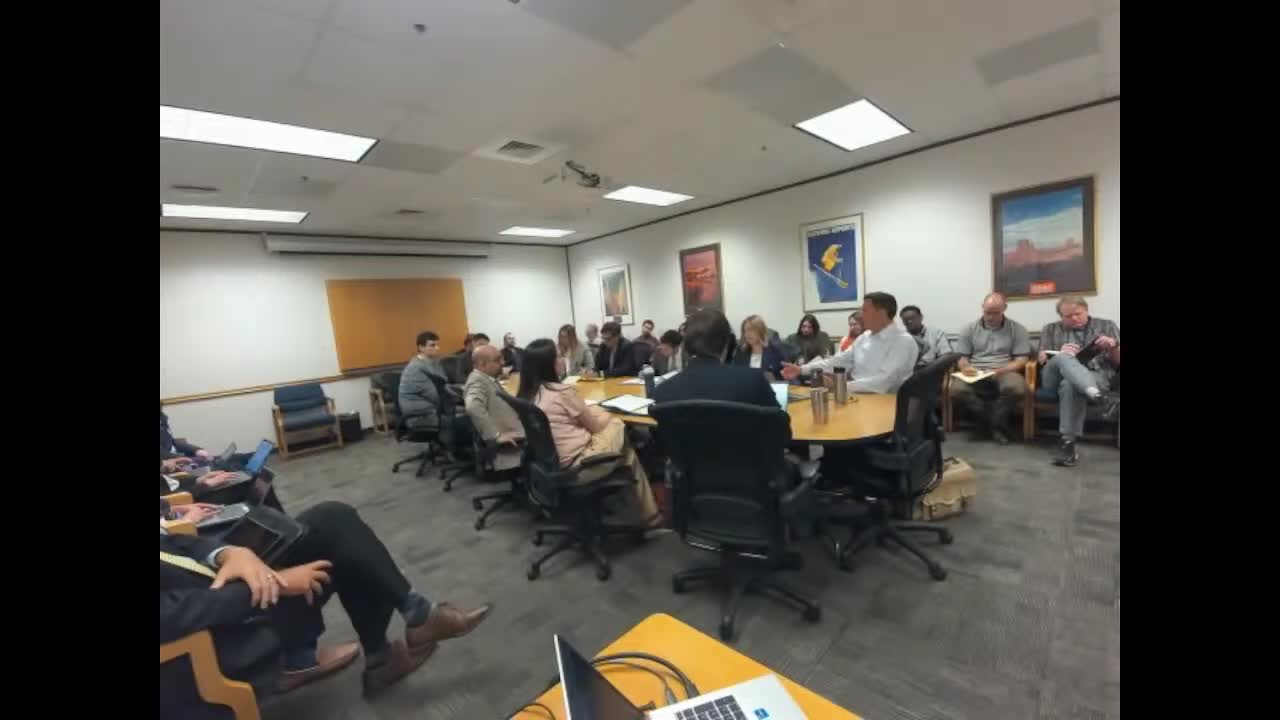
Stakeholders at the Utah Public Service Commissiontechnical conference debated whether Senate Bill 132 gives the commission approval authority over private generation contracts and how to balance confidentiality with the commissionand utilityneed to verify electrical isolation and reliability.
Why it matters: the distinction determines what contracts must be submitted, who can review commercially sensitive terms and what documentation (for example, single-line diagrams or curtailment provisions) is required to show a resource is a closed private generation system rather than a connected generation system subject to utility oversight.
Positions and quotes: Utah Association of Energy's representative said, "It is our position that SB 132 does not authorize the commission to have approval authority over those contracts." Craig Eller of Rocky Mountain Power said the company supports "the commission's authority to review the registration and have a process around the approval of suppliers and private generation contracts." Several stakeholders and staff discussed using redacted confidential filings so the commission can review arrangements without public disclosure of commercial pricing; an Office of Consumer Services participant said the commission should at least be able to see private-generation contract terms in confidence.
Key technical points: participants agreed a core distinction in the statute is between a closed private-generation system that "operates independently from the transmission system" and a connected generation system that uses the grid. Several speakers said electrical-isolation proof (for example, single-line diagrams and curtailment provisions) is necessary for the commission and the division to verify whether a system qualifies as closed. Rocky Mountain Power said it needs enough technical detail to confirm systems are not relying on ancillary or backup grid services except where a large-load service contract is approved.
Confidentiality and process: parties suggested filing contracts confidentially with redactions for pricing and commercial credit terms; the commission's existing confidentiality rules were cited as sufficient to protect sensitive information while enabling staff review. Several participants emphasized the commission has a reporting duty and should be able to see contracts at least in redacted form to evaluate whether private arrangements pose reliability or cost-shift risks.
Ending: No formal decision was reached; the discussion concluded with an expectation that rules will articulate which contracts must be submitted, the confidentiality process for sensitive commercial terms and the technical evidence required to show a system is electrically isolated.
Why it matters: the distinction determines what contracts must be submitted, who can review commercially sensitive terms and what documentation (for example, single-line diagrams or curtailment provisions) is required to show a resource is a closed private generation system rather than a connected generation system subject to utility oversight.
Positions and quotes: Utah Association of Energy's representative said, "It is our position that SB 132 does not authorize the commission to have approval authority over those contracts." Craig Eller of Rocky Mountain Power said the company supports "the commission's authority to review the registration and have a process around the approval of suppliers and private generation contracts." Several stakeholders and staff discussed using redacted confidential filings so the commission can review arrangements without public disclosure of commercial pricing; an Office of Consumer Services participant said the commission should at least be able to see private-generation contract terms in confidence.
Key technical points: participants agreed a core distinction in the statute is between a closed private-generation system that "operates independently from the transmission system" and a connected generation system that uses the grid. Several speakers said electrical-isolation proof (for example, single-line diagrams and curtailment provisions) is necessary for the commission and the division to verify whether a system qualifies as closed. Rocky Mountain Power said it needs enough technical detail to confirm systems are not relying on ancillary or backup grid services except where a large-load service contract is approved.
Confidentiality and process: parties suggested filing contracts confidentially with redactions for pricing and commercial credit terms; the commission's existing confidentiality rules were cited as sufficient to protect sensitive information while enabling staff review. Several participants emphasized the commission has a reporting duty and should be able to see contracts at least in redacted form to evaluate whether private arrangements pose reliability or cost-shift risks.
Ending: No formal decision was reached; the discussion concluded with an expectation that rules will articulate which contracts must be submitted, the confidentiality process for sensitive commercial terms and the technical evidence required to show a system is electrically isolated.
Don't Miss a Word: See the Full Meeting!
Go beyond summaries. Unlock every video, transcript, and key insight with a Founder Membership.
✓
Get instant access to full meeting videos
✓
Search and clip any phrase from complete transcripts
✓
Receive AI-powered summaries & custom alerts
✓
Enjoy lifetime, unrestricted access to government data
30-day money-back guarantee
