Transmission access and cost-allocation emerge as central flash points in SB 132 rule debate
September 18, 2025 | Utah Public Service Commission, Utah Subcommittees, Commissions and Task Forces, Utah Legislative Branch, Utah
This article was created by AI summarizing key points discussed. AI makes mistakes, so for full details and context, please refer to the video of the full meeting. Please report any errors so we can fix them. Report an error »
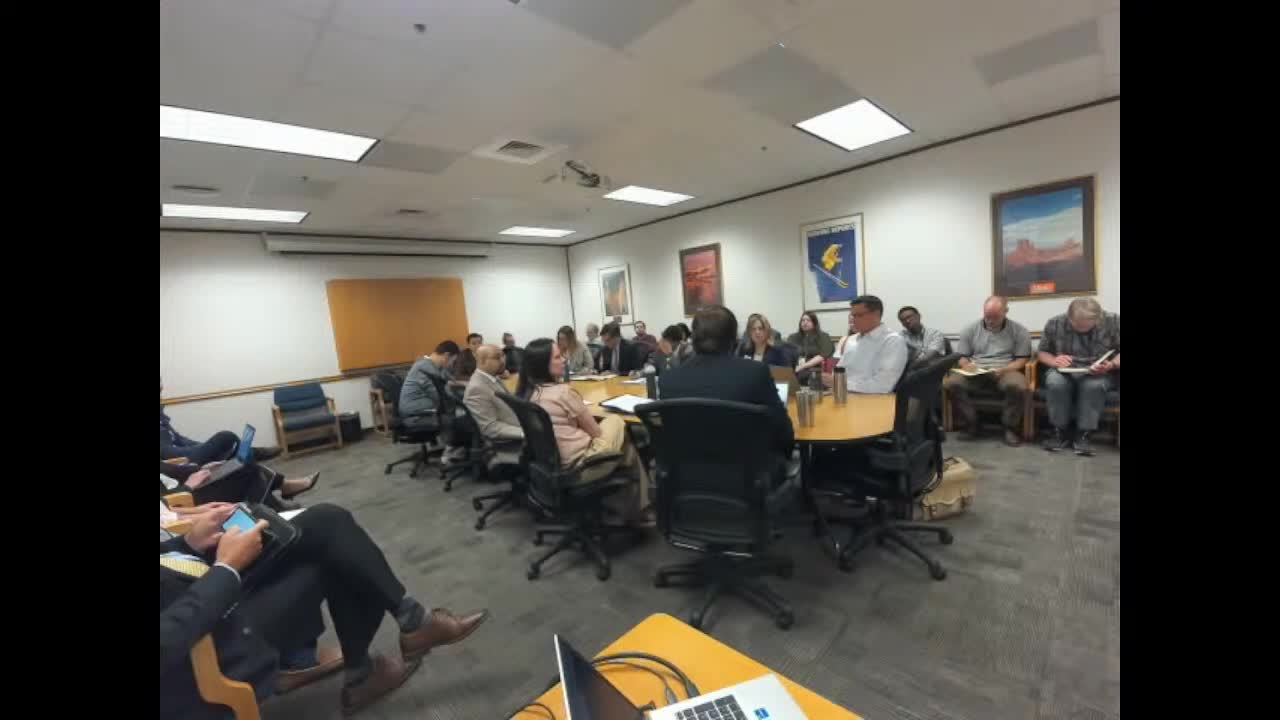
Transmission access and how to allocate costs for large-load customers or connected generation systems emerged as a primary point of disagreement during the Utah Public Service Commission technical conference on implementing SB 132.
Why it matters: how transmission costs are allocated determines project economics for large industrial and data-center customers and affects whether costs are socialized across other customers or borne by the project sponsor; the choice also implicates FERC jurisdiction over the open access transmission tariff (OATT).
Positions and details: Rocky Mountain Power warned against rules that would compel changes to Pacificorp's open access transmission tariff, saying federal jurisdiction and existing FERC processes govern OATT amendments. "The law clearly respects the jurisdictional boundary between the state and federal regulation," Rocky Mountain Power said. Some intervenors proposed a state-level tariff to provide predictable transmission-related charges for large customers, pointing to examples in Oregon and Arizona that use administrative mechanisms or state-authorized tariffs to align FERC and state jurisdictional responsibilities. One participant raised the possibility of an Arizona-style wholesale buy-through mechanism as an alternative.
Other technical points: participants discussed whether Senate Bill 132 unambiguously authorizes large load customers or private generators to use the utility's transmission system; several parties said the statute leaves that question open and recommended clear rule language to reduce downstream litigation. A FERC docket on colocated facilities (EL25-49-000) was mentioned as an external proceeding to monitor while state rules are developed.
Ending: No binding allocation method was chosen at the conference. Parties asked the commission to set rules that either provide clear guardrails for case-by-case evaluations or enable a front-end tariff approach to improve predictability for project developers; the commission will weigh those views in drafting rules.
Why it matters: how transmission costs are allocated determines project economics for large industrial and data-center customers and affects whether costs are socialized across other customers or borne by the project sponsor; the choice also implicates FERC jurisdiction over the open access transmission tariff (OATT).
Positions and details: Rocky Mountain Power warned against rules that would compel changes to Pacificorp's open access transmission tariff, saying federal jurisdiction and existing FERC processes govern OATT amendments. "The law clearly respects the jurisdictional boundary between the state and federal regulation," Rocky Mountain Power said. Some intervenors proposed a state-level tariff to provide predictable transmission-related charges for large customers, pointing to examples in Oregon and Arizona that use administrative mechanisms or state-authorized tariffs to align FERC and state jurisdictional responsibilities. One participant raised the possibility of an Arizona-style wholesale buy-through mechanism as an alternative.
Other technical points: participants discussed whether Senate Bill 132 unambiguously authorizes large load customers or private generators to use the utility's transmission system; several parties said the statute leaves that question open and recommended clear rule language to reduce downstream litigation. A FERC docket on colocated facilities (EL25-49-000) was mentioned as an external proceeding to monitor while state rules are developed.
Ending: No binding allocation method was chosen at the conference. Parties asked the commission to set rules that either provide clear guardrails for case-by-case evaluations or enable a front-end tariff approach to improve predictability for project developers; the commission will weigh those views in drafting rules.
View the Full Meeting & All Its Details
This article offers just a summary. Unlock complete video, transcripts, and insights as a Founder Member.
✓
Watch full, unedited meeting videos
✓
Search every word spoken in unlimited transcripts
✓
AI summaries & real-time alerts (all government levels)
✓
Permanent access to expanding government content
30-day money-back guarantee
