Vermillion County surveyor asks commissioners to separate survey and drainage funds, trims perpetuation requests
September 18, 2025 | Vermillion County, Indiana
This article was created by AI summarizing key points discussed. AI makes mistakes, so for full details and context, please refer to the video of the full meeting. Please report any errors so we can fix them. Report an error »
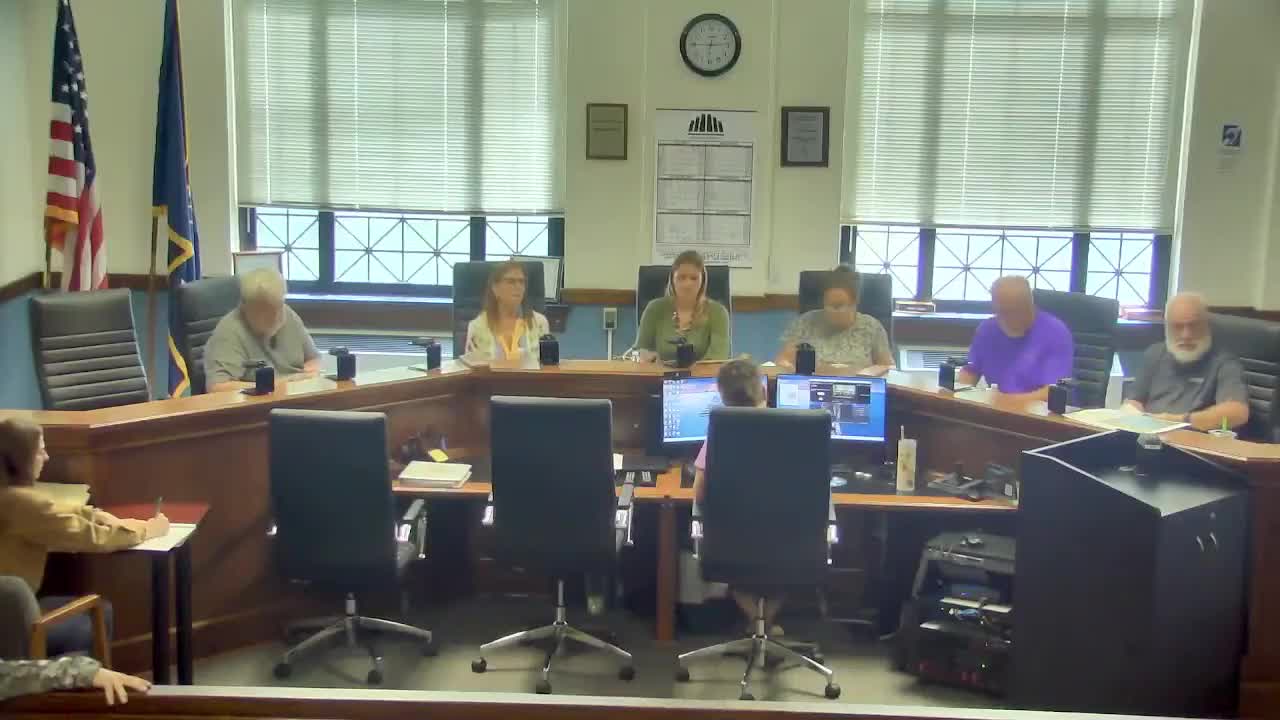
Ron, the county surveyor, urged Vermillion County commissioners on day three of budget review to treat surveyor and drainage finances as distinct accounts, cut some perpetuation budget line items and prepare for an expensive multi‑year regulated‑drain project that may require registered mail notices, engineering and possible legal action with Illinois landowners. "They should not be commingled," Ron said of the surveyor and drainage accounts, adding that separating the funds would let the drainage board review its own budget separately.
Why it matters: separating accounts affects how the county budgets for postage, legal and engineering fees tied to regulated drains; it also determines which costs are covered by watershed assessments versus the county general fund. Ron said the drainage maintenance fund balance was about $27,000 as of June 30 and that watershed assessments bring in roughly $1 per acre on about 6,000 acres — about $6,000 a year — making some near‑term dredging or excavation projects unaffordable without adjustments or outside funding.
Ron told commissioners he expects less perpetuation work this year because his licensed surveyor was assisting Fountain County, and recommended reducing the budgeted perpetuation line from $50,000 to between $15,000 and $20,000 because actual spending has historically been smaller. He said the perpetuation fund can be used for equipment or vehicle maintenance but argued for preserving a balance for excavation when work resumes. "When we get to where we're excavating, then it's gonna be a more expensive deal," he said.
On regulated drains, Ron said the county has contracted HWC to delineate the watershed and engaged DES to shoot ditch elevations; those studies will determine possible structures or dredging. He described the Rouse (referred to in the packet) or similarly located drains as involving parcels across the Illinois state line and said the process would likely begin in summer 2026 with registered‑mail notices and public meetings. If landowners in Illinois do not volunteer to participate in a watershed organization, Ron said the county may have to pursue court action to compel participation — a step he said the county wants to avoid but might be necessary.
Ron cited state procedures limiting how long maintenance assessments can be retained and told commissioners, "you can only keep four years of what your anticipated maintenance cost is," explaining why the county has been working to spend down older balances in some maintenance funds. He also referenced interstate drainage statutes and Indiana Supreme Court rulings that affect county liability, saying that if landowners sue, the county could be required to fix drains.
Budget details presented included county revenue line items discussed earlier in the packet — local income tax (about $5.2 million), miscellaneous state taxes including highway gas tax (about $2.8 million) and taxable property revenue (after circuit breaker losses) near $9.4 million for a combined operating revenue figure presented as roughly $17.4 million; Ron noted interest rate changes as a variable. For the drainage board professional services appropriation, staff proposed $25,000 for professional/legal services for 2025; Ron said that sum might be insufficient if interstate legal work is required.
Personnel and pay: Ron asked commissioners to consider salary parity concerns and said his requested pay remains lower than many hourly county positions and state peers; he also described a part‑time hours calculation he used for staffing budget lines. On equipment, he said he does not need a new fleet vehicle and would prefer to keep existing equipment, participating in maintenance‑only programs if available.
Process and next steps: commissioners discussed whether to show line items combined or separated in the budget presentation and noted they can transfer funds later if necessary. Ron and staff recommended cleaving surveyor general fund line items from drainage line items (postage, registered mail, legal and engineering) so each account reflects the correct users and revenue sources. He said the county will proceed with watershed mapping and elevation surveys and expects professional notices and meetings in 2026 if the Rouse/related drain proceeds.
The meeting included historical context on surveying errors and road maps dating to the early 20th century that shape present property and right‑of‑way questions; Ron described long‑running work to reconcile duplicate cornerstones and range‑line shifts that affect road widths and right‑of‑way records. Commissioners and staff asked clarifying questions about specific line items and proposed reductions to perpetuation and maintenance allocations; no formal motions or votes on budget line changes were recorded during the segment.
Taper: Staff said they will update the spreadsheet to separate drainage versus surveyor line items, and commissioners directed staff to reflect anticipated lesser spending on perpetuation in the 2025 budget presentation.
Why it matters: separating accounts affects how the county budgets for postage, legal and engineering fees tied to regulated drains; it also determines which costs are covered by watershed assessments versus the county general fund. Ron said the drainage maintenance fund balance was about $27,000 as of June 30 and that watershed assessments bring in roughly $1 per acre on about 6,000 acres — about $6,000 a year — making some near‑term dredging or excavation projects unaffordable without adjustments or outside funding.
Ron told commissioners he expects less perpetuation work this year because his licensed surveyor was assisting Fountain County, and recommended reducing the budgeted perpetuation line from $50,000 to between $15,000 and $20,000 because actual spending has historically been smaller. He said the perpetuation fund can be used for equipment or vehicle maintenance but argued for preserving a balance for excavation when work resumes. "When we get to where we're excavating, then it's gonna be a more expensive deal," he said.
On regulated drains, Ron said the county has contracted HWC to delineate the watershed and engaged DES to shoot ditch elevations; those studies will determine possible structures or dredging. He described the Rouse (referred to in the packet) or similarly located drains as involving parcels across the Illinois state line and said the process would likely begin in summer 2026 with registered‑mail notices and public meetings. If landowners in Illinois do not volunteer to participate in a watershed organization, Ron said the county may have to pursue court action to compel participation — a step he said the county wants to avoid but might be necessary.
Ron cited state procedures limiting how long maintenance assessments can be retained and told commissioners, "you can only keep four years of what your anticipated maintenance cost is," explaining why the county has been working to spend down older balances in some maintenance funds. He also referenced interstate drainage statutes and Indiana Supreme Court rulings that affect county liability, saying that if landowners sue, the county could be required to fix drains.
Budget details presented included county revenue line items discussed earlier in the packet — local income tax (about $5.2 million), miscellaneous state taxes including highway gas tax (about $2.8 million) and taxable property revenue (after circuit breaker losses) near $9.4 million for a combined operating revenue figure presented as roughly $17.4 million; Ron noted interest rate changes as a variable. For the drainage board professional services appropriation, staff proposed $25,000 for professional/legal services for 2025; Ron said that sum might be insufficient if interstate legal work is required.
Personnel and pay: Ron asked commissioners to consider salary parity concerns and said his requested pay remains lower than many hourly county positions and state peers; he also described a part‑time hours calculation he used for staffing budget lines. On equipment, he said he does not need a new fleet vehicle and would prefer to keep existing equipment, participating in maintenance‑only programs if available.
Process and next steps: commissioners discussed whether to show line items combined or separated in the budget presentation and noted they can transfer funds later if necessary. Ron and staff recommended cleaving surveyor general fund line items from drainage line items (postage, registered mail, legal and engineering) so each account reflects the correct users and revenue sources. He said the county will proceed with watershed mapping and elevation surveys and expects professional notices and meetings in 2026 if the Rouse/related drain proceeds.
The meeting included historical context on surveying errors and road maps dating to the early 20th century that shape present property and right‑of‑way questions; Ron described long‑running work to reconcile duplicate cornerstones and range‑line shifts that affect road widths and right‑of‑way records. Commissioners and staff asked clarifying questions about specific line items and proposed reductions to perpetuation and maintenance allocations; no formal motions or votes on budget line changes were recorded during the segment.
Taper: Staff said they will update the spreadsheet to separate drainage versus surveyor line items, and commissioners directed staff to reflect anticipated lesser spending on perpetuation in the 2025 budget presentation.
Don't Miss a Word: See the Full Meeting!
Go beyond summaries. Unlock every video, transcript, and key insight with a Founder Membership.
✓
Get instant access to full meeting videos
✓
Search and clip any phrase from complete transcripts
✓
Receive AI-powered summaries & custom alerts
✓
Enjoy lifetime, unrestricted access to government data
30-day money-back guarantee
