Board discusses formalizing policy for EZ‑2 waiver-of-noncompliance requests
September 18, 2025 | La Porte City, LaPorte County, Indiana
This article was created by AI summarizing key points discussed. AI makes mistakes, so for full details and context, please refer to the video of the full meeting. Please report any errors so we can fix them. Report an error »
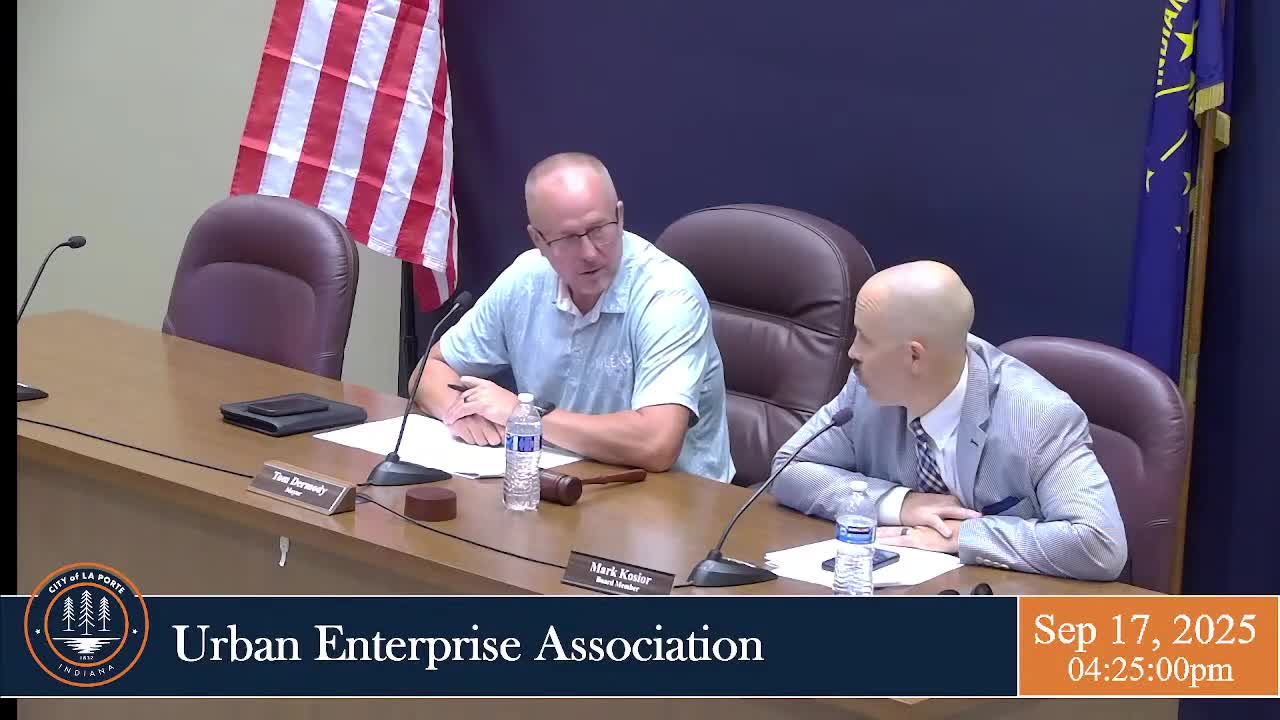
Board members spent substantial time discussing how to handle repeated requests from companies that miss annual EZ‑2 (Enterprise Zone 2) incentive filings and whether to require a recovery fee or formal policy. The board did not adopt a policy at the meeting but directed members and staff to develop recommendations for consideration at a future meeting.
Bert, a staff member, explained the current one-time waiver practice: “we allow a waiver of noncompliance, 1 time during the term of an incentive, for special circumstances where maybe a company, for 1 reason or another, doesn’t file doesn’t file timely.” He described the administrative steps required by state statute for approving a waiver, including legal review, a resolution by this board, presentation to city council, a legal notice in the newspaper, recording, and fees. Bert said those steps create staff, attorney, and publication costs that may justify assessing a fee to the entity seeking the waiver.
Board members said waivers were rare historically but appear to be increasing; one board member said waivers occurred twice historically and that the board may face two or three such requests in the current year. Members discussed fairness to companies and to the board’s budget: allowing a waiver may restore tax benefits to a company but also reduces fee revenue that the board had expected to include in budget forecasts. Board members asked staff to propose a procedural policy and a fee schedule to cover legal and administrative costs and to recommend a standard process for future waiver requests.
The board also clarified that the county auditor certifies fees annually and that EZ‑2 claims can be filed annually for up to ten years, with continuation tied to new investment after that period. No final vote or formal resolution was made at the meeting; staff and board members agreed to bring a proposed policy and potential fee structure to a future board meeting for formal consideration.
Bert, a staff member, explained the current one-time waiver practice: “we allow a waiver of noncompliance, 1 time during the term of an incentive, for special circumstances where maybe a company, for 1 reason or another, doesn’t file doesn’t file timely.” He described the administrative steps required by state statute for approving a waiver, including legal review, a resolution by this board, presentation to city council, a legal notice in the newspaper, recording, and fees. Bert said those steps create staff, attorney, and publication costs that may justify assessing a fee to the entity seeking the waiver.
Board members said waivers were rare historically but appear to be increasing; one board member said waivers occurred twice historically and that the board may face two or three such requests in the current year. Members discussed fairness to companies and to the board’s budget: allowing a waiver may restore tax benefits to a company but also reduces fee revenue that the board had expected to include in budget forecasts. Board members asked staff to propose a procedural policy and a fee schedule to cover legal and administrative costs and to recommend a standard process for future waiver requests.
The board also clarified that the county auditor certifies fees annually and that EZ‑2 claims can be filed annually for up to ten years, with continuation tied to new investment after that period. No final vote or formal resolution was made at the meeting; staff and board members agreed to bring a proposed policy and potential fee structure to a future board meeting for formal consideration.
Don't Miss a Word: See the Full Meeting!
Go beyond summaries. Unlock every video, transcript, and key insight with a Founder Membership.
✓
Get instant access to full meeting videos
✓
Search and clip any phrase from complete transcripts
✓
Receive AI-powered summaries & custom alerts
✓
Enjoy lifetime, unrestricted access to government data
30-day money-back guarantee
