Senator and local officials say charter and voucher growth strains public-school funding
September 18, 2025 | City of Opa-locka, Miami-Dade County, Florida
This article was created by AI summarizing key points discussed. AI makes mistakes, so for full details and context, please refer to the video of the full meeting. Please report any errors so we can fix them. Report an error »
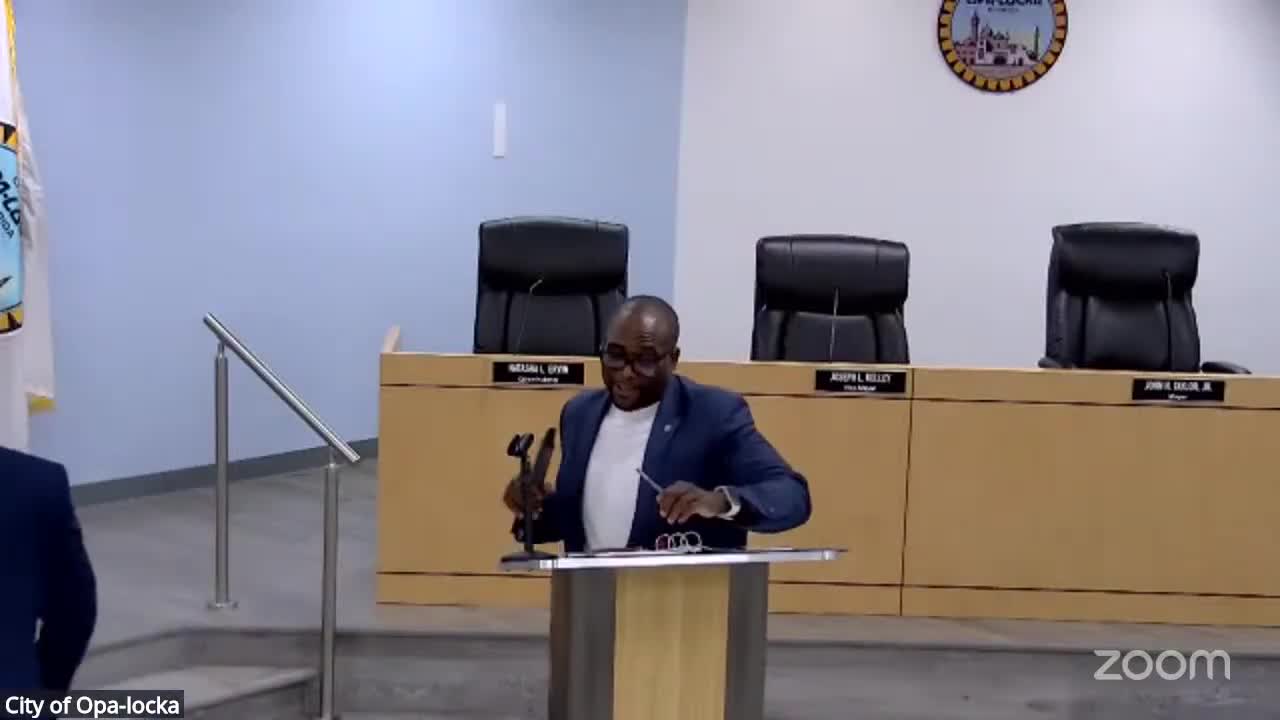
At an Opelika listening session, State Senator Chevron Jones and local officials discussed declining public-school enrollment tied to charter schools, universal vouchers and homeschooling, and described the funding consequences for impacted schools.
Jones traced the trend to policy changes beginning in 2001 and the growth of private vouchers and universal-school-choice programs. "If I could get $7,196 per child, get that into a block grant," Jones said, describing how per-pupil funding can follow a child to a private or charter setting. He said the state no longer enforces clear distribution rules for that funding and described instances where students leave a public school in the first weeks of the year, causing the public school to lose its funding allocation.
Local officials at the meeting said their district had already lost students: one commissioner said the county had lost about 13,000 students to private or charter schools in the first six weeks of a school year. Jones said he filed an amendment (to SB 508 as described in the meeting) to prorate funding when students leave midyear; he said the amendment failed in committee.
Why it matters: Jones and local officials argued that sudden enrollment declines reduce per-school budgets and, in some cases, force consolidation or closures when operating counts fall below thresholds. Jones also raised concerns about homeschooled children who may be isolated from mandatory protective oversight: "We found out that there are individuals who are being homeschooled... in the same home that they are in where they're supposed to be learning, you have individuals who are in the home with their abusers, and they're not in school."
Supporting details: Jones said the Northeast has managed school choice and public-school funding concurrently, but he argued Florida’s distribution practices have weakened public-school finances. He urged local engagement and described prior committee activity on funding amendments.
What’s next: Jones said he will continue to push for legislative changes to how per-pupil funding is allocated and encouraged parents and officials to raise concerns with legislators before the next session.
Jones traced the trend to policy changes beginning in 2001 and the growth of private vouchers and universal-school-choice programs. "If I could get $7,196 per child, get that into a block grant," Jones said, describing how per-pupil funding can follow a child to a private or charter setting. He said the state no longer enforces clear distribution rules for that funding and described instances where students leave a public school in the first weeks of the year, causing the public school to lose its funding allocation.
Local officials at the meeting said their district had already lost students: one commissioner said the county had lost about 13,000 students to private or charter schools in the first six weeks of a school year. Jones said he filed an amendment (to SB 508 as described in the meeting) to prorate funding when students leave midyear; he said the amendment failed in committee.
Why it matters: Jones and local officials argued that sudden enrollment declines reduce per-school budgets and, in some cases, force consolidation or closures when operating counts fall below thresholds. Jones also raised concerns about homeschooled children who may be isolated from mandatory protective oversight: "We found out that there are individuals who are being homeschooled... in the same home that they are in where they're supposed to be learning, you have individuals who are in the home with their abusers, and they're not in school."
Supporting details: Jones said the Northeast has managed school choice and public-school funding concurrently, but he argued Florida’s distribution practices have weakened public-school finances. He urged local engagement and described prior committee activity on funding amendments.
What’s next: Jones said he will continue to push for legislative changes to how per-pupil funding is allocated and encouraged parents and officials to raise concerns with legislators before the next session.
Don't Miss a Word: See the Full Meeting!
Go beyond summaries. Unlock every video, transcript, and key insight with a Founder Membership.
✓
Get instant access to full meeting videos
✓
Search and clip any phrase from complete transcripts
✓
Receive AI-powered summaries & custom alerts
✓
Enjoy lifetime, unrestricted access to government data
30-day money-back guarantee
