Council adopts larger FAR bonus for stacked flats, removing lot-size and transit limits
September 19, 2025 | Seattle, King County, Washington
This article was created by AI summarizing key points discussed. AI makes mistakes, so for full details and context, please refer to the video of the full meeting. Please report any errors so we can fix them. Report an error »
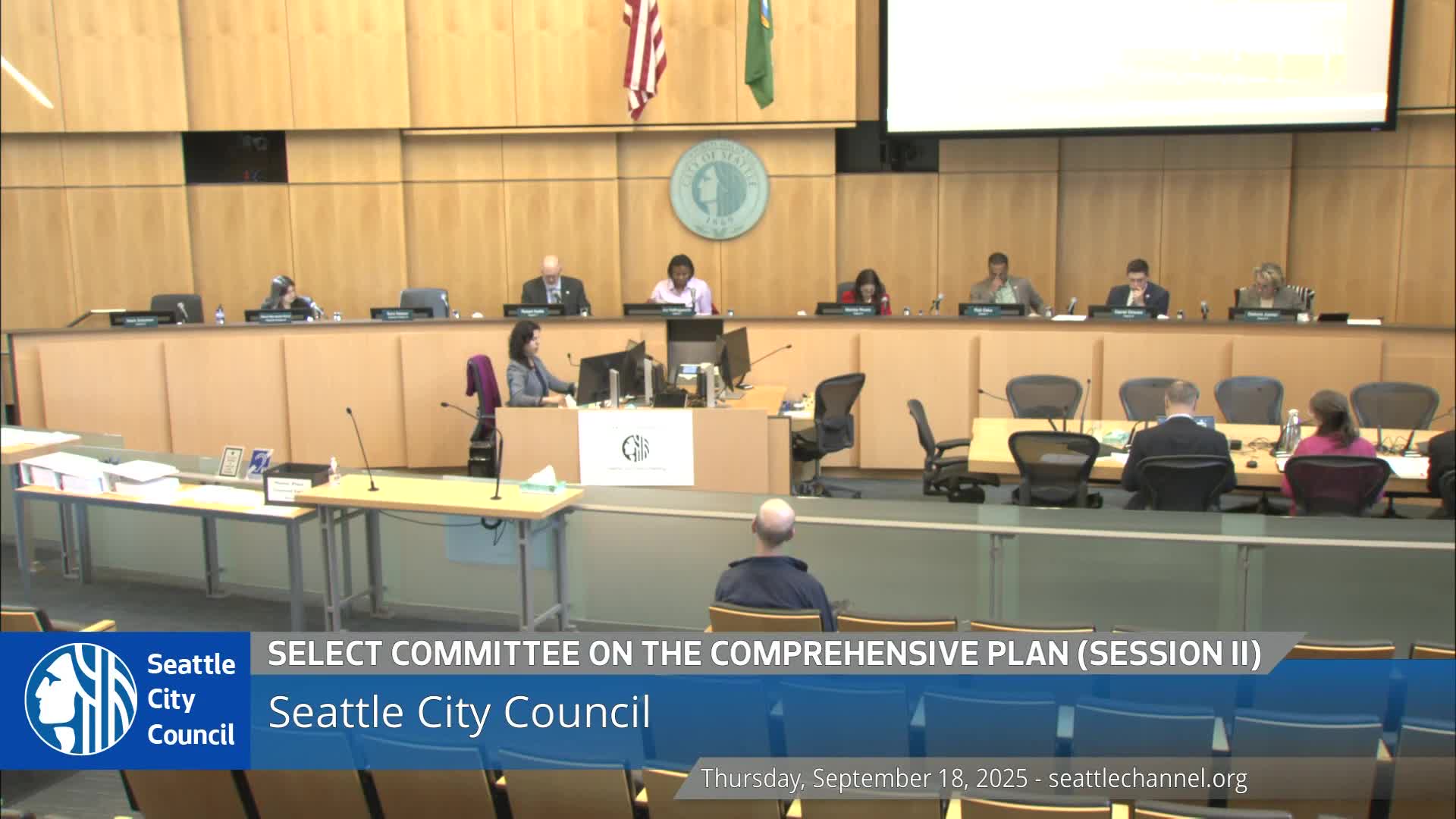
The Seattle City Council on Sept. 18 adopted an amendment to council bill 120993 that raises the floor‑area ratio (FAR) bonus for stacked dwelling units in neighborhood residential zones and removes prior lot‑size and transit‑proximity limits. The amendment passed after a roll call and a subsequent addition to the record that secured a final 7–1 vote.
Council member Kettle moved amendment 70 (version 2) to increase the FAR bonus for stacked dwelling units. Central staff had explained that the bill as transmitted set a maximum FAR of 1.2 for the densest developments, with a higher 1.4 FAR for stacked flats in larger lots inside frequent‑transit areas; later consent changes had raised the stacked‑flat bonus to 1.6 and removed lot‑size and location limits. Amendment 70 raised that bonus further to 1.8 for stacked dwelling units with no locational or lot‑size requirements.
Why it matters: supporters said the change is intended to encourage family‑sized stacked flats and produce more family‑suitable units than narrow, vertical townhomes. Opponents warned that removing the proximity‑to‑transit condition could produce greater car dependence.
Council member Kettle framed the change as an incentive to produce larger “family‑sized” stacked flats rather than single large houses, saying she hoped it would “support families” and asked colleagues for their support. Council member Rivera said she supported stacked flats in principle but opposed removing the transit/location requirement, asking, “How are we moving people around?” and declined to support the amendment because of that concern.
Vote and procedural notes: the clerk recorded the first tally as 6 in favor, 1 opposed; the record was later updated when Council President Nelson logged in and provided a vote, bringing the final count to 7 in favor, 1 opposed. The amendment was adopted and incorporated into the bill.
What happens next: Adoption of the amendment changes the baseline development incentives in the neighborhood residential zone text of council bill 120993. The council continued further consideration of other amendments and postponed remaining work to a continuation meeting.
Speakers quoted in this story spoke at the Sept. 18 Select Committee on the Comprehensive Plan meeting in Seattle.
Council member Kettle moved amendment 70 (version 2) to increase the FAR bonus for stacked dwelling units. Central staff had explained that the bill as transmitted set a maximum FAR of 1.2 for the densest developments, with a higher 1.4 FAR for stacked flats in larger lots inside frequent‑transit areas; later consent changes had raised the stacked‑flat bonus to 1.6 and removed lot‑size and location limits. Amendment 70 raised that bonus further to 1.8 for stacked dwelling units with no locational or lot‑size requirements.
Why it matters: supporters said the change is intended to encourage family‑sized stacked flats and produce more family‑suitable units than narrow, vertical townhomes. Opponents warned that removing the proximity‑to‑transit condition could produce greater car dependence.
Council member Kettle framed the change as an incentive to produce larger “family‑sized” stacked flats rather than single large houses, saying she hoped it would “support families” and asked colleagues for their support. Council member Rivera said she supported stacked flats in principle but opposed removing the transit/location requirement, asking, “How are we moving people around?” and declined to support the amendment because of that concern.
Vote and procedural notes: the clerk recorded the first tally as 6 in favor, 1 opposed; the record was later updated when Council President Nelson logged in and provided a vote, bringing the final count to 7 in favor, 1 opposed. The amendment was adopted and incorporated into the bill.
What happens next: Adoption of the amendment changes the baseline development incentives in the neighborhood residential zone text of council bill 120993. The council continued further consideration of other amendments and postponed remaining work to a continuation meeting.
Speakers quoted in this story spoke at the Sept. 18 Select Committee on the Comprehensive Plan meeting in Seattle.
View the Full Meeting & All Its Details
This article offers just a summary. Unlock complete video, transcripts, and insights as a Founder Member.
✓
Watch full, unedited meeting videos
✓
Search every word spoken in unlimited transcripts
✓
AI summaries & real-time alerts (all government levels)
✓
Permanent access to expanding government content
30-day money-back guarantee
