Council reviews six-figure equipment requests including $180,000 plow truck and $45,000 skid steer
September 22, 2025 | South Russell Village, Geauga County, Ohio
This article was created by AI summarizing key points discussed. AI makes mistakes, so for full details and context, please refer to the video of the full meeting. Please report any errors so we can fix them. Report an error »
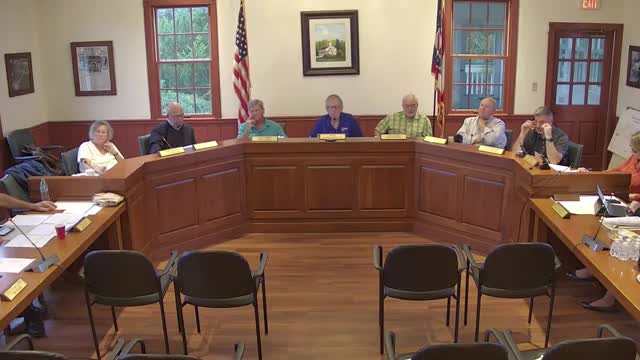
Council members and staff spent the meeting reviewing requests for major public-works equipment including a proposed $180,000 replacement plow/salt truck, a $45,000 mini skid steer, and proposals to buy an excavator instead of replacing an older backhoe. The items were discussed as part of the draft 2026 budget and would be funded from an equipment reserve established in June 2022.
The council discussed tradeoffs between large single-purpose vehicles and more flexible options. The street commissioner described a hook-lift/chassis approach that would let one chassis accept multiple bodies and said, "that truck could then be switched out and be sent right out to a cold patch and patch potholes" to illustrate operational flexibility. Staff estimated the $180,000 figure would cover a chassis and salt-body outfit; additional swap bodies could be added later for roughly $3,000 apiece.
Why it matters: the purchases would draw on a designated reserve fund that the council set up at $100,000 per year through 2028 (a planned $600,000 total). Council members said the reserve reduces the immediate budget hit but noted competing infrastructure needs such as planned road and stormwater work. One council member urged caution because other capital projects and emergency-service costs are expected to rise.
Details and debate: the street commissioner outlined alternatives and operation benefits, including smaller 600-series trucks that keep gross weight below CDL thresholds and hook-lift bodies that can be reused on future chassis. Staff estimated a like-for-like replacement of the current large vehicle could cost about $270,000; the $180,000 estimate is for a smaller chassis outfitted with a v-body salt spreader. The council also discussed buying a $50,000 pickup truck to replace a 2012 one-ton and selling the old 1-ton (staff estimated sale proceeds around $20,000–$25,000).
Equipment lifespan and maintenance facts were emphasized: staff said many of the village's large trucks date from 2018–2020 and that salt trucks typically show a 12‑year useful life under current usage. The group discussed the cost-efficiency of v-body spreaders versus tailgate spreaders and noted reusing bodies could lower future chassis replacement costs.
Next steps and budget direction: council members did not approve purchases at the meeting. Staff were asked to refine quotes, provide photos and model numbers, and present staged options (for example, splitting purchases across fiscal years). One council member suggested phasing purchases — for example, buying portions of the equipment this year and the remainder in following budgets — to reduce immediate spending.
Less-critical items discussed during the same session included replacement of six garage bay doors (one failure was cited as the immediate need), small masonry repairs around the service building, and a $33,009.50 placeholder for villagewide pond dredging. Those items were described as subject to further estimates and contingent on available funds in the reserve.
The council discussed tradeoffs between large single-purpose vehicles and more flexible options. The street commissioner described a hook-lift/chassis approach that would let one chassis accept multiple bodies and said, "that truck could then be switched out and be sent right out to a cold patch and patch potholes" to illustrate operational flexibility. Staff estimated the $180,000 figure would cover a chassis and salt-body outfit; additional swap bodies could be added later for roughly $3,000 apiece.
Why it matters: the purchases would draw on a designated reserve fund that the council set up at $100,000 per year through 2028 (a planned $600,000 total). Council members said the reserve reduces the immediate budget hit but noted competing infrastructure needs such as planned road and stormwater work. One council member urged caution because other capital projects and emergency-service costs are expected to rise.
Details and debate: the street commissioner outlined alternatives and operation benefits, including smaller 600-series trucks that keep gross weight below CDL thresholds and hook-lift bodies that can be reused on future chassis. Staff estimated a like-for-like replacement of the current large vehicle could cost about $270,000; the $180,000 estimate is for a smaller chassis outfitted with a v-body salt spreader. The council also discussed buying a $50,000 pickup truck to replace a 2012 one-ton and selling the old 1-ton (staff estimated sale proceeds around $20,000–$25,000).
Equipment lifespan and maintenance facts were emphasized: staff said many of the village's large trucks date from 2018–2020 and that salt trucks typically show a 12‑year useful life under current usage. The group discussed the cost-efficiency of v-body spreaders versus tailgate spreaders and noted reusing bodies could lower future chassis replacement costs.
Next steps and budget direction: council members did not approve purchases at the meeting. Staff were asked to refine quotes, provide photos and model numbers, and present staged options (for example, splitting purchases across fiscal years). One council member suggested phasing purchases — for example, buying portions of the equipment this year and the remainder in following budgets — to reduce immediate spending.
Less-critical items discussed during the same session included replacement of six garage bay doors (one failure was cited as the immediate need), small masonry repairs around the service building, and a $33,009.50 placeholder for villagewide pond dredging. Those items were described as subject to further estimates and contingent on available funds in the reserve.
View the Full Meeting & All Its Details
This article offers just a summary. Unlock complete video, transcripts, and insights as a Founder Member.
✓
Watch full, unedited meeting videos
✓
Search every word spoken in unlimited transcripts
✓
AI summaries & real-time alerts (all government levels)
✓
Permanent access to expanding government content
30-day money-back guarantee
