REAP outlines 2026 push on Byers CTE programs, North‑side growth and West Bijou Creek restoration
September 22, 2025 | Arapahoe County, Colorado
This article was created by AI summarizing key points discussed. AI makes mistakes, so for full details and context, please refer to the video of the full meeting. Please report any errors so we can fix them. Report an error »
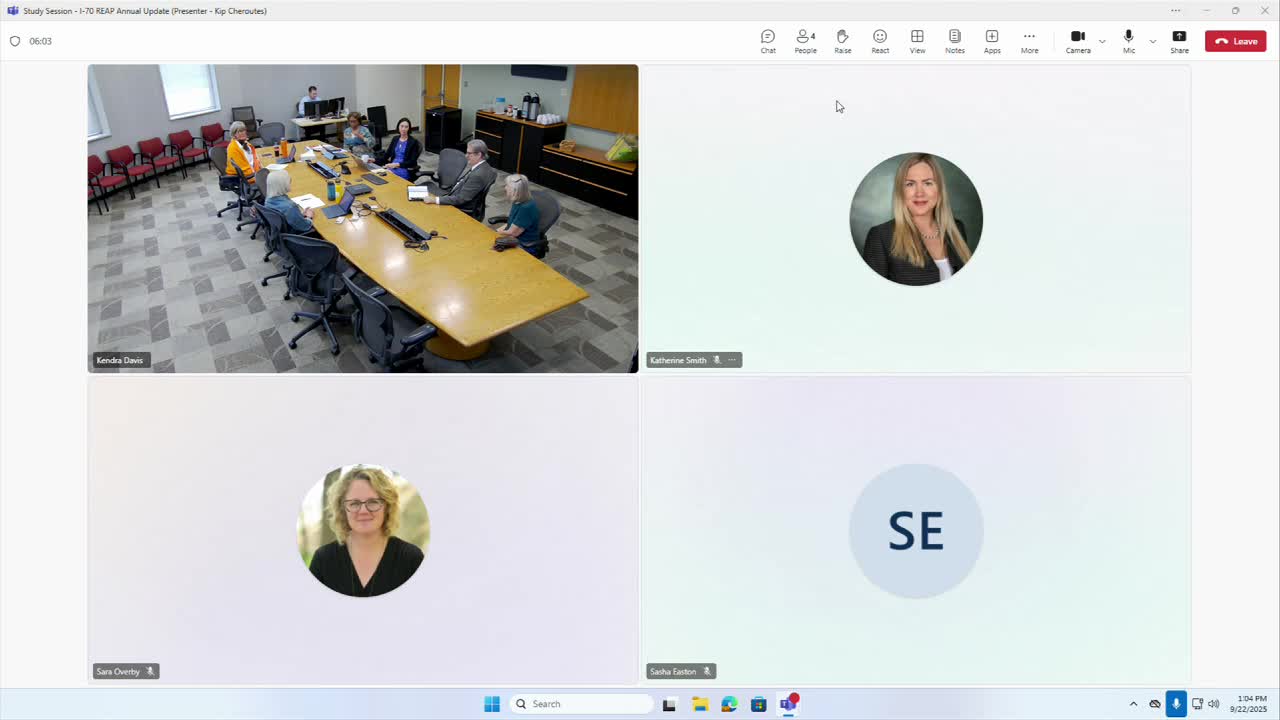
Kip Sharudis, executive director of the I‑70 Regional Economic Advancement Partnership, told the Arapahoe County commissioners at a study session that REAP will focus in 2026 on career and technical education, supporting growth north of Interstate 70 in Byers, and preliminary work to secure federal funding for West Bijou Creek restoration.
REAP’s pitch centers on long‑range planning for eastern Arapahoe County, Sharudis said. “We’re focused in the 5 to 10 year from now range,” he said, describing REAP as a catalyst for investment and jobs in the I‑70 corridor.
The initiative’s nut graffrom the presentation is that small, targeted investments in schools and infrastructure could support an emerging outdoor‑recreation and agritourism economy north of I‑70 while preserving the small‑town character south of the interstate.
Sharudis said REAP plans to expand career and technical education (CTE) outreach in 2026, with four or five field trips for students from Byers and neighboring high schools (Bennett, Strasburg, Deer Trail and Byers) and follow‑up classroom counseling on basic job‑search skills such as resume writing and online applications. “We take kids on field trips to places, but then they come back and say, ‘Now what?’” he said.
He said Byers High School leads the region’s CTE work and that REAP expects a visit from U.S. Senator John Hickenlooper to tour Byers CTE classes and hold roundtable discussions on Monday, Nov. 10, including sessions on health care, aeronautics and tourism and outdoor recreation jobs. Sharudis also described a planned campus greenhouse at Byers High School and said REAP is working to time a ribbon cutting if construction finishes in time.
Sharudis described coordinated local investments that he said have set the stage for north‑side growth: a completed water pipeline north of I‑70, an extension of the South Metro enterprise zone boundary to include Byers, and interest from local accountants and business contacts to attract investment. “You guys invested in Byers by financing a water pipe. It’s done,” he said.
REAP also plans to pursue a larger landscape effort, describing West Bijou Creek as a corridor the group would like to rehabilitate from just south of Byers north to Colfax Avenue at the county line. Sharudis said the work could include creek channel stabilization, farmland preservation and trail/open‑space connections, and that REAP has begun initial contacts with the U.S. Department of Agriculture about a federal program administered through the Farm Service Agency. “REAP is starting to make initial communications to the federal USDA office to get them interested in this West Bijou Creek project,” he said.
Sharudis flagged two other local priorities: concern about state transportation funding priorities in advance of next year’s elections, and the near‑term effects of tariffs on local firms. He gave three data points: a 19% drop in local newspaper ad revenue so far this year, a Maverick Steel job whose steel tariffs raised costs by about $1 million overnight, and Oringa — a biochar company whose equipment ordered from India has been delayed by tariffs.
Commissioners and staff in the room offered brief comments of appreciation and discussed possible partnerships. Sasha Easton, director of Arapahoe Douglas Works, agreed to follow up on CTE programming and resume coaching. Commissioner Jessica Campbell and others offered to help with USDA outreach and support letters if REAP pursues federal grant applications.
Sharudis said long‑term health care capacity in Byers is a topic of local conversation: Lincoln Health staff have discussed options for a facility that would be more than a clinic but less than a full hospital if population and demand grow on the north side of I‑70.
REAP administrative officer Sherry James, who announced she will be leaving the area, was recognized for her work. Sharudis closed by reiterating plans to continue REAP’s outreach and events into 2026 and thanked the commissioners for their support.
Ending: The presentation was informational; no formal county action was taken. Commissioners encouraged ongoing coordination with county staff, Arapahoe Douglas Works and legislative contacts and offered support for grant outreach.
REAP’s pitch centers on long‑range planning for eastern Arapahoe County, Sharudis said. “We’re focused in the 5 to 10 year from now range,” he said, describing REAP as a catalyst for investment and jobs in the I‑70 corridor.
The initiative’s nut graffrom the presentation is that small, targeted investments in schools and infrastructure could support an emerging outdoor‑recreation and agritourism economy north of I‑70 while preserving the small‑town character south of the interstate.
Sharudis said REAP plans to expand career and technical education (CTE) outreach in 2026, with four or five field trips for students from Byers and neighboring high schools (Bennett, Strasburg, Deer Trail and Byers) and follow‑up classroom counseling on basic job‑search skills such as resume writing and online applications. “We take kids on field trips to places, but then they come back and say, ‘Now what?’” he said.
He said Byers High School leads the region’s CTE work and that REAP expects a visit from U.S. Senator John Hickenlooper to tour Byers CTE classes and hold roundtable discussions on Monday, Nov. 10, including sessions on health care, aeronautics and tourism and outdoor recreation jobs. Sharudis also described a planned campus greenhouse at Byers High School and said REAP is working to time a ribbon cutting if construction finishes in time.
Sharudis described coordinated local investments that he said have set the stage for north‑side growth: a completed water pipeline north of I‑70, an extension of the South Metro enterprise zone boundary to include Byers, and interest from local accountants and business contacts to attract investment. “You guys invested in Byers by financing a water pipe. It’s done,” he said.
REAP also plans to pursue a larger landscape effort, describing West Bijou Creek as a corridor the group would like to rehabilitate from just south of Byers north to Colfax Avenue at the county line. Sharudis said the work could include creek channel stabilization, farmland preservation and trail/open‑space connections, and that REAP has begun initial contacts with the U.S. Department of Agriculture about a federal program administered through the Farm Service Agency. “REAP is starting to make initial communications to the federal USDA office to get them interested in this West Bijou Creek project,” he said.
Sharudis flagged two other local priorities: concern about state transportation funding priorities in advance of next year’s elections, and the near‑term effects of tariffs on local firms. He gave three data points: a 19% drop in local newspaper ad revenue so far this year, a Maverick Steel job whose steel tariffs raised costs by about $1 million overnight, and Oringa — a biochar company whose equipment ordered from India has been delayed by tariffs.
Commissioners and staff in the room offered brief comments of appreciation and discussed possible partnerships. Sasha Easton, director of Arapahoe Douglas Works, agreed to follow up on CTE programming and resume coaching. Commissioner Jessica Campbell and others offered to help with USDA outreach and support letters if REAP pursues federal grant applications.
Sharudis said long‑term health care capacity in Byers is a topic of local conversation: Lincoln Health staff have discussed options for a facility that would be more than a clinic but less than a full hospital if population and demand grow on the north side of I‑70.
REAP administrative officer Sherry James, who announced she will be leaving the area, was recognized for her work. Sharudis closed by reiterating plans to continue REAP’s outreach and events into 2026 and thanked the commissioners for their support.
Ending: The presentation was informational; no formal county action was taken. Commissioners encouraged ongoing coordination with county staff, Arapahoe Douglas Works and legislative contacts and offered support for grant outreach.
Don't Miss a Word: See the Full Meeting!
Go beyond summaries. Unlock every video, transcript, and key insight with a Founder Membership.
✓
Get instant access to full meeting videos
✓
Search and clip any phrase from complete transcripts
✓
Receive AI-powered summaries & custom alerts
✓
Enjoy lifetime, unrestricted access to government data
30-day money-back guarantee
