Salem council adopts wedding policy allowing small ceremonies in council chambers
September 26, 2025 | Salem City, Essex County, Massachusetts
This article was created by AI summarizing key points discussed. AI makes mistakes, so for full details and context, please refer to the video of the full meeting. Please report any errors so we can fix them. Report an error »
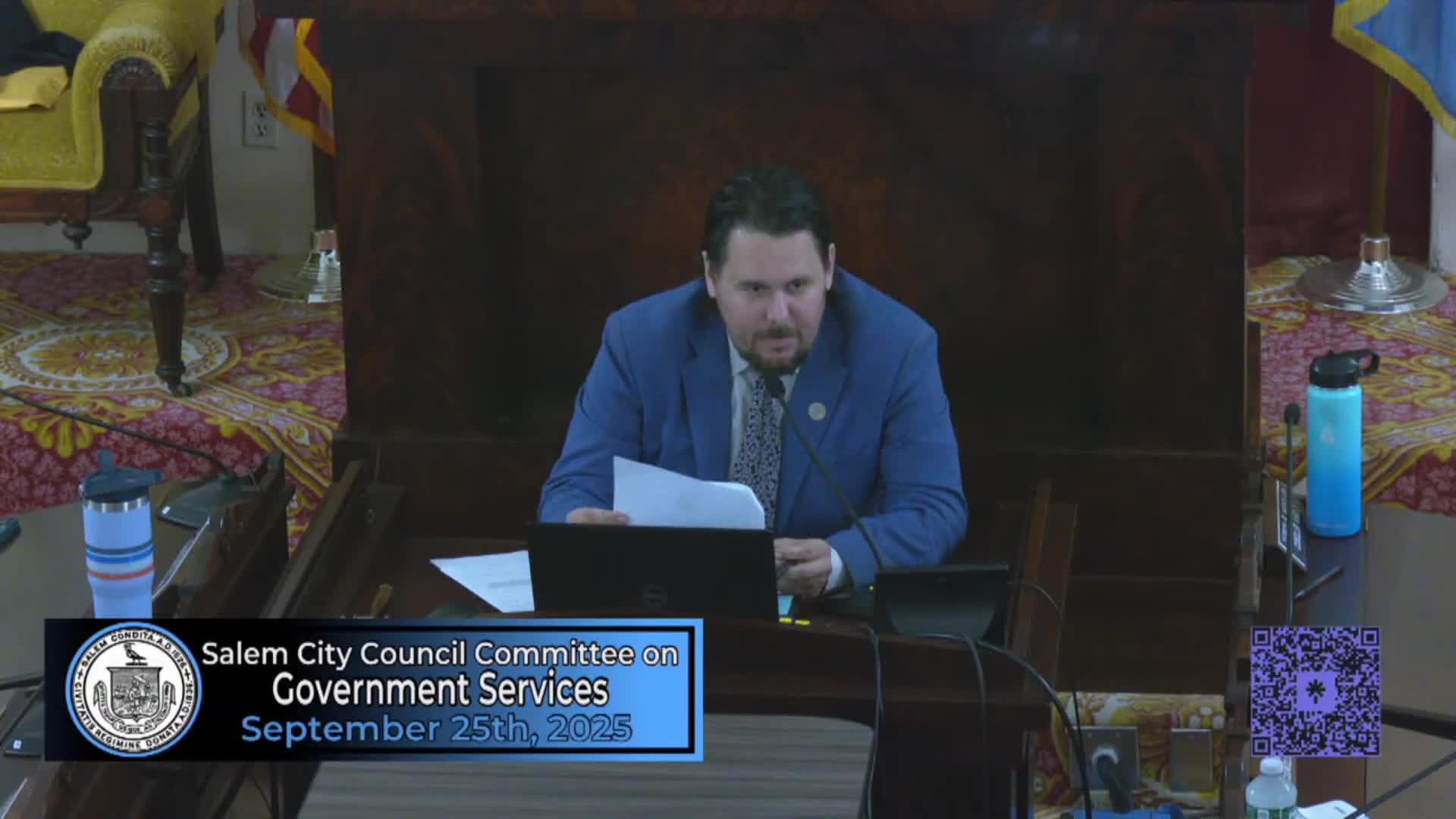
The Salem City Council on Sept. 25 adopted a policy allowing the city clerk’s office to perform small wedding ceremonies in the City Hall council chambers, rescinding an earlier May 2025 order that had halted ceremonies in the room. The policy sets a maximum of eight people in the arranged ceremony area, requires a 15‑minute check‑in in Room 3 before the ceremony, limits ceremonies to 30 minutes and requires a 15‑minute buffer between scheduled ceremonies.
Councilors said the ordinance and accompanying rules aim to balance public access to City Hall with safe, ADA‑compliant circulation and to set clear expectations for couples and staff. Councilor Stott, who led the committee discussion, said the policy replaces earlier language that left chamber use decisions entirely to the full council. “The use of the council chambers in City Hall shall be subject to the policy established on 09/25/2025 by city council order as may be amended from time to time by the City Council,” the ordinance language states.
Why this matters: City Hall is a working public building and has been used informally for marriages; councilors said a written policy was necessary after multiple incidents where wedding activity interfered with access and with City Hall operations. The rules approved by the council require ceremonies to take place on the south side of chambers, delineated by stanchions to preserve an ADA path from the Mayor’s Office to restrooms and the elevator; prohibit decorations such as cake, confetti or rice; ban animals other than service animals; and prohibit obstruction of doors and public pathways. Couples must check in about 15 minutes before the ceremony to review the marriage license.
Debate focused on how many people are appropriate in the space and how to enforce the rules. Councilor Hepworth said, “8 feels appropriate to me personally,” arguing the limit allows close family and children while keeping the ceremony dignified. Councilor Merkel said problems had included photographers and blocked doors during past ceremonies and said she preferred ceremonies be scheduled outside city business hours; others countered the chambers are an affordable, dignified option for residents who have no other venue.
The policy assigns primary responsibility for enforcing the rules to the City Clerk or a designee and says the City Council retains authority to revoke permission for ceremonies after repeated or serious noncompliance. Councilors also approved language that guests should not arrive more than 15 minutes before a ceremony and that guests are expected to leave council chambers once a ceremony ends.
Background and next steps: Committee members also voted to rescind Order No. 206 (the May 2025 halt on weddings) and to add the wedding rules to the chamber use policy and to a revised ordinance text that delegates limited administrative scheduling authority to the clerk. The council discharged a separate order about delegating chamber scheduling authority to the clerk and moved the chamber‑use ordinance language into place. The policy goes into effect immediately as adopted by the council; enforcement is to be carried out by clerk staff per the policy.
Details that matter: The policy allows the city clerk and assistant city clerk or a Justice of the Peace to perform ceremonies “when such ceremonies are unable to occur in the office of the city clerk” and requires that stanchions be placed from the Mayor’s Office entrance to the first council desk to create the ADA path. The council did not adopt separate civil penalties beyond the stated ability of the clerk to take “appropriate action” and of the council to revoke privileges after repeat violations.
The council’s action follows a Government Services Committee meeting the same night where the committee refined the limits that were later adopted by the full council.
Councilors said the ordinance and accompanying rules aim to balance public access to City Hall with safe, ADA‑compliant circulation and to set clear expectations for couples and staff. Councilor Stott, who led the committee discussion, said the policy replaces earlier language that left chamber use decisions entirely to the full council. “The use of the council chambers in City Hall shall be subject to the policy established on 09/25/2025 by city council order as may be amended from time to time by the City Council,” the ordinance language states.
Why this matters: City Hall is a working public building and has been used informally for marriages; councilors said a written policy was necessary after multiple incidents where wedding activity interfered with access and with City Hall operations. The rules approved by the council require ceremonies to take place on the south side of chambers, delineated by stanchions to preserve an ADA path from the Mayor’s Office to restrooms and the elevator; prohibit decorations such as cake, confetti or rice; ban animals other than service animals; and prohibit obstruction of doors and public pathways. Couples must check in about 15 minutes before the ceremony to review the marriage license.
Debate focused on how many people are appropriate in the space and how to enforce the rules. Councilor Hepworth said, “8 feels appropriate to me personally,” arguing the limit allows close family and children while keeping the ceremony dignified. Councilor Merkel said problems had included photographers and blocked doors during past ceremonies and said she preferred ceremonies be scheduled outside city business hours; others countered the chambers are an affordable, dignified option for residents who have no other venue.
The policy assigns primary responsibility for enforcing the rules to the City Clerk or a designee and says the City Council retains authority to revoke permission for ceremonies after repeated or serious noncompliance. Councilors also approved language that guests should not arrive more than 15 minutes before a ceremony and that guests are expected to leave council chambers once a ceremony ends.
Background and next steps: Committee members also voted to rescind Order No. 206 (the May 2025 halt on weddings) and to add the wedding rules to the chamber use policy and to a revised ordinance text that delegates limited administrative scheduling authority to the clerk. The council discharged a separate order about delegating chamber scheduling authority to the clerk and moved the chamber‑use ordinance language into place. The policy goes into effect immediately as adopted by the council; enforcement is to be carried out by clerk staff per the policy.
Details that matter: The policy allows the city clerk and assistant city clerk or a Justice of the Peace to perform ceremonies “when such ceremonies are unable to occur in the office of the city clerk” and requires that stanchions be placed from the Mayor’s Office entrance to the first council desk to create the ADA path. The council did not adopt separate civil penalties beyond the stated ability of the clerk to take “appropriate action” and of the council to revoke privileges after repeat violations.
The council’s action follows a Government Services Committee meeting the same night where the committee refined the limits that were later adopted by the full council.
View the Full Meeting & All Its Details
This article offers just a summary. Unlock complete video, transcripts, and insights as a Founder Member.
✓
Watch full, unedited meeting videos
✓
Search every word spoken in unlimited transcripts
✓
AI summaries & real-time alerts (all government levels)
✓
Permanent access to expanding government content
30-day money-back guarantee
