Council begins votes on citywide 'right‑on‑red' restrictions after lengthy debate; some amendments adopted, police input pending
September 26, 2025 | Salem City, Essex County, Massachusetts
This article was created by AI summarizing key points discussed. AI makes mistakes, so for full details and context, please refer to the video of the full meeting. Please report any errors so we can fix them. Report an error »
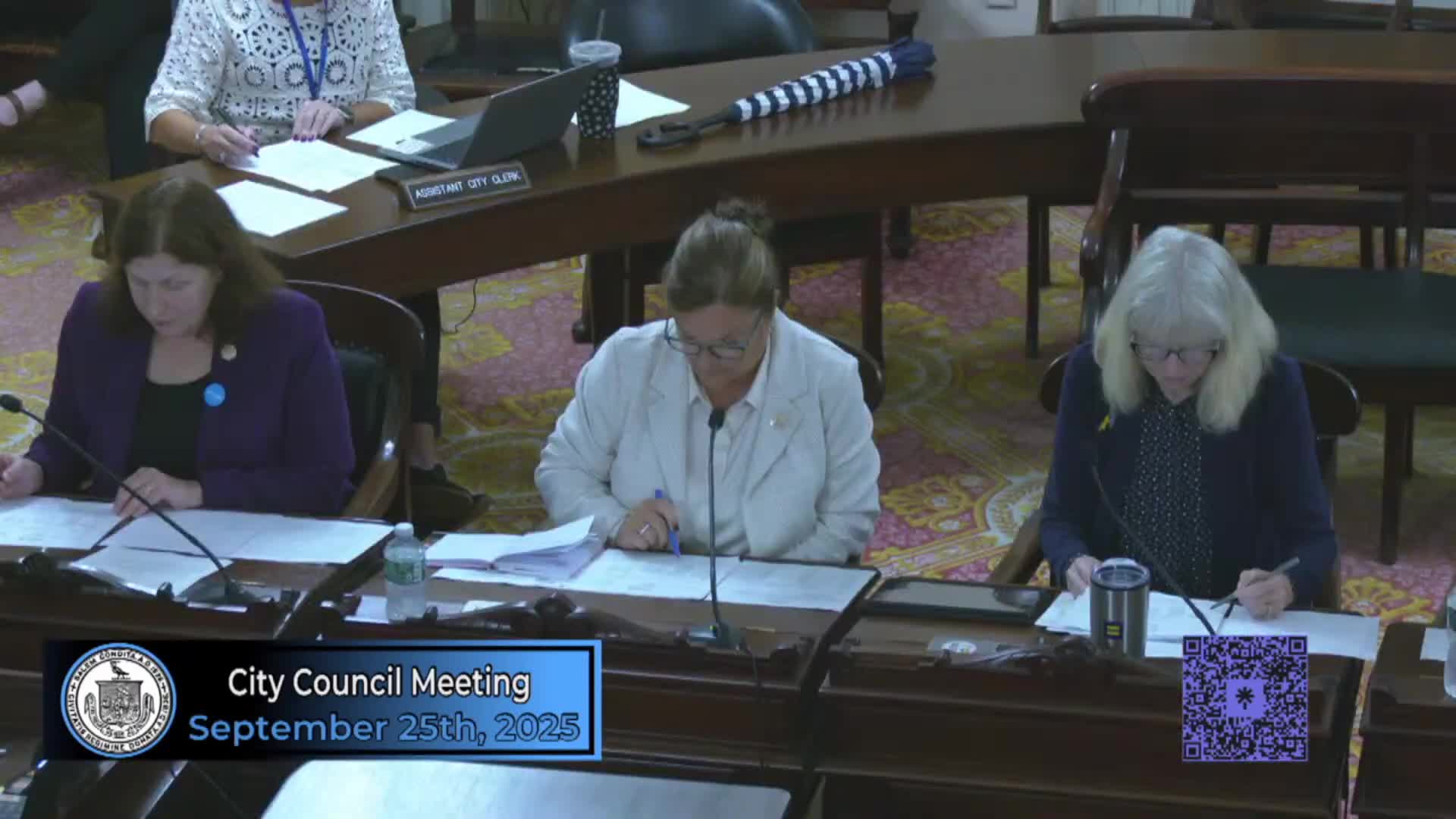
The Salem City Council on Sept. 25 took up a long‑running package of traffic changes that would prohibit right turns on red at multiple intersections across the city. The measure, developed by the Transportation Commission and reviewed in Ordinances and Legal Affairs, drew hours of debate and a series of roll‑call and voice votes on specific intersection amendments.
Councilors emphasized competing goals: improving pedestrian safety and preserving traffic flow. Supporters said banning right on red at certain intersections would reduce conflicts with pedestrians and vulnerable road users; opponents warned blanket prohibitions could worsen congestion and first‑responder response times. Councilor Marcello and others emphasized data‑driven decisions, while Councilor Stott and Councilor Davis underscored pedestrian safety as an urgent priority.
On amendments considered at the meeting one proposal to remove the ban at the Congress and Derby Street intersection failed on a roll call (narrow margin). Several scribe‑error corrections and direction clarifications to replace "Street"/"Avenue" typographical mistakes were approved. The council also approved two intersection direction changes proposed by Councilor Cohen (adding some eastbound/southbound pairings and removing a mistaken duplication). A motion to suspend the rules to proceed immediately to first passage was proposed and met objections; the council discussed waiting for the police traffic division’s formal recommendation before second passage.
Why this matters: the ordinance affects traffic patterns, crosswalk safety, emergency vehicle access and downtown congestion. Council debate was framed around balancing pedestrian safety with vehicle delays and ensuring decisions are supported by traffic data.
Next steps: councilors directed that the traffic division (Salem Police) provide its recommendation; some members sought a pause to ensure all technical language was correct before second passage. The measure remains under active council consideration following the adopted committee recommendations and the votes taken at this session.
Details: During debate councilors cited crash data, sightline geometry, pedestrian counts and neighborhood concerns. Proponents pointed to intersections with demonstrated conflicts and urged proactive action rather than waiting for serious injury before imposing restrictions.
Councilors emphasized competing goals: improving pedestrian safety and preserving traffic flow. Supporters said banning right on red at certain intersections would reduce conflicts with pedestrians and vulnerable road users; opponents warned blanket prohibitions could worsen congestion and first‑responder response times. Councilor Marcello and others emphasized data‑driven decisions, while Councilor Stott and Councilor Davis underscored pedestrian safety as an urgent priority.
On amendments considered at the meeting one proposal to remove the ban at the Congress and Derby Street intersection failed on a roll call (narrow margin). Several scribe‑error corrections and direction clarifications to replace "Street"/"Avenue" typographical mistakes were approved. The council also approved two intersection direction changes proposed by Councilor Cohen (adding some eastbound/southbound pairings and removing a mistaken duplication). A motion to suspend the rules to proceed immediately to first passage was proposed and met objections; the council discussed waiting for the police traffic division’s formal recommendation before second passage.
Why this matters: the ordinance affects traffic patterns, crosswalk safety, emergency vehicle access and downtown congestion. Council debate was framed around balancing pedestrian safety with vehicle delays and ensuring decisions are supported by traffic data.
Next steps: councilors directed that the traffic division (Salem Police) provide its recommendation; some members sought a pause to ensure all technical language was correct before second passage. The measure remains under active council consideration following the adopted committee recommendations and the votes taken at this session.
Details: During debate councilors cited crash data, sightline geometry, pedestrian counts and neighborhood concerns. Proponents pointed to intersections with demonstrated conflicts and urged proactive action rather than waiting for serious injury before imposing restrictions.
View the Full Meeting & All Its Details
This article offers just a summary. Unlock complete video, transcripts, and insights as a Founder Member.
✓
Watch full, unedited meeting videos
✓
Search every word spoken in unlimited transcripts
✓
AI summaries & real-time alerts (all government levels)
✓
Permanent access to expanding government content
30-day money-back guarantee
