DPH discusses loaned OAE hearing screener for home-birth midwives; community to define sharing plan
September 26, 2025 | Department of Public Health, Departments and Agencies, Organizations, Executive, Connecticut
This article was created by AI summarizing key points discussed. AI makes mistakes, so for full details and context, please refer to the video of the full meeting. Please report any errors so we can fix them. Report an error »
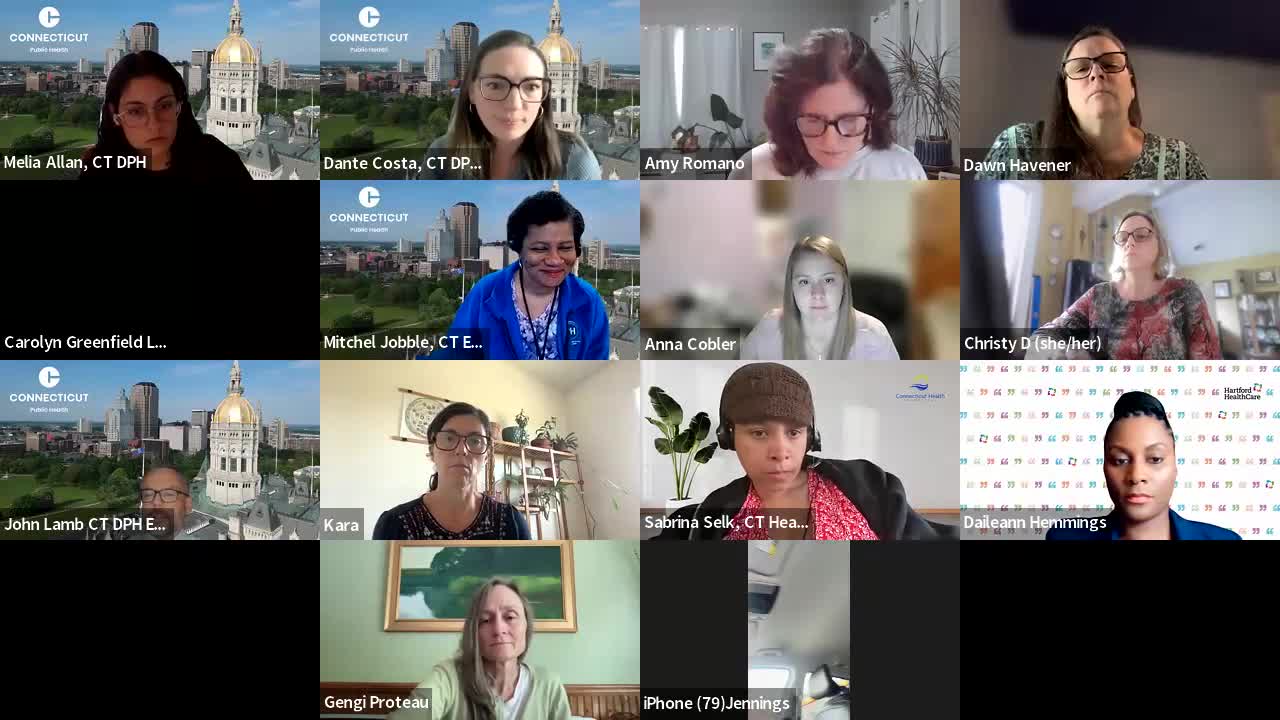
Connecticut Department of Public Health staff and members of the Midwives Working Group discussed whether a single OAE (otoacoustic emission) newborn hearing screener purchased by DPH could be shared among home-birth midwives to improve screening access for babies born outside hospitals.
John Lamb, of the Department of Public Health Early Hearing Detection and Intervention program, and Michelle Jubel, a program staff member, asked the working group whether midwives would be able to share a portable OAE device and what a loan-and-share process would look like. Michelle said DPH currently has “the potential to probably, buy 1 or maybe 2 equipments,” and asked for input on feasibility and logistics.
Members said sharing raises practical questions: how to rotate the device across geographic areas, who would sign for and be responsible for the equipment, how to replenish disposable ear tips and whether providers could charge for screening. One home-birth member noted an existing practice — Birth and Beyond — had received one or two devices under a contract and served that practice’s families, but the device had not been shared broadly.
DPH staff said the first-year purchase and consumables could possibly be covered by the program but cautioned that ongoing funding for replacement tips or maintenance is uncertain. Michelle said the program could include supplies during the first year but would likely not be able to cover consumables after that because the program budget is limited.
DPH asked the midwife community to consider and propose a sharing framework and offered to collect feedback via email. John and Michelle asked the group to identify a point of contact for follow-up and proposed an email survey to gather specifics about equipment needs, geographic distribution and interest. Staff also said they would likely require users to sign an agreement for accountability and would request hearing-screen results be submitted to the program (child name, date of birth, screening result and device type) so the state can validate use and outcomes.
Members agreed to continue the conversation at a follow-up meeting and to circulate a set of specific questions so the group can return with proposals about rotation, scheduling and cost-sharing. DPH staff said they will receive the group’s feedback and report back at the next working-group meeting.
John Lamb, of the Department of Public Health Early Hearing Detection and Intervention program, and Michelle Jubel, a program staff member, asked the working group whether midwives would be able to share a portable OAE device and what a loan-and-share process would look like. Michelle said DPH currently has “the potential to probably, buy 1 or maybe 2 equipments,” and asked for input on feasibility and logistics.
Members said sharing raises practical questions: how to rotate the device across geographic areas, who would sign for and be responsible for the equipment, how to replenish disposable ear tips and whether providers could charge for screening. One home-birth member noted an existing practice — Birth and Beyond — had received one or two devices under a contract and served that practice’s families, but the device had not been shared broadly.
DPH staff said the first-year purchase and consumables could possibly be covered by the program but cautioned that ongoing funding for replacement tips or maintenance is uncertain. Michelle said the program could include supplies during the first year but would likely not be able to cover consumables after that because the program budget is limited.
DPH asked the midwife community to consider and propose a sharing framework and offered to collect feedback via email. John and Michelle asked the group to identify a point of contact for follow-up and proposed an email survey to gather specifics about equipment needs, geographic distribution and interest. Staff also said they would likely require users to sign an agreement for accountability and would request hearing-screen results be submitted to the program (child name, date of birth, screening result and device type) so the state can validate use and outcomes.
Members agreed to continue the conversation at a follow-up meeting and to circulate a set of specific questions so the group can return with proposals about rotation, scheduling and cost-sharing. DPH staff said they will receive the group’s feedback and report back at the next working-group meeting.
Don't Miss a Word: See the Full Meeting!
Go beyond summaries. Unlock every video, transcript, and key insight with a Founder Membership.
✓
Get instant access to full meeting videos
✓
Search and clip any phrase from complete transcripts
✓
Receive AI-powered summaries & custom alerts
✓
Enjoy lifetime, unrestricted access to government data
30-day money-back guarantee
